
Tortoiseshell and Calico Maine Coons: Rare Coats Explained
The first time I saw a tortoiseshell Maine Coon kitten, I honestly thought someone had spilled paint on her. One ear was black, the other was red, and her chin was split down the middle in two colours.
That split face is not a flaw or a trick of the light. It is genetics written across the fur, and once you know how to read it, the whole coat starts to make sense.
In this guide I will untangle the names tortie, torbie and calico, explain the X chromosome story in plain words, and deal honestly with the famous tortitude claim. I keep Maine Coons myself, and I am an enthusiast, not a geneticist, so I will keep the science simple and accurate rather than fancy.
Tortie, Torbie or Calico: The Names
All three names describe the same basic recipe: black based fur and red fur on the one cat. What changes between them is striping and the amount of white, and that is really all there is to it.
If you want the full colour chart first, my guide to Maine Coon colours and patterns walks through every coat the breed can wear. This article zooms in on the patchwork corner of that chart.
Tortie: Black and Red Patches
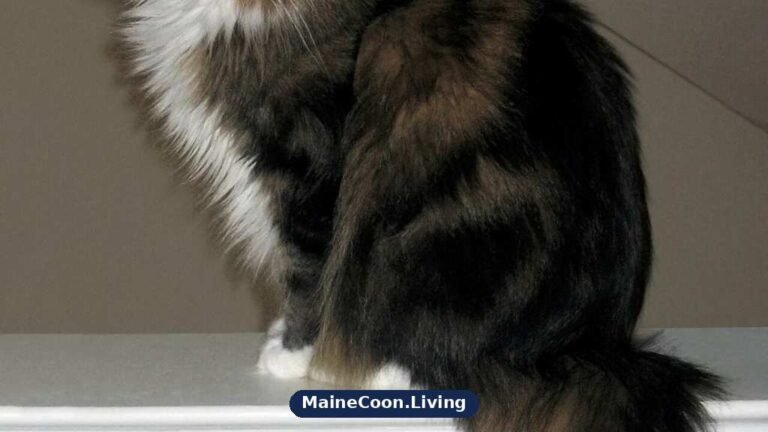
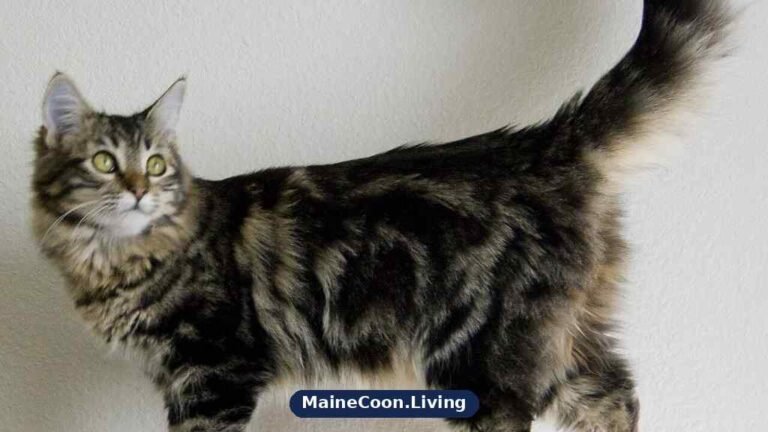
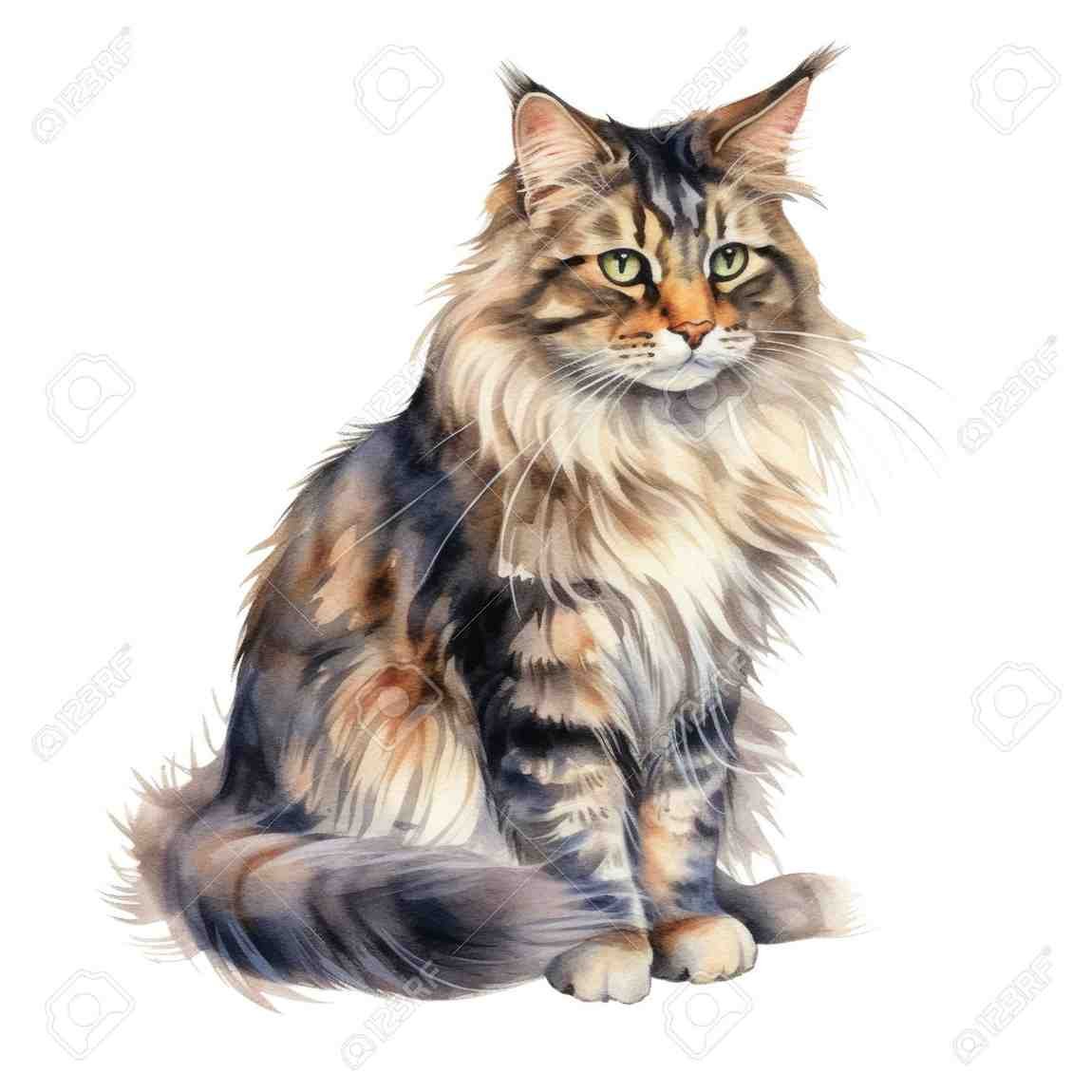
A tortie, short for tortoiseshell, wears black and red patches with little or no white. The two colours can be finely mixed, almost brindled, or laid down in bigger, clearer patches.
On a Maine Coon the long coat softens the edges, so a tortie often looks smoky and blended from a distance. Only up close do you see how sharply each hair group commits to one colour or the other.
One point is worth stating plainly: tortoiseshell is a pattern, not a breed. Torties turn up in many breeds and in ordinary mixed breed cats, and a tortie Maine Coon is simply a Maine Coon wearing that pattern.
Torbie: A Tortie With Tabby Stripes
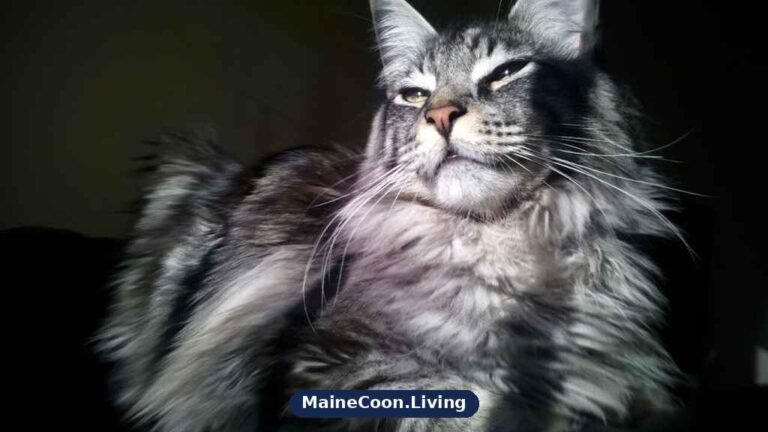
A torbie is a tortie plus tabby striping, and the name is just tortie and tabby squashed together. You will see stripes or swirls running through the patches, most clearly in the red areas and often across the black ones too.
The giveaway is the black based fur. If those dark patches are solid, the cat is a tortie, and if they carry clear tabby markings, she is a torbie.
Red fur almost always shows some striping, even on a solid looking cat, so ignore the red patches when you judge. Look only at the dark patches and the tail rings, and the answer usually jumps out.
Calico: A Tortie With Lots of White
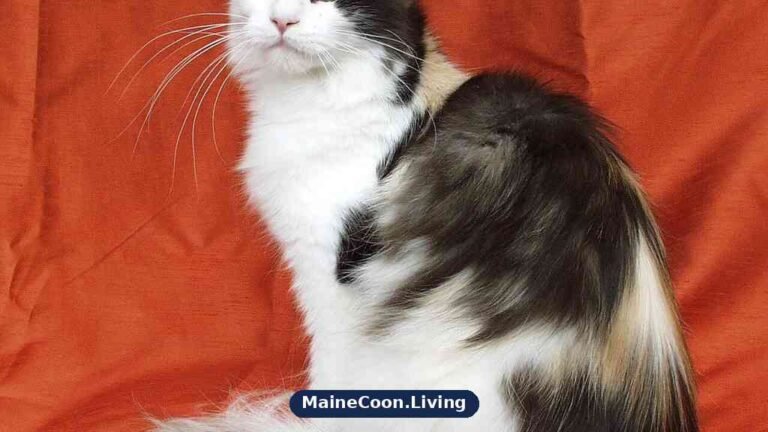
A calico is a tortie with a large amount of white added. The white breaks the coat into bold blocks, so you get clear patches of black, clear patches of red, and big clean areas of white between them.
In many breed standards the same cat is written up as tortie and white, which is the more literal description. Calico is the everyday word, especially in North America, and both labels point at the same coat.
The white usually gathers on the chest, belly, legs and lower face. The more white a kitten carries, the more separated and dramatic her colour blocks tend to look as an adult.

The X Chromosome Story
One Gene, Two Versions
Here is the heart of it. The gene that decides between orange pigment and black based pigment sits on the X chromosome, and it comes in two versions.
One version tells the fur making cells to produce red or orange pigment. The other version does not, so those cells default to black based pigment, which can also show as brown or, in dilute cats, blue grey.
A female cat has two X chromosomes, so she can carry one version on each. A male cat normally has one X and one Y, so he gets only one version, and he ends up fully red or fully black based, never a mix of both.
The O locus, written down
Breeders write the orange version of that gene as O and the non orange version as o. A female with O on one X and o on the other is a tortoiseshell or a calico, while a female with O on both is fully orange and a male with O on his single X is orange too. Our guide to the orange Maine Coon cat explains that gene from the other direction, and reading the two together makes the X chromosome story click very fast.
Switching Off an X
Early in a female kitten’s development, each of her cells switches off one of its two X chromosomes at random. That choice then sticks for life in every cell that descends from that first cell.
Where the red version stayed switched on, the fur grows red. Where the black based version stayed on, the fur grows dark, and the kitten ends up wearing a patchwork map of those early coin flips.
That process is called X inactivation, and it explains two things owners always ask about. It explains why no two torties ever match, and why a tortie daughter never looks like an exact copy of her tortie mother.
The white in a calico comes from a separate spotting gene that is not on the X chromosome at all. Where that gene is active, pigment cells never settle, so the fur grows white and the coloured patches stay in big blocks.
That spotting gene is written as S, and the amount of white a kitten shows depends on how strongly it acts. A little white gives a tortie with a white chest and paws, while a lot of white gives the bold blocked calico look, and the same gene is behind the white patches on black and white or tabby and white cats. Our guide to white Maine Coon cats explains the difference between this spotting gene and the dominant white gene, which masks the whole coat rather than adding patches.
If genetics is your thing, the Cat Fanciers’ Association breed material is a good next read for how these colours sit inside the wider pedigree cat world. It also shows how popular the Maine Coon itself has become.
The video above walks through the same patchwork story from the calico side, including the male rarity and the tortitude question. It is a handy watch before we get to the boys.
Why Male Torties Are So Rare
For a male cat to wear both red and black based fur, he almost always needs a second X chromosome. That gives him an XXY set instead of the usual XY, a pattern vets compare with Klinefelter syndrome in people.
Estimates usually quoted put male torties and calicos at about one in 3,000 of these cats. So if you meet a male tortie Maine Coon, you are looking at a genuine rarity, and his breeder probably double checked his sex more than once.
Most XXY males are sterile, which means they cannot father kittens. A small number of male torties are chimeras instead, formed when two early embryos merge, and a few of those cats can be fertile, but they are the exception within an exception.
Nothing about the XXY pattern makes a cat a poor pet. Owners of male torties describe normal, healthy companions, and any health questions are best handled with a routine vet chat rather than internet worry.
Dilute Torties: Blue and Cream
A dilute tortie carries two copies of a softening gene that fades both of her colours. Black turns to blue grey and red turns to cream, so the whole patchwork looks washed in pastel.
Breeders call this pattern blue cream, and on a long Maine Coon coat it can look almost silvered in bright light. The patch boundaries are still there, they are just quieter and harder to spot from across the room.
Dilute torbies exist too, with soft stripes running through the blue and cream. And a dilute calico adds white to the pastel mix, giving one of the gentlest looking coats in the whole breed.
The pedigree shorthand for patchwork coats
On pedigrees, a black tortoiseshell is written with the single letter f, and a dilute tortoiseshell, the blue cream coat, is written as g. Add white and the code grows, so a tortoiseshell and white is usually written as f with a white pattern note, and a torbie adds the pattern number, for example f 22 for a classic torbie and f 23 for a mackerel torbie. The International Cat Association breed standard lists these coats among the patterns the breed is judged in.
If the red side of the family fascinates you, my look at the orange Maine Coon cat covers the red gene from the other direction. Reading the two together makes the X chromosome story click very fast.
What About Tortitude?
What the Studies Actually Found
Tortitude is the playful claim that tortie and calico cats are sassier, feistier and more strong willed than other cats. It is a fun word, and owners, myself included, love swapping stories that seem to prove it.
The honest evidence is thinner than the legend. The most cited work is an owner survey from the University of California, Davis, where owners of tortie, calico and torbie cats reported slightly more feisty behaviour during handling and vet visits.
Those differences were modest, and the study relied on what owners believed about their own cats. Owners who expect tortitude may simply notice and remember the spicy moments more, which is a well known trap in survey research.
What Owners and Breeders See
Plenty of tortie owners describe confident, chatty, people focused cats, and I do not doubt a word of their experience. But you can find just as many torties who are soft, shy lap cats, and plenty of black or tabby cats with enough attitude for three cats.
What really shapes a Maine Coon’s character is early socialisation, handling in the first weeks, health, and daily life with her people. That is true across every colour, as I set out in my guide to Maine Coon temperament.
My own view, after years around these cats, is simple. Colour tells you about chromosomes, not character, so choose a kitten for her health, her breeder and her individual spark, never for a myth attached to her coat.
Living With a Patchwork Coon
Day to day, a tortie or calico Maine Coon needs exactly the same care as any other Maine Coon. That means regular combing for that long double coat, big scratching posts, sturdy high spots, and food measured for a large, slow maturing breed.
Patchwork coats do hide loose hair and dust better than solid pale coats, which is a small household mercy. The flip side is that mats can hide too, especially behind the ears and under the front legs, so a weekly comb through still matters.
One practical tip from experience: photograph your young tortie often, because her pattern will spread and clarify as the coat grows in. Kittens who look muddy at eight weeks often turn into strikingly clear patched adults by their first birthday.
Expect questions from every visitor, too. A big patchwork cat with ear tufts and a split coloured face is a conversation starter, and now you know the chromosome story well enough to tell it properly.
Eyes are the last detail worth a look before you finish. Tortie and calico Maine Coons usually wear gold, copper or green eyes, and the warm eye colours sit beautifully against a patchwork coat. Our guide to Maine Coon eye colours walks through all three in detail, including how the colour deepens over the first year, and it is a useful read if eye colour is part of what drew you to the pattern.
Frequently Asked Questions
Is a tortoiseshell Maine Coon a separate breed?
No. Tortoiseshell is a coat pattern, not a breed, and it can appear in many breeds as well as in mixed breed cats. A tortie Maine Coon is a full Maine Coon whose coat happens to mix black and red patches.
What is the difference between a tortie and a calico Maine Coon?
A tortie has black and red fur with little or no white. A calico has the same two colours plus a large amount of white, so the patches sit in clear blocks. Breeders often use the plainer term tortie and white for the same cat.
Can a male Maine Coon be a tortie or a calico?
Yes, but it is very rare, at roughly one in 3,000 tortie and calico cats. Most of these males carry an extra X chromosome, written XXY, and most are sterile. A vet can confirm the sex and, if needed, test fertility before any breeding plans are made.
Do tortie Maine Coons really have tortitude?
There is no solid proof that coat colour drives personality. Some owner surveys found slightly higher reports of feisty behaviour in tortie and calico cats, but the differences were small and based on owner opinion. Upbringing, socialisation and the individual cat matter far more.
What is a dilute tortie Maine Coon?
A dilute tortie carries a gene that softens both of her colours. Black fades to blue grey and red fades to cream, giving a gentle blue cream coat. She is genetically the same kind of patchwork cat, just painted in pastels.