
Maine Coon eye colours: the full range explained
Eye colour is one of the first things people ask me about when they meet my Maine Coon. The eyes are big, wide set and full of expression, and the colour can look completely different in morning light and evening light.
In this guide I will walk through every eye colour you are likely to see in the breed. I will cover the warm everyday shades, the rare blue and odd eyes, and the way a kitten’s blue eyes turn into the adult colour.
The short answer
Most adult Maine Coons have eyes in the warm family of gold, copper, green and green-gold. Those four shades, plus the hazel tones that sit between them, make up the normal range for the breed.
Blue eyes are the exception rather than the rule. They appear almost only in solid white cats and in cats with a great deal of white in the coat, and the same is true of odd eyes, where the two eyes are different colours.
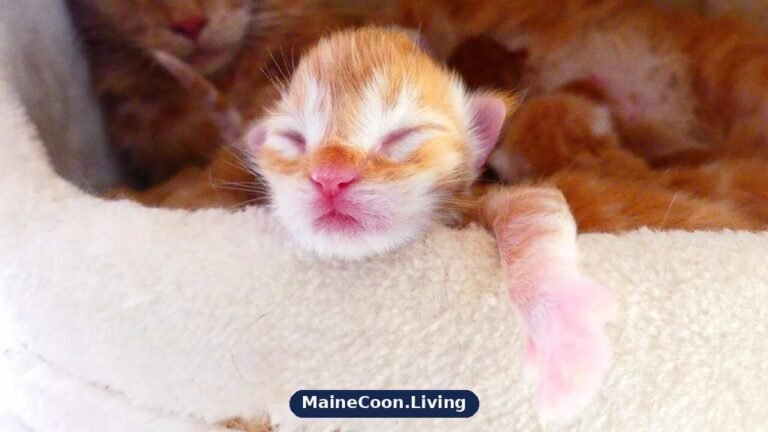
Every Maine Coon kitten starts life with blue looking eyes. For most kittens that blue is temporary, and it gives way to the adult colour during the first few months.
Gold eyes
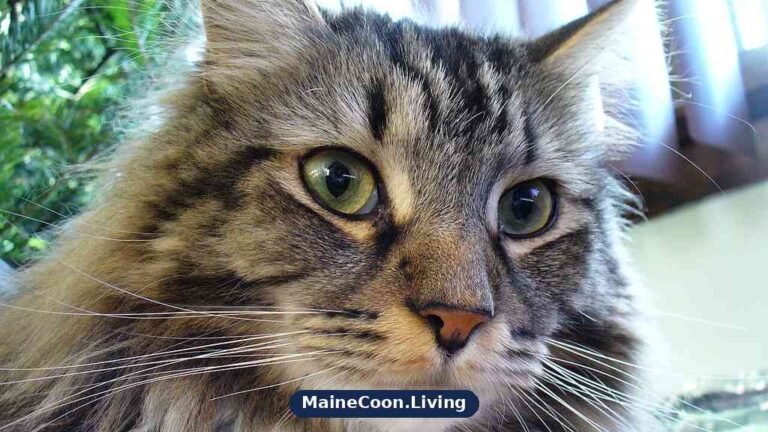
Gold is probably the colour I see most often in the breed. It ranges from a soft honey tone to a deep, rich yellow gold that almost glows against a dark coat.
Gold eyes suit the classic brown tabby look beautifully. Against warm brown fur and black tabby markings, gold eyes give that steady, lion like stare so many owners love.
If your cat’s eyes look yellow in bright light and deeper in shade, that is normal. Gold sits on a spectrum, and lighting alone can move it a full shade either way.
Copper eyes
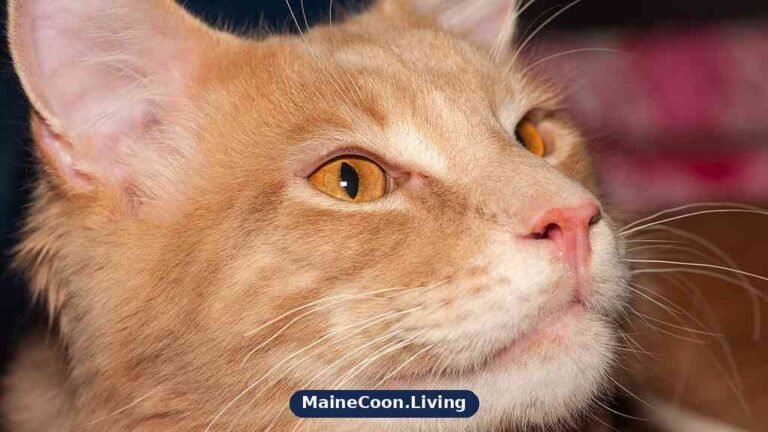
Copper is the deepest of the warm shades. It is a rich orange brown, darker and more intense than gold, and it stands out strongly against silver, blue and black coats.
Copper is the eye colour many people picture on a red or cream Maine Coon. The warm coat and the warm eyes sit close together in tone, which gives those cats a very striking, fiery look.
True copper is less common than plain gold. Plenty of cats described as copper eyed are really a deep gold, and there is no harm in that, because the two shades blend into each other.
Green eyes
Green eyes bring a cooler note to the breed. They range from a pale gooseberry green to a deep, clear green that looks almost jewel like.
Silver tabbies are the cats I most often see with green eyes, and the pairing is lovely. The cool silver coat and the cool green eyes set each other off, although green turns up on plenty of other coat colours too.
That green and silver pairing is no accident of taste. Silver tabbies carry pale roots under dark markings, and the cool ground makes a clear green eye stand out in a way a warm coat never quite manages. Our silver Maine Coon guide puts silver tabbies, smokes and shaded cats side by side, which is the easiest way to learn the difference.
The pattern matters as much as the colour here. A silver classic tabby and a silver mackerel tabby can wear the same green eyes and look like different cats, so read the pattern first and the eyes second. Our tabby patterns guide shows how to tell the two apart on a real flank.
A green eyed kitten can take a little longer to show its true colour. Green often arrives late in the colour change, passing through a muddy stage first.
Green-gold and hazel tones
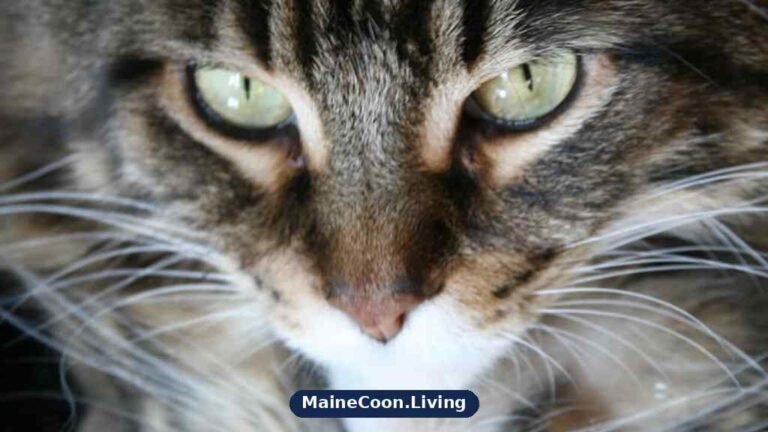
Not every cat lands neatly in one box. Many Maine Coons have eyes that sit between green and gold, a shade the standards call green-gold.
Hazel tones belong in this middle ground as well. A hazel eye may look green at the outer edge and golden around the pupil, or it may shift between the two depending on the light.
These in between shades are completely normal and fully accepted. When I describe my own cat’s eyes to friends, green-gold is honestly the most accurate label most days.
Blue eyes and odd eyes
Blue eyes in an adult Maine Coon are tied to white fur. The genes that produce a white coat can also stop pigment from reaching the iris, and an iris with little or no pigment looks blue.
Odd eyes deserve a closer look, because the deafness risk follows the blue eye, not the odd pair itself. Cornell reports that about 40 percent of white cats with one blue eye are born deaf, and that a cat deaf in one ear is deaf on the same side as the blue eye. A cat with two blue eyes faces a higher risk still, at 65 to 85 percent.
Most odd eyed white cats still hear normally, so the numbers are a reason to test, not a reason to worry in advance. A BAER hearing test checks each ear on its own, and it is the question to ask the breeder before you commit to a white kitten. Our white Maine Coon guide covers the deafness question in full, including what a BAER result looks like.
That is why you will see blue eyes on solid white cats and on cats with heavy white spotting, especially where white covers much of the face. A fully coloured adult Maine Coon with blue eyes sits outside the normal picture for this breed.
Odd eyes follow the same logic, one step further. One eye receives pigment and turns gold or green, while the other stays blue, and the result is a cat that seems to look at you in two colours at once.
White cats carry one extra consideration that is worth knowing about. There is a known link between white coats, blue eyes and deafness in cats, and I cover that properly in my guide to white Maine Coon cats, so I will not repeat the whole discussion here.
Why kittens start with blue eyes
All kittens, Maine Coons included, are born with very little pigment in the iris. With almost no pigment in place, the eye scatters light in a way that makes it look blue or blue grey.
The change begins at roughly 4 to 8 weeks of age. Pigment producing cells in the iris switch on, pigment builds up, and the eyes pass through grey, greenish or muddy tones on the way to the adult colour.
By about 3 to 4 months, most kittens show a colour close to the one they will keep.
The reason for the slow change is simple. PetMD explains that the cells in the iris that make melanin are barely active for the first six weeks of life, so the iris looks blue for lack of pigment rather than for any blue colour in it. As those cells switch on, melanin builds up and the adult colour appears.
The change usually starts at around six to seven weeks, and most kittens show a colour close to their adult shade by three to four months. The shade can keep deepening for months after that, and green is often the last colour to settle, passing through a muddy stage first. Judge a kitten by the parents rather than by the exact shade in a six week old photo.
The shade can still deepen for a few more months, so I would not judge a young kitten’s final eye colour too early.
One point of confusion is worth clearing up while we are here. A kitten’s early blue eyes have nothing to do with a blue coat, which is really a dilute grey; my guide to the blue Maine Coon coat colour explains that side of things.
Watching the change happen week by week is one of the small joys of kittenhood. This short video follows one Maine Coon kitten as her eyes shift from blue to orange.
How eye colour pairs with coat colour
Here is the part that surprises people: for most colours, the coat and the eyes are inherited separately. A black cat, a brown tabby and a tortoiseshell can all end up with the same gold eyes.
That said, some pairings turn up again and again in real life. In my experience the common ones look like this:
- Brown tabbies often carry gold or green-gold eyes.
- Red and cream cats very often have gold or copper eyes.
- Silver tabbies frequently show clear green eyes.
- Black and blue solid cats commonly have gold or copper eyes.
- White cats are the ones that may have blue eyes or odd eyes.
These are tendencies, not rules, and you will meet plenty of exceptions.
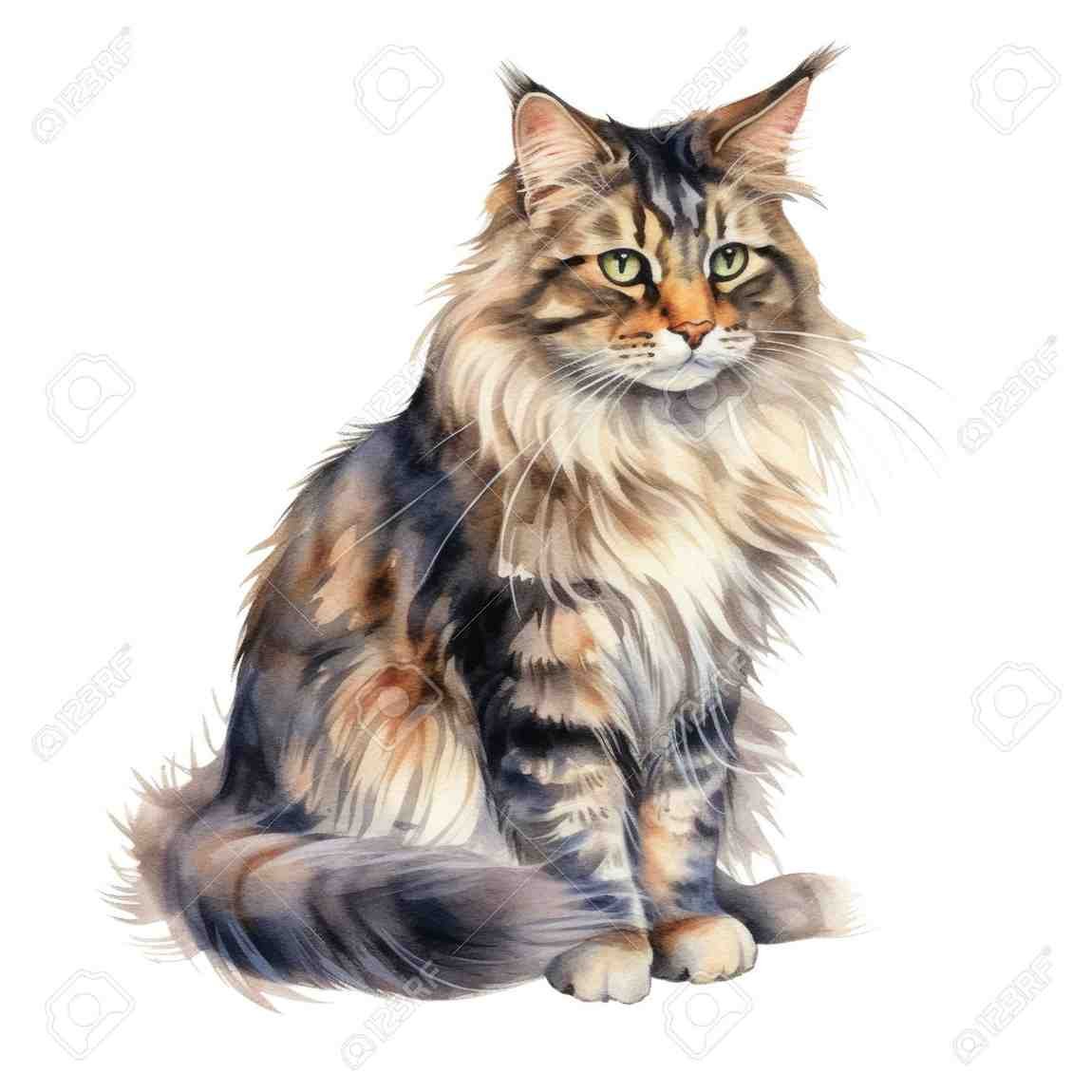
The photo on this page shows one pairing I see again and again on tortoiseshells, pale green eyes against the mixed coat. Red and cream cats lean the other way, towards gold or copper, which gives them the fiery look. Our orange Maine Coon guide shows that warm on warm look at its best.
Eye colour also says something about breed type, just not what most people expect. A blue eyed or odd eyed Maine Coon is a white or mostly white cat, and FIFe now requires a PAX3 gene test for Maine Coons with blue or odd eyes. The FIFe breeding rules list the test as obligatory, so a breeder offering a blue eyed kitten should be able to show the result.
If you enjoy the coat side of the breed, my full guide to Maine Coon colours walks through every coat colour and pattern.

Think of eye colour as the finishing touch rather than part of the coat pattern. Two littermates with near identical markings can still grow into different eye shades.
What the breed standards say
The two big registries describe the range in very similar words. The TICA Maine Coon breed standard allows any shade of green and gold, and states plainly that eye colour has no relation to coat colour.
TICA accepts blue and odd eyes only in white cats and cats with white. Blue or odd eyes in a fully coloured cat are listed as a disqualification in the show hall.
The CFA standard is a touch broader in its wording. It allows shades of green, gold, green-gold or copper, and it also permits blue or odd eyes in white cats and in all cats with white.
Both standards also care about the eye itself, not just its colour. The eye should be large, slightly oval and wide set, and judges can penalise eyes that are small, deep set or the wrong shape, whatever their colour.
For a pet owner, none of this limits which cat you should love. It simply explains why breeders describe eye colour the way they do, and why blue eyes on a coloured cat are treated as a fault rather than a feature.
A quick word on eye health
Eye colour itself is not a health issue, and a change during kittenhood is normal. What deserves attention is a sudden change in an adult cat, such as one eye turning cloudy, milky or a different colour from the other.
Redness, discharge, squinting or a cat pawing at its eye are also signs to act on. I am an owner, not a vet, so anything like that means a proper veterinary check rather than home guesswork.
A simple habit helps: look at your cat’s eyes in good light every week or so. Clear, bright eyes with a steady colour are what you want to see, and you will spot changes early if you know the normal look.
Frequently Asked Questions
What colour eyes do Maine Coons have as adults?
Most adult Maine Coons have gold, copper, green or green-gold eyes, and the shade can sit anywhere along that warm spectrum. Blue eyes and odd eyes are the exception, and they appear almost only in white or mostly white cats.
Do all Maine Coon kittens have blue eyes?
Nearly all of them do, yes. Kittens are born with very little pigment in the iris, so their eyes look blue or blue grey at first. That early blue is a starting point, not the adult colour, and it fades as pigment develops.
When do a Maine Coon kitten’s eyes change colour?
The change usually begins at around 4 to 8 weeks of age, as pigment producing cells in the iris become active. Most kittens show a colour close to their adult shade by 3 to 4 months, although the tone can keep deepening for a while after that.
Can a Maine Coon keep blue eyes as an adult?
Yes, but it is uncommon and it is tied to the coat. A solid white Maine Coon, or one with a lot of white around the face, can keep blue eyes or have one blue eye and one coloured eye. A fully coloured Maine Coon with adult blue eyes is outside the breed standard.
Does eye colour depend on coat colour?
Mostly no. The TICA standard states that eye colour has no relation to coat colour, so a brown tabby and a black cat can share the same gold eyes. The one real link is white fur, because the genes behind a white coat can also leave one or both eyes blue.