Silver Maine Coon: Tabby vs Smoke vs Shaded Guide
The first silver Maine Coon I spent real time with fooled me completely. Sitting still, he looked like a solid dark cat, almost black in indoor light. Then he rolled over, the long coat fell open, and the underside flashed bright white.
I am Umar, and I live with Maine Coons, so I have learned to look twice at this colour. Silver is the one that causes the most arguments at kitchen tables and in breeder listings alike. People use silver tabby, smoke and shaded as if they were interchangeable, and they really are not.
This guide is my attempt to sort them out the way I wish someone had sorted them out for me. No genetics degree, no show jargon for its own sake. Just what the gene does, what your eyes should look for, and the simple hands on tests that settle the question.
If you want the wider picture first, start with our hub on Maine Coon colors and come back here for the silver details. Silver sits on top of other colours, so context helps. A silver version of black behaves very differently in the light from a silver version of blue.
Silver is an effect, not a colour
Think of silver as a filter laid over a base colour. The base might be black, blue, red or cream, and the cat would have been that colour in a plainer form without the silver effect. With silver switched on, the lower part of every hair loses its pigment.
The gene behind it is called the inhibitor gene, and the name actually helps. It inhibits, or holds back, pigment in the root and lower shaft of the hair, so that section grows in white or very pale silver. The tip, which forms first, keeps the full colour.
That is why a single hair tells the whole story. Pluck nothing, just part the coat and follow one long guard hair from tip to skin. If the bottom section is clean white and the top section is coloured, you are looking at silver at work.
How much of the shaft stays coloured is the whole game. A lot of colour at the tip gives you a dark, dramatic cat with a hidden pale base. Very little colour at the tip gives you a cat that looks almost white at first glance.
Two other factors shape the result just as much. The first is whether the cat is tabby or solid underneath, because that decides whether you see a pattern or a solid surface. The second is how wide the pale band is, which breeders sometimes describe in terms of wide banding.
The long Maine Coon coat shows all of this beautifully. There is simply more hair for light to move through, especially in the ruff, the belly fur and the britches. A short coated silver cat can look flat by comparison, while a Maine Coon seems to change as it walks across a room.
Standards from groups like The International Cat Association describe these coats in careful detail, and judges are trained to part the fur and check the roots. I am not a judge, and I would never pretend to be one. I am just an owner who has learned, from breeders and those standards, what to look for.
Silver tabby: the bright, contrasty one
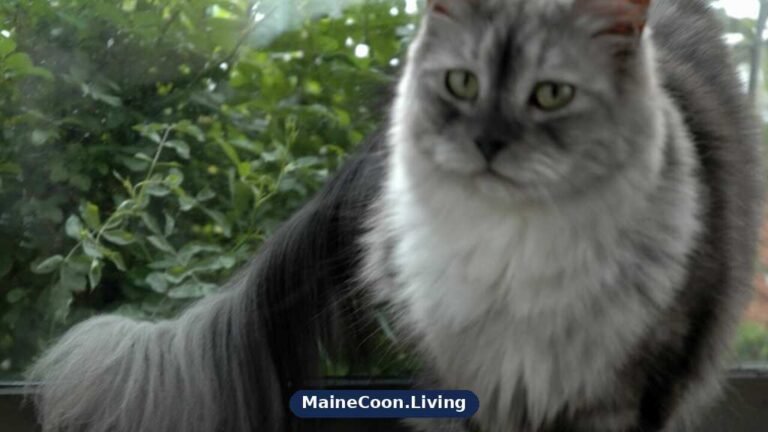
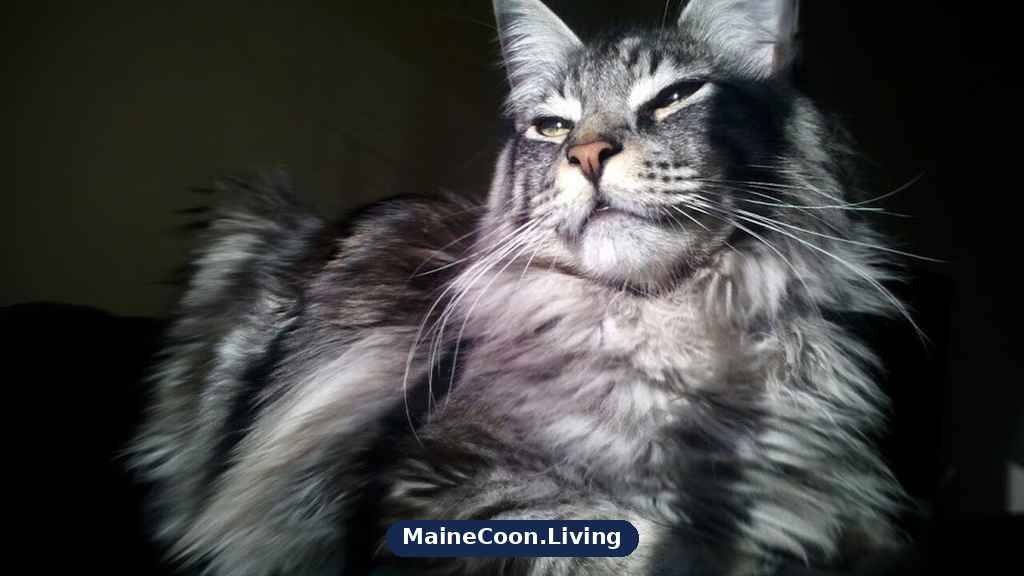
A silver tabby is the easiest of the three to recognise. Dark tabby markings sit on a pale silver ground, so the pattern stands out sharply even from across the room. The cat looks bright, clean and contrasty, with none of the warm brown tones you see in a classic brown tabby.
The markings can be mackerel, classic, spotted or ticked, just as in any tabby. What changes is the background between them, which turns from warm ivory or brown to cool silver white. Black silver tabby is the version most people picture first, and it is a striking combination.
Compare it with a plain black Maine Coon and the difference is immediate. The black cat hides its shading in shadow, while the black silver tabby wears its pattern openly. The same genes for colour are there, but silver turns the contrast up.
Blue silver tabby is softer and, to my eye, one of the prettiest coats in the breed. The markings are blue grey rather than black, set against the same icy ground. If you like the softer look of a blue Maine Coon, the silver version adds light without adding fuss.
Red silver tabby exists too, and breeders often call it red silver or cameo tabby depending on depth. The warm red tips over a pale base can look almost peachy in soft light. It is less common in everyday listings, which is part of its appeal.
You do not need to part the coat to name a silver tabby. If the pattern is clear at rest and the ground colour looks pale and cool rather than warm, you are almost certainly there. Parting the fur simply confirms pale roots under both markings and background.
Watch a silver tabby move in daylight and you will see why people fall for it. The markings stay put while the pale coat shimmers between them as the hair shifts. It is pattern and light show in one package.
Smoke: the one hiding in plain sight
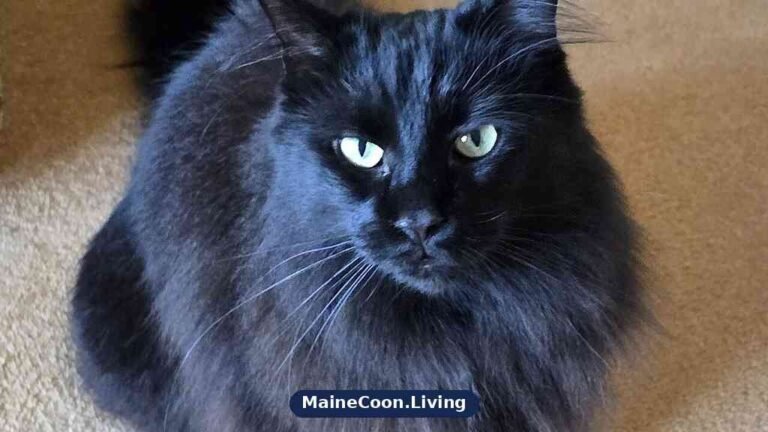
A smoke is a solid cat with the silver effect underneath, and that one sentence explains its party trick. At rest it can look plain black, blue, red or cream, with no tabby pattern to give it away. Part the coat, and a striking white undercoat appears against the dark surface.
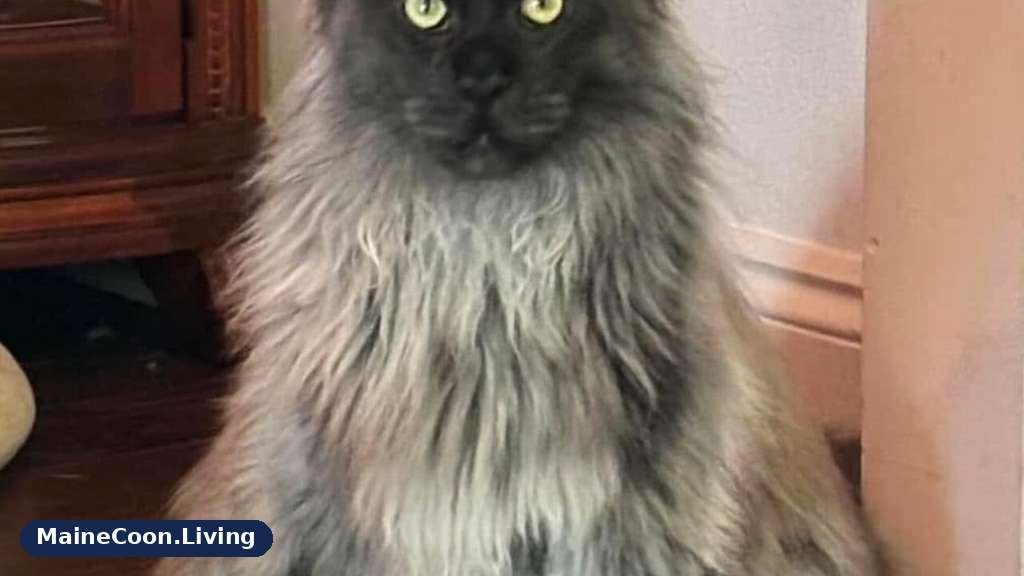
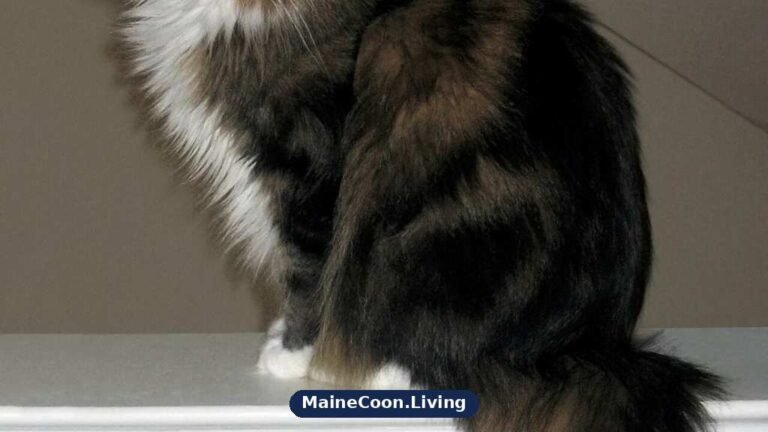
Black smoke is the classic example and the photo above shows the idea well. The face and legs stay dark, while the longer body coat carries that pale smoke colour through it. In person the effect is even stronger when the cat stretches or turns.
The easiest test is also the oldest one. Use your fingers to part the fur on the back and sides, or blow gently into the coat so the hairs separate. If clean white roots flash through across a wide area, and the surface looked solid before you touched it, you have a smoke.
Roughly speaking, about half of each hair shaft stays coloured in a typical smoke, with the lower half pale. Treat that as an approximation, not a measurement, because it varies from cat to cat and even across the body. The tail, ears and face often keep more colour than the long coat on the sides.
Young smokes can show faint ghost markings, especially in bright light. Those shadowy bars are kitten leftovers, not proof that the cat is really a tabby. They usually fade as the adult coat thickens, leaving the clean solid surface that defines the look.
Smokes change with the seasons more than most colours seem to. A thick winter coat parts to reveal more pale undercoat, so the cat can look lighter and smokier. A shorter summer coat sits darker and flatter, and visitors may swear it is a different cat.
At shows, breeders and judges look for that clear contrast when the coat is opened, along with a solid looking surface when it is closed. A muddy root colour or patchy silver weakens the effect they want to see. At home, none of that stops a smoke from being a wonderful pet, and most owners love the surprise element most of all.
Shaded and chinchilla: tips only
Shaded silver takes the same idea and pushes the pale section much further up the hair. Only the outer part of each shaft keeps its colour, roughly a third or less in a typical shaded cat. The result is a soft gradient, darker along the back and melting into near white underneath.
Chinchilla silver, often called shell silver, goes one step lighter again. Only the very tips of the hairs are coloured, like a fine dusting over a white coat. These cats can look almost white until they move into good light and the colour on the tips catches your eye.
There is no tabby pattern shouting for attention and no solid surface hiding the silver either. The whole cat reads pale from the start, with colour present as shading rather than markings. That soft, even gradient is what sets shaded and chinchilla cats apart from both tabbies and smokes.
These are the lightest and, in Maine Coons, the rarest of the silver looks. Getting that much pale banding, evenly, across a long coat is simply harder to breed consistently. When a listing claims a chinchilla kitten, ask to see both parents and clear photos in natural light.
Colour on the face helps you judge the depth. A shaded cat usually keeps visible colour on the face, ears and tail, framing the pale body. A true chinchilla keeps even that framing delicate, so the face can look surprisingly light for a coloured cat.
Telling them apart in practice
Start with the cat at rest, in decent light, without touching the coat. If you can see a clear tabby pattern on a pale ground, call it a silver tabby and you will be right in most cases. If the cat looks solid and dark, you are probably dealing with a smoke.
Next, part the fur on the back and then on the side. A smoke reveals white roots under a solid surface, while a silver tabby reveals pale roots under a pattern that was already visible. A shaded cat needs no reveal at all, because the pale coat was obvious from the start.
A quick side by side check
Silver tabby means pattern first, with dark markings and a bright ground. Smoke means solid first, with the white undercoat as the surprise underneath. Shaded and chinchilla mean pale first, with colour only as tipping or a light gradient.
Then check how far the colour runs down a few long hairs. Around half coloured suggests smoke territory, a third or less points toward shaded, and tips only points toward chinchilla. Use those fractions as rough guides only, because real cats rarely sit neatly on a line.
Lighting can mislead you, so check in more than one place. Warm indoor bulbs add yellow that silver does not actually have, and phone cameras love to overexpose pale fur. Daylight near a window, without harsh direct sun, gives the most honest read.
Silver kittens and the tarnish phase
Silver kittens are famous for keeping you guessing. Many look muddy, dull or slightly brown for the first months, with none of the clean brightness of the adult photos that made you fall in love. The kitten coat is softer and shorter, and it simply does not show silver the way the adult coat does.
Tarnishing is the word breeders use for yellowish or rusty patches in a silver coat. It is a known fault in the show ring, where breeders and judges look for a clean, clear silver. The good news for pet owners is that tarnish in a kitten often fades or clears completely as the adult coat replaces the kitten fuzz.
I would never reject a kitten on tarnish alone. Ask the breeder whether the parents tarnished as kittens and whether it cleared, because family history is a useful clue. Then judge the kitten on health, temperament and the breeder in front of you, not on a patch of yellow in month three.
Smoke kittens are the trickiest of all to read early. Some look oddly pale, some look almost solid black, and ghost tabby bars can come and go. Any breeder who promises an exact adult shade from a tiny kitten is offering more certainty than the coat can give.
Take monthly photos in the same spot if you bring a silver kitten home. The change sneaks up on you day to day, and a photo series shows the silver clearing in a way memory does not. By the first birthday, most owners can finally see the cat they were promised, and often a better one.
Eyes, and the colours silver sits on
Green eyes are the pairing silver lovers prize most. Against a cool pale coat, clear green looks vivid in a way that gold or copper does not quite match. Breed standards allow a range of eye colours in Maine Coons, but green on silver is the combination that turns heads.
Gold and copper eyes are common too and can look superb, especially on red silver and warmer toned cats. What matters more than the shade name is clarity and expression. A bright, clear eye of any allowed colour suits a healthy cat better than a dull eye in a fashionable shade.
Remember that silver is a layer, so almost every base colour has a silver version. Black becomes black silver tabby or black smoke, and blue becomes the softer blue silver or blue smoke. Red and cream produce the cameo family, pale and warm and easy to confuse with shaded cats at a glance.
Nose leather and paw pads follow the base colour, not the silver. A black based silver keeps dark pads, while a red based silver keeps pink ones. Checking those small details helps when a coat is so pale that the base colour is hard to name from the fur alone.
Keeping silver bright
Silver shows everything, which is both its charm and its chore. Dust, loose undercoat and the start of a small mat all stand out against a pale base. The fix is boring and reliable: comb the ruff, armpits, belly and britches two or three times a week with a steel comb.
Bathing is an occasional tool, not a weekly ritual, for most pet silvers. When you do bath, use only a shampoo made for cats, and choose a gentle formula without harsh whitening chemicals or heavy perfume. Human shampoo and dog shampoo have no place on a cat, whatever a social media tip claims.
Rinsing matters more than the brand on the bottle. Leftover shampoo dulls a pale coat and can leave it looking yellow, which owners then blame on tarnish. Rinse until the water runs completely clear, then rinse once more, especially through that dense ruff.
Sunlight habits play a small but real part. A cat that bakes in strong sun for hours every day can pick up a warmer, yellowed tone on the exposed coat over time. Most indoor cats with a sunny windowsill are fine, but a catio nap in fierce midday sun is worth limiting if brightness matters to you.
Tear staining deserves a quick daily wipe on pale faces. Use a soft cloth dampened with plain water and be gentle around the eyes. Catching it early is far easier than trying to lift set staining out of white fur later.
For show homes, tarnish and yellowing matter because placings can turn on coat clarity. For pet homes, they are cosmetic footnotes on an otherwise glorious coat, and I say that as an owner who has stopped worrying about them. Brush well, feed well, rinse well, and let the cat be a cat the rest of the time.
Choosing a silver kitten honestly
Silver tabby and black smoke are not rare, whatever a listing says. Good breeders produce them regularly, and a modest price difference for a popular colour is one thing. A huge rarity premium for a common silver pattern, with no health testing behind it, is marketing and you can walk away from it.
Shaded and chinchilla silvers are genuinely harder to find, so patience is realistic there. Even then, health screening, pedigree and how the kittens are raised matter far more than the exact depth of tipping. A well raised shaded kitten from tested parents is worth waiting for, and a poorly raised one is not worth having quickly.
Ask to see the parents, or at least clear adult photos of them, before you commit. Adult silver is the honest preview, kitten silver is the rough draft. A breeder who explains tarnish, ghost markings and coat change openly is a breeder who understands this colour.
My own rule has not changed since I started keeping these cats. Choose the breeder first, the kitten second, and the exact silver grade third. Get that order right and the coat, in whichever of its three forms, will delight you for years.
Frequently Asked Questions
What is a silver Maine Coon?
A silver Maine Coon is not a separate colour but a cat whose inhibitor gene has removed pigment from the lower part of each hair. The tip keeps its colour, such as black or blue, while the root grows in white or pale silver. The result can look like a silver tabby, a smoke, or a shaded silver depending on the pattern underneath.
How can I tell a smoke from a silver tabby?
Look at the cat at rest first, then part the fur on the back and sides. A silver tabby shows clear dark markings on a pale ground without any parting, while a smoke looks solid until you open the coat and see the white undercoat. Blowing gently into the fur makes the difference obvious in seconds.
What does tarnishing mean in a silver cat?
Tarnishing is a yellowish or brownish cast that appears in patches on a silver coat, especially in kittens and young cats. It is listed as a fault in show standards, but in many cats it fades as the adult coat comes through. For a pet home it is purely cosmetic and changes nothing about health or temperament.
Do silver Maine Coon kittens stay silver?
Most do, but kittens can look muddy, dull or uneven for months while the kitten coat is replaced. The clear silver usually strengthens as the adult coat grows in, often well into the first year and sometimes beyond. A breeder who shows you the parents gives you the best clue to the finished colour.
How do I keep a silver coat bright?
Comb regularly, use a shampoo made for cats only when a bath is truly needed, and rinse very thoroughly. Keep long sunny naps from becoming an all day habit if yellowing bothers you, and wipe away tear staining promptly. Good basic grooming matters more than any whitening product.