
Do Maine Coon Kittens Change Colour as They Grow?
Yes, Maine Coon kittens often change colour as they grow, sometimes quite a lot. The kitten you choose from a photo at eight weeks can look noticeably different at one year old, and different again at two.
I am Umar, a Maine Coon owner and enthusiast, and this surprises new owners more than almost anything else. In this guide I explain what changes, what stays the same, and what no photo can honestly predict.
The short answer
The base colour a kitten is born with does not usually switch to a completely different colour. A black kitten does not become red, and a blue kitten does not become brown tabby.
What changes is the depth, clarity and pattern of that colour as the adult coat replaces the kitten coat. Tones can deepen or soften, markings can fade or sharpen, and pale undercoats can appear where you saw none before.
Kitten coat versus adult coat
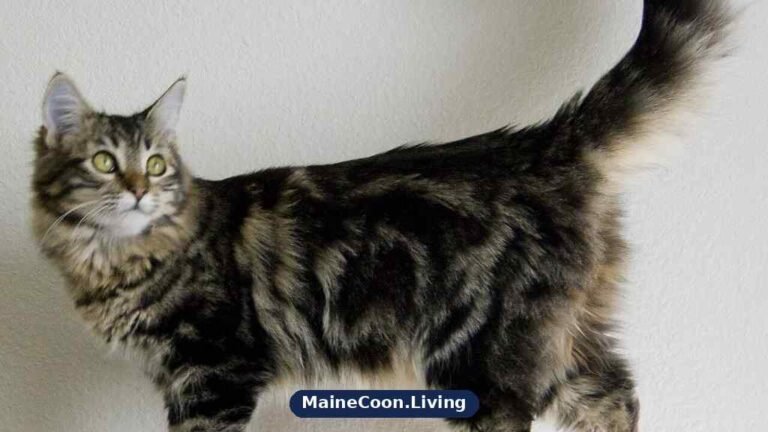
A young Maine Coon kitten wears a soft, fine and rather fluffy coat that is built for warmth, not for show. It often looks lighter, duller and less defined than the coat the same cat will wear as an adult.
The adult coat develops slowly, with a denser undercoat and longer guard hairs over the top. The ruff around the neck, the britches on the back legs and the full plume of the tail can take well over a year to arrive.
Because Maine Coons mature slowly, this swap is gradual rather than dramatic. You rarely wake up to a different cat, but photos taken six months apart can look like two related cats rather than the same one.
The breed material from TICA, The International Cat Association, makes the same point about slow development. TICA notes that Maine Coons do not reach full maturity until around four years of age, and that the young kitten coat is thinner and shorter than the mature two layered coat.
Why kittens often look lighter
Kitten fur holds pigment less densely than adult fur, so many kittens look washed out at first. Brown tabbies can look greyish, red kittens can look pale apricot, and black kittens can look charcoal or even slightly brown.
As the adult hairs grow in, the colour usually looks richer and more even. This is one reason I tell friends not to judge a kitten by its eight week colour alone, because that early shade is often the palest version you will ever see.
Ghost tabby markings on solid kittens
One of the most confusing changes is the appearance of faint stripes on a kitten sold as a solid colour. These soft, shadowy bars are often called ghost markings, and they are very common in solid black, blue, red and cream kittens.
The markings show because young solid coloured cats do not always mask their underlying tabby pattern completely. In bright light you might see rings on the tail, bars on the legs and a faint pattern along the sides, even though the kitten is genetically a solid.
In most cases those ghost markings fade as the adult coat thickens and the pigment becomes more even. By six to twelve months they are often hard to see except in strong sunlight, and in many cats they disappear from everyday view altogether.
Red and cream kittens are the main exception to keep in mind. Red based solids often keep visible tabby markings into adulthood more than black or blue cats do, so a red kitten with clear stripes may well stay a visibly marked cat.
If you want the wider picture of how colours and patterns are grouped, our guide to Maine Coon colours is a helpful place to start. It shows how solids, tabbies, smokes and silvers sit alongside each other in the breed.
How tabby patterns settle
True tabby kittens do not lose their pattern, but the pattern does change in presentation. Markings that looked smudged and wide on a small round kitten often look crisper and more separated as the body lengthens and the adult coat grows in.
Torbie: tabby plus tortoiseshell
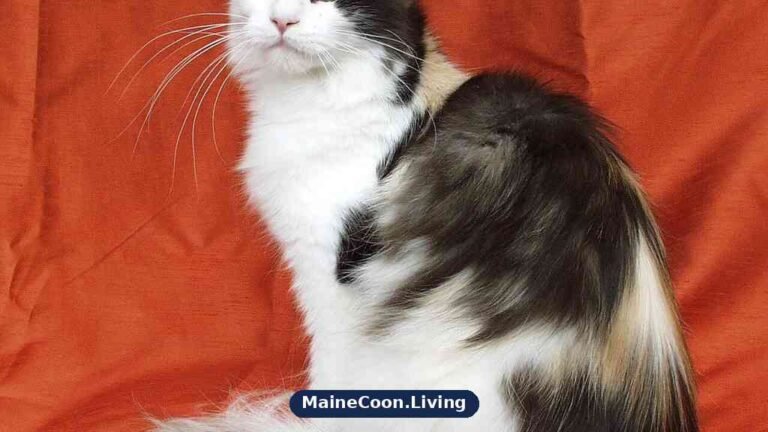
A torbie is a tortoiseshell with a tabby pattern laid over it, and it is one of the most striking coats in the breed. The red and black patches of a tortoiseshell each carry their own tabby markings, so the coat looks striped and patched at the same time.
Torbie kittens change as they grow in the same way tabbies do, with the pattern sharpening as the adult coat arrives. Our guide to tortoiseshell and calico Maine Coons covers the genetics behind the patches, and our tabby patterns guide shows how the stripes themselves settle with age.
Classic tabbies can show their swirls more clearly once the flank coat is longer and denser. Mackerel tabbies can look more cleanly striped as the kitten fuzz goes, while ticked tabbies may look plainer from a distance and more speckled close up.
Contrast can also shift with the seasons and with coat condition. A well groomed adult in a full winter coat will usually show stronger pattern contrast than the same cat in a thinner summer coat.
Smoke coats develop slowly
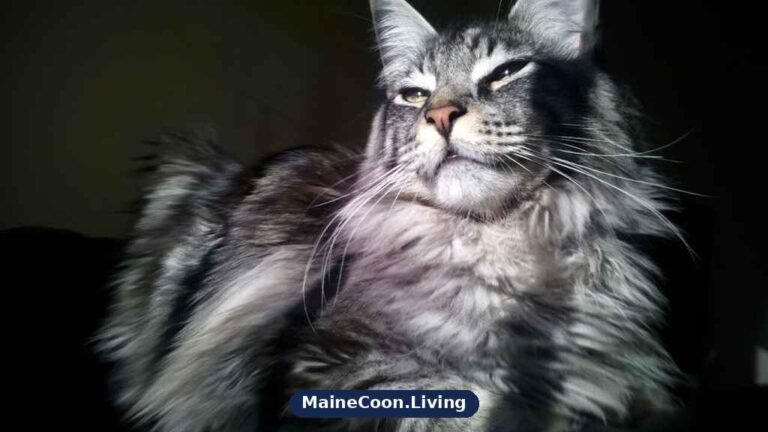
Smoke Maine Coons are the cats that change the most dramatically, in my experience. A smoke kitten can look almost solid at first, because the colour sits on the outer part of each hair while the root is pale.
As the coat grows longer, movement starts to reveal the contrast underneath. When the cat walks, turns or is brushed the wrong way, you see pale roots showing through the darker topcoat, which gives the smoke effect its name.
This effect builds over the first one to two years, not in the first few weeks. A black smoke or blue smoke kitten that looked plain at ten weeks can look striking at eighteen months, once the ruff and longer side coat hold enough length to show the two tones.
Parting the fur with your fingers is the easiest way to check a young smoke kitten. If the base of the hair is pale silver or white against a darker tip, the smoke is there, even if the kitten still looks solid in normal photos.
The time lapse above follows a silver tabby Maine Coon growing from a tiny kitten to an adult over ten months. Watch how the coat length, contrast and face change together, because colour never really changes on its own.
Silver coats and silver tabbies
Silver Maine Coons also tend to clarify with age rather than change colour outright. The silver factor lightens the base of the coat, so a silver tabby often looks brighter and cooler in tone as the adult coat replaces the softer kitten fur.
Young silver kittens can look dull or slightly smoky before the clean contrast arrives. Tarnishing, which is a warm or yellowish cast in parts of the coat, can also show more at some ages than others, so a kitten phase is a poor time to judge final silver quality.
Our dedicated guide to the silver Maine Coon goes deeper into how silver, shaded and smoke coats differ. If your kitten is silver or smoke, that guide will help you read what you are seeing as the coat develops.

The seven month stage in that photo is a useful reality check for new owners. The silvering is already clear, but the neck ruff, coat density and overall depth are still unfinished, and they will keep filling out for many months.
Eye colour changes too
Coat colour is not the only thing that moves in the first months. All Maine Coon kittens are born with blue eyes, and for the first few weeks that blue tells you almost nothing about the adult eye colour.
The change usually begins at about six to eight weeks of age. The blue softens into a mixed, hazy tone first, then the true colour builds gradually through green, gold, green gold or copper, depending on the cat.
For most kittens the eye colour is largely settled by around four months, although subtle deepening can continue for a little longer. White cats and cats with a lot of white can be the exceptions, as blue eyes or odd eyes are allowed in those colour combinations.
Odd eyes and white cats
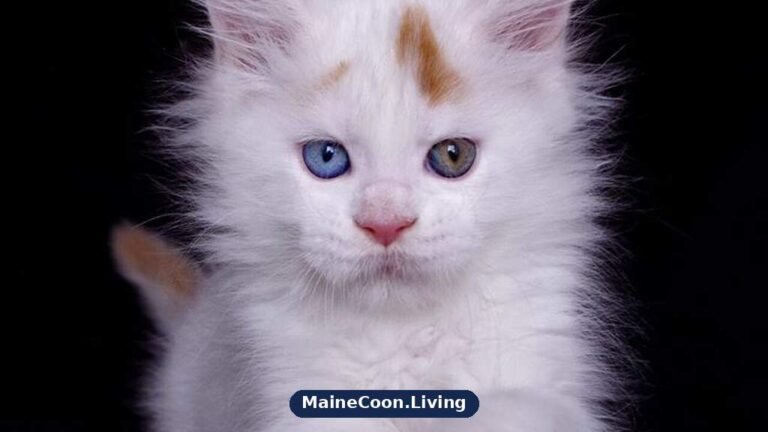
White cats and cats with a lot of white are the exceptions to the usual eye colour rules, because blue eyes and odd eyes, one blue and one gold or green, are allowed in those combinations. The eyes often finish changing later in these cats, so give them a few extra months before you decide what colour they will be.
White cats with blue eyes also deserve a hearing check, because the white gene is linked to deafness in some cats, and a breeder should be able to tell you whether hearing was checked. Our guide to Maine Coon eye colours covers the full range of shades and combinations, and it is the best companion to this section.
I cover the full range of adult shades, and how they pair with different coats, in our guide to Maine Coon eye colours. It is worth reading alongside this article, because coat and eye colour often finish developing on different timelines.
Sun lightening is real but modest
Strong sunlight can lighten a Maine Coon coat, especially on black and dark brown cats. Owners call the warm reddish cast that appears on a sun loving dark cat rusting, and you will usually see it first on the chest, flanks and tail.
This is a surface effect on the outer coat, not a change to the colour the cat was born with. When the lightened hairs shed and fresh coat grows in, the richer tone usually returns, particularly in the darker winter coat.
Indoor cats can show a milder version if they spend hours sleeping in a bright window spot. Good nutrition and regular grooming help the new coat come through evenly, but no diet will turn a genetically black cat into a brown one.
Changes after neutering or spaying
Many owners ask whether neutering or spaying changes coat colour, and the honest answer is that any effect is usually subtle. After surgery some cats gain weight more easily, and a fuller body and a thicker, softer coat can make the colour look slightly different in photos.
Hormonal changes can also affect how much a cat sheds and how dense the coat feels at certain times of year. That can make a tabby pattern look softer or a smoke effect look stronger for a while, without the underlying colour actually changing.
Online, this topic is often overstated, with normal kitten to adult development being blamed on the surgery. If your young cat was neutered at six months and looks different at one year, most of that difference would almost certainly have happened anyway.
Season and age effects
Even adult Maine Coons do not look identical all year round. The winter coat is usually longer, denser and deeper in tone, while the summer coat can look lighter, flatter and less dramatic, especially around the neck and tail.
Older cats can also grey a little around the muzzle and face, just as many animals do. That slow frosting is normal ageing, and it is different from the planned colour development you see in the first two years.
When a colour change is a vet question
Slow, even change over months is development, but a sudden change is worth a vet visit. A coat that turns dull, patchy or thin, sudden white hairs appearing in a young cat, or colour change paired with weight loss, itching or sores all point to something beyond the normal coat cycle.
Skin and coat are often the first place illness shows in a cat, because the body spends its resources elsewhere when it is unwell. Our guide to Maine Coon health problems explains the conditions vets watch for in this breed, and a coat that changes suddenly is a reasonable reason to book a check.
Taking photos in the same light every few months is the best way to see what is really happening. Phone cameras change exposure and warmth automatically, so two pictures taken in different rooms can exaggerate a colour change that is actually quite small.
What a breeder can predict
A good breeder can predict a lot, because coat colour follows genetics rather than guesswork. If both parents are known, the breeder can usually tell you which colours and patterns are possible in the litter, and which are impossible.
The genes behind the change
Four gene families do most of the work behind the changes in this guide. The agouti gene decides whether the tabby pattern shows, the dilution gene softens black to blue and red to cream, the inhibitor gene creates smoke and silver by lightening the base of each hair, and the orange gene decides red and cream.
You do not need to memorise the symbols to use this, but knowing they exist helps you read a pedigree. The UC Davis Veterinary Genetics Laboratory offers coat colour testing for cats, and a breeder who has tested their lines can tell you which colours a pairing can actually produce, rather than guessing from photos.
Parent colours are the best guide you have when choosing a kitten. Seeing the mother and, if possible, the father, or clear photos of both, will tell you more about likely adult tone and pattern than any single kitten photo ever will.
An experienced breeder can also read early clues that most buyers miss. Root colour in a smoke kitten, the clarity of tabby markings under the fluff and the way the eye colour is turning all help narrow down how the adult will probably look.
What a breeder cannot promise
What no honest breeder can promise is an exact adult shade from one early kitten photo. Lighting, camera settings, kitten fluff and age all distort colour, and two littermates with the same genetics can still present their colour a little differently.
Genetics sets the colour and pattern a cat carries, while presentation is how strongly that colour shows at a given age. A kitten can carry smoke or silver in a way that is barely visible at eight weeks and very obvious at eighteen months.
Reading the pedigree colour code
Pedigrees describe colour in code, and the code is worth learning if you are choosing a kitten. In the TICA system, n means black, a means blue, d means red, e means cream, f means tortoiseshell, and an s after the code, as in ns, means the cat carries silver.
That code is the registered colour, and it is a fact you can check against the parents, unlike a photo. The TICA Maine Coon breed page lists the colours the breed is recognised in, and it is a useful cross check when a seller describes a kitten in words that sound rarer than the code suggests.
Be cautious with anyone who guarantees a rare sounding shade, promises that ghost markings will certainly vanish, or charges far more based only on a predicted adult colour. Ask for the registered colour description and photos of both parents instead, because those are facts you can check.
How to track the change at home
Start a simple photo record when your kitten comes home, ideally in natural light near the same window. One photo a month is enough, and a short note about age, season and any grooming or diet change will help you interpret the pictures later.
Part the coat once a month on the side and chest and look at the roots. That quick check tells you more about smoke, silver and overall coat health than the surface colour alone, and it helps you spot matting early in longer areas.
Most of all, enjoy the in between stages rather than waiting for a finished cat. Maine Coons take years to mature, and watching the coat, eyes and ruff arrive in stages is one of the quiet pleasures of living with this breed.
Frequently Asked Questions
Do Maine Coon kittens change colour or just get darker?
Most kittens do not switch to a different base colour, but their tone often deepens and looks richer as the adult coat grows in. Patterns can also sharpen, ghost markings can fade, and smoke or silver undercoats can become much more visible over the first two years.
At what age does a Maine Coon coat stop changing?
The biggest coat changes happen in the first year, and smoke and silver effects can keep developing into the second year. Because Maine Coons mature slowly, the full ruff and adult coat density may not be complete until two to three years of age.
Will ghost stripes on my solid kitten disappear?
In most solid black, blue and similar kittens, ghost tabby markings fade a lot as the adult coat thickens and pigment evens out. Red and cream solids are more likely to keep visible markings into adulthood, so their stripes may soften rather than vanish completely.
When do Maine Coon kittens eyes change colour?
Kittens are born with blue eyes, and the change usually starts at about six to eight weeks of age. The adult colour, often green, gold or copper, is largely settled by around four months, although the shade can deepen slightly after that.
Can neutering change my Maine Coons coat colour?
Neutering or spaying does not change the colour a cat was born with. It can affect weight, shedding and coat density a little, which may make the colour look slightly different, but most changes owners notice at that age are normal kitten to adult development.