
Maine Coon Persian Mix: Looks, Coat and Health Notes
People fall for this cross in photos, and I understand why. You get the soft Persian look with the size and presence of a Maine Coon, and the result can look like a small lion with a gentle face.
I am Umar, a Maine Coon owner and enthusiast, and this is the mix I warn friends about for one honest reason. The coat work is real, it is daily, and no breeder photo prepares you for what happens when you skip it.
This guide covers what these cats tend to look like, how the face can vary, and where the health watch points sit on each parent side. Nothing here is a promise, because a mix is a range, not a fixed breed standard.
What This Cross Actually Is
A Maine Coon Persian mix is a cross between two long haired parent breeds with very different builds and faces. The Persian brings density, a round head, and a calm indoor nature, while the Maine Coon brings length, a strong muzzle, and a sociable streak.
There is no single registry standard for this cross, so kittens in one litter can lean in different directions. One may look mostly Persian with a slightly longer nose, while a sibling may look mostly Maine Coon with a softer and thicker coat.
That is why I always talk about tendencies from the parent breeds rather than certain outcomes. Coat length, face shape, size, and temperament all sit on a sliding scale, and you only see the adult picture clearly after the first year or two.
How They Tend To Look
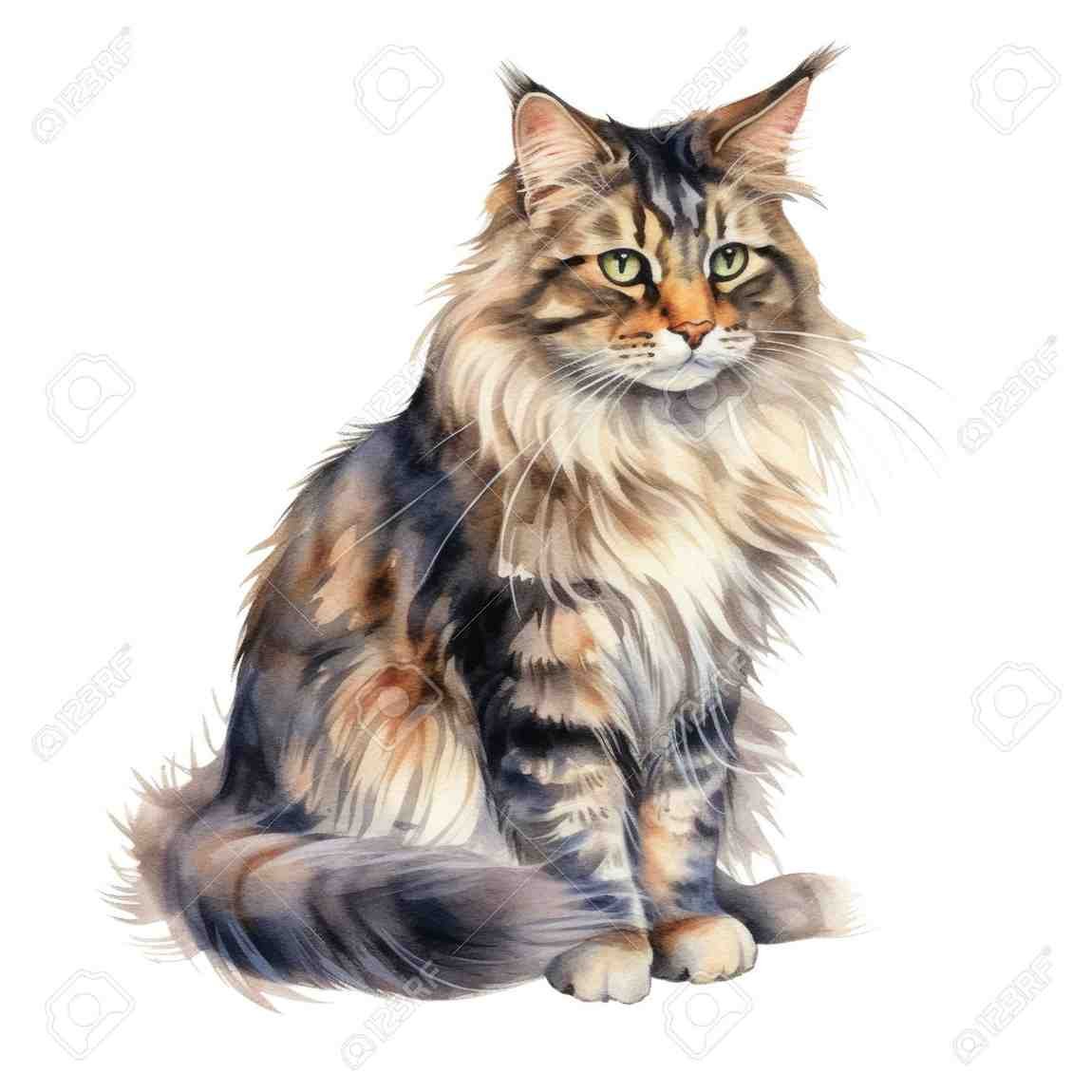
Most crosses I have seen described or met are medium to large cats with a lot of coat making them look even bigger. The body often sits between the compact Persian build and the long rectangular Maine Coon frame.
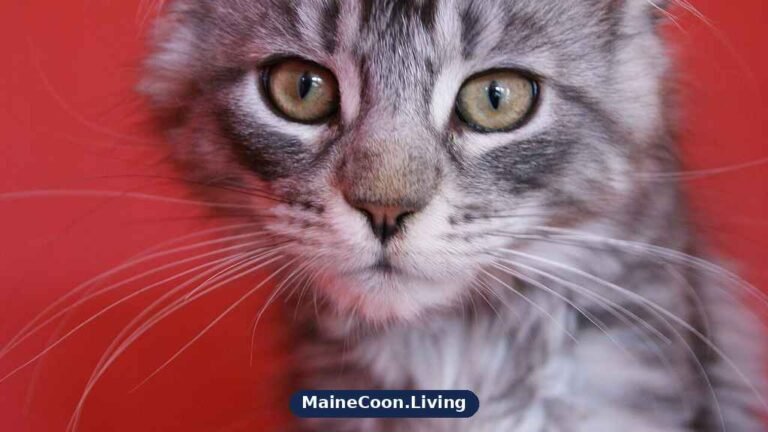
Eye colour follows the coat and the parent lines, and the eyes themselves tend to look large and round. Ear size and furnishings vary too, with some cats keeping clear Maine Coon ear tips and others showing smaller and rounder Persian style ears.
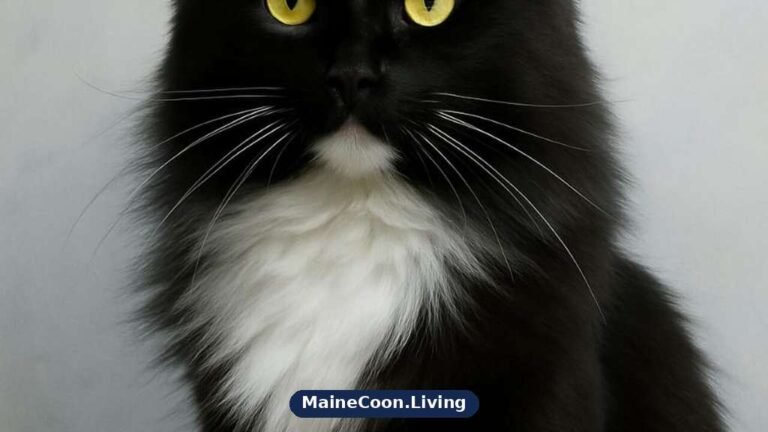
Colour is wide open because both parent breeds come in many colours and patterns. Tabby markings, solid colours, and mixed colour coats all appear, so colour alone tells you almost nothing about the mix.
On size, expect a medium to large cat with a lot of coat making it look even bigger. The Persian is a medium sized, stocky breed while the Maine Coon is long and heavy, so the mix usually lands between the two, with the coat doing a lot of the visual work. Growth is slow, and you only see the adult picture clearly after the first year or two, so do not judge final size at six months. Our guide to Maine Coon size and our weight by age numbers show the Coon side month by month.
The Coat, In Honest Detail
This is, in my view, the heaviest grooming load of the common Maine Coon mixes. Persian density and a fine cottony undercoat meet Maine Coon length, and that combination tangles faster than either parent coat on its own.
A pure Maine Coon coat is often silkier, with guard hairs that shed water and resist tight matting when you comb weekly. Persian undercoat is softer and denser, and when a cross inherits a lot of it, the coat packs down close to the skin and forms knots in hidden places.
The trouble spots are predictable once you know them. Behind the ears, under the front legs, along the belly, and around the back legs are where small tangles turn into solid mats if you miss a few days.
Shedding is also heavier than many new owners expect, especially during seasonal coat changes. Loose undercoat that is not combed out does not just fall away cleanly, it often catches in the longer coat and starts the next mat.
Daily Combing Is The Reality
For most of these cats, daily combing is not optional if you want to keep the full coat in good condition. Ten to fifteen minutes a day with a steel comb, working down to the skin in small sections, prevents most problems before they start.
A brush alone often slides over the top and leaves the undercoat untouched. I learned with my own Maine Coon that the comb tells the truth, because it catches the small tangles that your fingers and a soft brush both miss.
Start combing as a kitten routine, in short and calm sessions with rewards at the end. An adult cat that has never been combed properly will not thank you for a long first session, so building the habit early matters more than any tool you buy.
My full routine for long coats is in my guide on how to groom a Maine Coon cat, and the same section by section method suits this mix. For this cross you simply do it more often, and you pay closer attention to the dense areas behind the ears and under the arms.
Bathing helps some of these cats every few weeks, because a clean coat separates more easily and mats less quickly. Use a cat safe shampoo, rinse very thoroughly, and dry the undercoat fully, since damp packed undercoat can felt together as it dries.
The video below shows Persian coat care up close, including the bathing and drying work behind a full coat. Watching a proper Persian groom helps you judge the time involved far better than any written estimate.
Professional Grooming And Costs
Many owners use a professional groomer every six to eight weeks for a bath, a full comb out, and a tidy trim around the back end. Prices vary a lot by city and by coat condition, but you should budget for regular paid grooming as part of the cost of this mix, not as an emergency extra.
A matted coat costs more to sort out, and tight mats sometimes have to be clipped out for the cat comfort and skin health. Clipping a mat at home with scissors is risky because the skin lifts into the mat, so that job belongs to a groomer or a vet.
Some owners choose a shorter clip for part of the year to make daily life easier. There is no shame in that choice, and a shorter coat that you can maintain kindly is better than a long coat that hurts when it is touched.
On price, keep the same honest frame as the rest of this guide. A mix should not cost pedigree money, because there is no registration or show value behind the label, and many of these mixes come from rescues at adoption fees. Budget for grooming as a running cost, not a one off, and our guide to Maine Coon prices shows the wider cost picture. If a seller charges pedigree prices for a cross, ask what health testing and paperwork justifies it, and our guide to adopting a Maine Coon covers the rescue route.
A Face That Can Go Either Way
Face shape is where this cross varies the most, and it matters for more than looks. At one end a cat can be near Persian flat, with a short nose and a round head, and at the other end a cat can show the full broad Maine Coon muzzle.
Most crosses land somewhere between those two ends. You might see a moderate muzzle with a slightly shorter nose than a pure Maine Coon, paired with round eyes and a softer profile than either parent shows alone.

Ask to see both parents if you are considering a kitten, and look at their faces as much as their coats. A kitten face changes with growth, but two flatter faced parents make a flatter faced litter far more likely.
Jaw shape follows face length, and shorter jaws leave less room for teeth. I cover dental crowding below, but it starts here, because the same shorter face that looks sweet in kitten photos can crowd the mouth as an adult.
Tear Staining, Explained Plainly
Tear staining is the reddish brown marking that builds up in the fur below the eyes, and it is very common at the flatter end of this cross. Tears normally drain away through small ducts, and in a shorter face those ducts can be shorter, narrower, or less well aligned.
When drainage is poor, tears spill onto the face instead of draining away out of sight. On light coloured fur the damp area stains over time, and if it stays damp it can also irritate the skin in the fold below the eye.
Daily eye wiping is the simple answer for most cats. Use a soft damp cloth or a vet approved eye wipe, wipe gently below each eye once a day, and use a fresh part of the cloth for the second eye.
See your vet if one eye suddenly tears much more than the other, if the discharge turns thick or coloured, or if your cat squints or rubs the eye. Those signs can point to a blocked duct, an infection, or an irritated eye surface, and none of those are grooming problems to wipe away at home.
Breathing, Without Scare Talk
I want to handle breathing honestly and calmly, because it is a real watch point at the flatter end of this cross. A flatter face can mean narrower nostrils and a tighter airway, so breathing can take more effort, especially in heat, after play, or during stress such as travel.
That does not mean every cross with a shorter face will struggle, and it does not mean you should panic about a normal sleeping snore. Many of these cats breathe comfortably all their lives, and the face shape you can see is only part of the airway picture.
What I advise is simple observation and an early vet conversation. Mention any loud breathing, open mouth breathing at rest, poor heat tolerance, or exercise that stops quickly, and let your vet judge what is normal for your individual cat.
Keep a flatter faced cat cool in summer, avoid play in the hottest part of the day, and never leave any cat in a hot car or a stuffy room. Those are sensible steps for any long haired cat, and they matter a little more when the airway is narrower.
Health Watch Points
On the Persian side, the best known inherited risk is polycystic kidney disease, where cysts form in the kidneys and can grow over time. The Cornell Feline Health Center page on polycystic kidney disease explains how it is inherited in Persians and why testing breeding cats matters so much.
A DNA test exists for the known Persian kidney mutation, so ask any breeder for the test results for both parents in writing. A cross from a tested clear Persian parent is in a very different position from a cross where nobody ever tested and nobody can tell you.
Hypertrophic cardiomyopathy, a thickening of the heart muscle, is a watch point linked to both parent sides of this cross. It can develop without early outward signs, which is why regular vet checks and listening to the heart matter, and why a breeder who screens breeding cats is worth waiting for.
Hip dysplasia comes mainly from the Maine Coon side, where large joints and fast growth put real load on the hips. Watch for stiffness after rest, reluctance to jump, or a change in gait, and keep your cat at a healthy weight so the joints carry no extra burden.
Dental crowding is the quieter issue in shorter jaws, where teeth sit too close, trap food, and build tartar faster. Lift the lip at home from time to time, expect dental checks at every vet visit, and budget for a professional dental clean if your vet advises one.
None of this list means a mix will develop these problems, and I am not a vet, so treat this as a screening checklist rather than a diagnosis. The practical move is the same in every case, which is to ask for parent health records before you commit and to keep up routine vet care afterwards.
For PKD, the detail that matters is inheritance. Polycystic kidney disease in Persians is autosomal dominant, which means one copy of the faulty gene is enough, and Cornell explains how PKD is inherited in Persians and why testing breeding cats matters so much. A DNA test exists for the known Persian kidney mutation, and UC Davis lists Persians and Persian crosses among the cats appropriate for the PKD1 DNA test, so ask for the test results for both parents in writing. For HCM, which is linked to both parent sides, ask for the Maine Coon MYBPC3 A31P DNA test plus an echocardiogram, since Cornell notes that a DNA test alone cannot diagnose HCM, and ask for hip screening before breeding on the Maine Coon side.
Temperament Tendencies
Temperament is where this cross often shines, because Persian calm tends to soften nicely with Maine Coon sociability. Many owners describe a cat that follows the household at a gentle pace, joins in without being frantic, and settles close by in the evening.
The Persian side brings a preference for routine and a quieter home rhythm. The Maine Coon side brings curiosity, soft chirping and trilling sounds in some cats, and a habit of staying near their people rather than hiding away.
Play style is usually moderate rather than wild, with short active spells and long comfortable rests between them. Individual cats still vary a lot, and early social handling as a kitten shapes confidence just as much as parentage does.
These cats often suit calm homes where someone is around for much of the day. A noisy and unpredictable home is not impossible, but a cross leaning Persian may take longer to relax in it and will value a quiet corner of its own.
With children and other pets, these mixes are usually tolerant when introductions are slow and the cat can always walk away to a quiet corner. Our guide to the best cat companions for Maine Coons covers multi cat homes, and our guide to Maine Coon temperament covers the sociable side this cross often inherits.
Life At Home, Day To Day
Plan your day around two small jobs, which are the morning comb through and the quick eye wipe. Neither job is hard on its own, but together they are the daily contract you sign when you choose a coat and a face like this.
Give this cat sturdy scratching posts, a large litter tray, and climbing space sized for a bigger and heavier cat. Maine Coon size can hide under Persian fluff, and standard small cat furniture is often outgrown within the first year.
Food and weight deserve steady attention because a heavy coat hides weight gain until it is well advanced. Feel the ribs with your hands at combing time, follow your vet guidance on portions, and treat combing as a health check as well as a beauty routine.
Telling If A Cat Is Really This Mix
Identification honesty matters here, because a long coat and a round face do not prove any particular parentage. Many ordinary long haired cats look Persian influenced, and many large fluffy cats get called part Maine Coon with no evidence at all.
Real evidence is paperwork from a breeder who kept records, knowledge of both parents, or a reputable DNA test that reports breed ancestry. My guide on how to tell if your cat is part Maine Coon walks through the signs people use and explains which ones hold up and which ones do not.
If you adopted your cat and the history is unknown, love the cat in front of you and use the parent breed tendencies as care guidance only. A shelter label is often a best guess based on looks, and there is nothing wrong with that as long as nobody presents the guess as a fact.
Is This Mix Right For You
Choose this cross if you genuinely enjoy grooming time and can protect it every single day, including busy weeks and holidays. Be honest with yourself here, because the cat wears the consequences of an optimistic answer for the next decade or more.
Look elsewhere if you want a low maintenance coat, if your home is very hot without cooling, or if regular vet screening and grooming costs strain your budget. There are wonderful cats with far easier coats, and matching the cat to your real life is the kindest decision you can make.
Frequently Asked Questions
How much grooming does a Maine Coon Persian mix need?
Most need combing every day for ten to fifteen minutes, working down to the skin with a steel comb. Many also need a bath every few weeks and a professional groom every six to eight weeks to keep the dense undercoat under control.
Do Maine Coon Persian mix cats have flat faces?
Some do and some do not, because face shape in this cross sits on a wide range. One cat may be near Persian flat while a sibling shows a clear Maine Coon muzzle, and most land somewhere between the two.
Why does my Maine Coon Persian mix get tear stains?
Tear stains happen when tears spill onto the fur below the eyes instead of draining away normally. In flatter faces the tear ducts can be shorter or narrower, so daily gentle wiping keeps the area clean and dry.
What health problems should I watch for in this mix?
Watch for polycystic kidney disease from the Persian side and heart disease linked to both parent breeds. Hip problems from the Maine Coon side and dental crowding in shorter jaws also belong on your regular vet checklist.
Are Maine Coon Persian mix cats calm or sociable?
Most tend to be both, with Persian calm softened by Maine Coon friendliness. Many follow their people from room to room at a gentle pace and settle nearby rather than demanding constant attention.