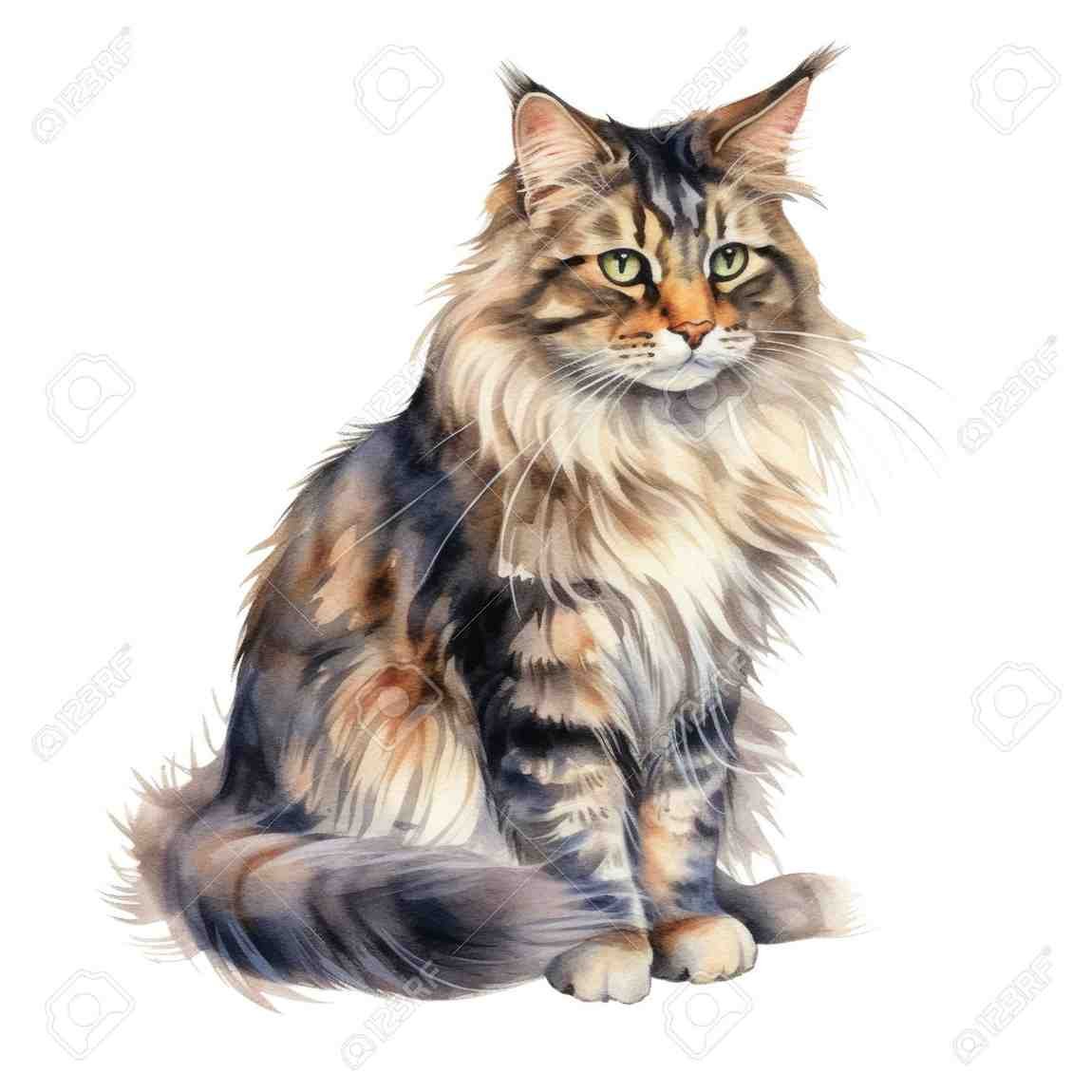

Maine Coon Tabby Patterns: Classic, Mackerel and Ticked Explained
Stand a tabby Maine Coon side on in good daylight and the coat tells you a story. Swirls, thin stripes or an almost plain speckled finish can all belong to the same breed. The difference is the tabby pattern, and once you learn to read it, you stop guessing.
I am Umar, and I write this as an owner who has spent far too long staring at flanks at kitchen tables. I am not a geneticist or a judge, just an enthusiast who learned to look properly. This guide keeps the science plain and the checking practical.
Tabby is a pattern, not a colour and not a breed. A Maine Coon can be brown, silver, red, blue or cream and still wear one of these patterns. You name the colour first, then the pattern, which is why descriptions sound long at first.
Start With the Sides
The sides of the body give you the honest answer. Faces, legs and tails look similar across all tabbies, so they can pull you in the wrong direction. Turn the cat broadside, smooth the long coat flat with your hand, and look at the flank.
Ask one simple question about that flank. Are the markings wide and swirling, thin and straight, or mostly missing? Those three answers lead you straight to classic, mackerel or ticked.
Our full Maine Coon colours and patterns hub sets out how colour and pattern fit together across the breed. Keep it open if the colour names are new to you. Pattern is easier once colour stops crowding your attention.
Classic Tabby, the Blotched Pattern
The classic pattern is also called blotched, and blotched is the word that helps most. Instead of neat thin lines, the markings are broad, dark and rounded. They loop and swirl across the sides like marble or slow smoke.
On a clear classic you can often find a round target or bullseye on each flank. A dark blotch sits near the middle, ringed by lighter ground colour and then by more dark marking. No two sides match perfectly, but the swirling feel is the same on both.
The Butterfly Between the Shoulders
The classic party trick sits between the shoulder blades. Lines running back from the head open out into a shape breeders call the butterfly, with upper and lower wings outlined on the shoulders. It is easiest to spot when the cat lowers its head and stretches forward.
From that butterfly, dark lines run along the spine toward the tail. The standard description in the CFA Maine Coon breed standard talks about those shoulder markings and the rings around the side blotch in detail. You do not need show language at home, but butterfly plus bullseye is a strong home test.
Classic markings need space, and a Maine Coon gives them plenty. That long, large body shows swirls that would look cramped on a smaller cat. It is one reason classic brown tabbies photograph so dramatically.
Mackerel Tabby, the Tiger Look
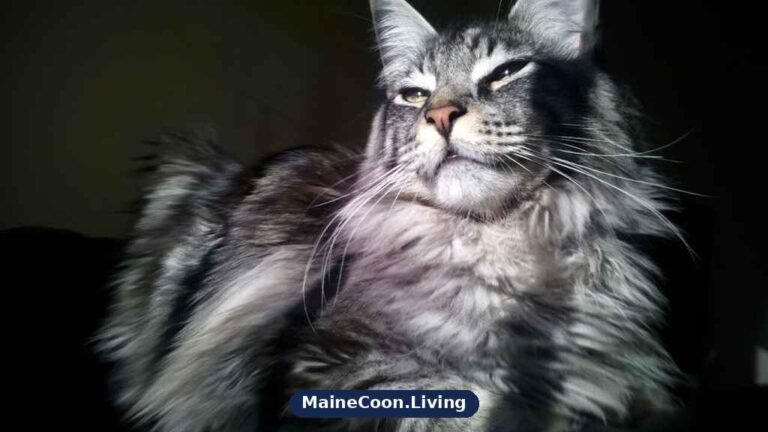
Mackerel is the striped pattern, and most people reach for the word tiger. Thin dark stripes run down the sides from the spine, fairly straight and fairly close together. They should stay mostly separate rather than melting into big blotches.
The name comes from the mackerel fish and its dark barred back. On the cat, a dark line along the spine feeds the side stripes, a bit like a fishbone. Look for lines you can follow one by one with a finger.

Mackerel stripes can be bold or fine depending on colour contrast. A silver mackerel tends to look crisp because the pale ground sets off the dark lines. A brown mackerel in winter coat can look softer, even though the same narrow striping is there.
Broken Stripes Happen
Real cats are rarely ruled with a ruler. Mackerel stripes often break along the lower flank or belly into short bars and spots. That broken look confuses many owners, who wonder if they have a spotted cat instead.
Judge the pattern where it is clearest, high on the side near the spine. If the top lines start as proper stripes and only break lower down, you are still looking at mackerel. Coat length matters too, because long fur drags stripes sideways and softens their edges.
Ticked Tabby, the Quiet One
Ticked is the pattern people miss, because the body carries almost no stripes or swirls. From across the room a ticked Maine Coon can look nearly solid. Up close the coat has a speckled, sandy sparkle that gives it away.
That sparkle comes from the hairs themselves. Each hair carries bands of light and dark colour along its length, an effect called ticking. Thousands of banded hairs side by side cancel out any big body pattern.
Part the coat on the back and look at single hairs in bright light. If each hair shows several bands and the skin below shows no bold pattern, you have found ticking. The face, legs and tail usually keep some barring, which is your confirmation.
Spotted Is Broken Mackerel
Spotted sounds like a fourth body pattern, and in some breeds it is treated that way. In Maine Coons, most spotted looking coats are mackerel patterns that have broken up. The stripes split into separate bars, ovals and dots, often in rough rows.
Follow those spots with your eye and you can often reconnect them into lines. Spots that line up like a dashed road are broken stripes, not random polka dots. Calling such a cat a broken mackerel is honest and accurate for everyday use.
Classic patterns can break up a little too, especially over the hips. The rule stays the same either way. Read the clearest area first, then name the pattern that the clearest markings describe.
The Genetics in Plain Words
Two ideas explain almost everything on this page, and neither needs a textbook. The first is the agouti gene, which acts like a switch for banded hairs. When that switch is on, the tabby pattern can show.
Agouti hairs are banded hairs, light in one stretch and dark in another. Where many banded hairs gather with more dark pigment, you see a stripe or swirl. Where the bands stay even across the coat, you see the quiet ticked finish instead.
The second idea is the tabby pattern locus, the place in the genes that shapes the layout.
The gene behind the layout has a name worth knowing: the tabby locus, and its two main versions are Mc for mackerel and mc for classic. Mackerel is dominant, so a cat needs only one Mc copy to show stripes, while classic is recessive, so a cat needs two mc copies to show swirls. That is why two mackerel parents can still produce a classic kitten.
Ticked plays by its own rule. Its version, usually written Ti, is dominant over both mackerel and classic and masks the body pattern, leaving only the face, leg and tail markings. Pets4Homes describes the same split, with the tabby gene deciding the layout and agouti deciding whether it shows at all.
Classic, mackerel and the pattern underneath ticked all trace back to variations at the same tabby locus. One set of instructions draws wide swirls, another draws narrow stripes.Ticked sits on top of the other two, which is the phrase breeders use for a good reason. A cat can carry classic or mackerel underneath and still look ticked on the surface. The ticked instruction masks the body pattern, leaving mainly the face, leg and tail markings.
That layering is why pattern names describe what you can see, not everything the cat carries.
A ticked cat may pass a hidden classic or mackerel pattern to its kittens.
The same layering explains a coat this page has not named yet: the torbie. A tortoiseshell whose coloured patches carry tabby striping is called a torbie, short for tortoiseshell tabby, and the red patches usually show the striping more clearly than the black ones. Our colours guide covers tortoiseshells themselves, so read the two pages together.
For the patched coats themselves, my guide to tortoiseshell and calico Maine Coons explains how the two colours share one coat, why nearly every tortie is female, and what a torbie really is.
Pedigrees write all of this in shorthand. Under the FIFe EMS system a classic tabby is 22, mackerel is 23, spotted is 24 and ticked is 25, so a black classic tabby reads MCO n 22. The FIFe EMS page lists every code, and once you can read one the rest of the pedigree opens up.
Home owners do not need breeding maths, but that one fact explains many surprises in litters.Colour genes sit apart from all of this and do their own work. They decide whether the markings read as black based brown, blue, red, cream or silver. That is why every pattern in this guide can appear in several different colours.
Red and cream cats break the usual rules in one useful way. The non agouti gene that makes a black cat solid cannot switch off tabby markings in red pigment, so every red and cream Maine Coon shows some tabby pattern, however faint it looks. A red cat advertised as solid is really a tabby whose markings are washed out, not a cat without a pattern.
That is also why tortoiseshells so often look striped in their red patches and plain in their black ones: the same gene is at work in both areas. Our orange Maine Coon guide covers red cats in full, and the genetics note on reds and creams explains the mechanism for readers who want the detail.
Markings Every Tabby Shares
Whichever pattern your Maine Coon wears, a set of smaller markings comes with the tabby package. The best known is the letter M on the forehead, formed by dark lines between the ears and above the eyes. Some Ms are crisp, others are smudged, but the lines are nearly always there.
Dark lines also run back from the outer corners of the eyes, like careful eyeliner. Many tabbies carry necklace lines across the upper chest, plus dark barring around the legs. On a long coated Maine Coon the necklaces can hide inside the ruff until you part the fur.
The tail finishes the set with dark rings around it and usually a dark tip. Count the rings when the tail is held up in daylight and they show clearly. These shared marks confirm a cat is tabby, even though they cannot tell you which pattern it wears.
That last point is worth holding on to. New owners often point at the M and think the job is done. The M says tabby, the flank says which tabby, and you need both halves of that sentence.
Kittens Can Mislead You
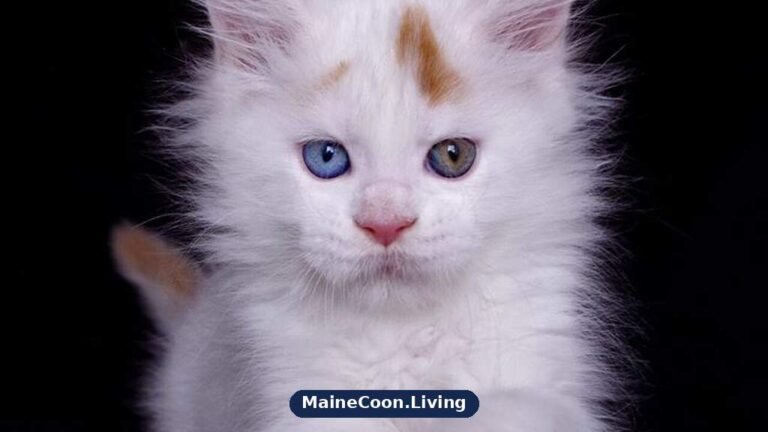
Kitten coats lie politely, and Maine Coon kittens lie for longer than most. The first coat is soft, fuzzy and short on contrast, so markings look washed out or smeared. A mackerel can look blotchy through the fuzz, and a classic can look like a plain blob.
Ghost markings make things trickier still. Young kittens often show faint tabby lines that fade as the adult coat comes in, even on cats that will look solid as adults. The opposite happens too, with quiet kitten markings sharpening into clear stripes by six months.
My own rule is to make no final call before twelve weeks, and a firmer one at five to six months.
Ghost markings deserve a word here too, because they fool more owners than any real pattern does. Many solid kittens wear faint tabby lines in their first months that fade as the adult coat grows in, so a striped kitten can still grow into a solid adult. Wait for the adult coat before you settle the label, and keep the photo diary going.
The same slow maturing applies to the coat as a whole, since a Maine Coon coat keeps developing well past the first year. Our colours guide explains how ghost markings and colour changes fit into the wider picture.
Photograph the kitten side on, in the same daylight spot, every few weeks. A little photo diary shows the pattern settling far better than memory does.Reading an Adult Coat
Adults are easier because the guard hairs are longer, denser and richer in colour. Smooth the flank flat, step back, and read the biggest shapes first. Big shapes beat tiny details every time when you are naming a pattern.
Season still plays a part in this slow maturing breed. A heavy winter coat can blur mackerel lines and deepen classic swirls, while a lighter summer coat sharpens everything. If a coat looks borderline, check again a few months later before you settle the label.
Age can soften contrast in senior cats as pigment lightens a little. The layout itself does not change, though, so an old classic stays a classic. Look at the shape of the markings, not just how dark they are.
Which Pattern Does a Brown Tabby Wear?
The brown tabby is the coat most people picture when they hear the breed name, and it wears any of the three patterns. In practice, the classic brown tabby is the textbook image, with coppery ground colour, black markings and those wide flank swirls. Plenty of brown tabbies are mackerel, though, and brown ticked cats exist too.
So brown names the colour, never the pattern on its own.
If the two patterns still blur together, try one simple test. Follow a single dark marking from the spine down towards the belly with your eye.
If it runs as one unbroken line, you are looking at mackerel, and if it curls back on itself into a swirl or a ring, you are looking at classic. Judge the clearest patch of flank, not the belly.
Contrast changes the answer your eyes give you, so check the same cat in daylight rather than lamplight. A silver mackerel looks crisp because the pale ground sets the stripes off, while a brown mackerel in heavy winter coat can look soft enough to mistake for classic. Our silver Maine Coon guide shows that contrast effect at its clearest.
Our guide to brown Maine Coon cats walks through the colour in depth, from ground colour to nose leather. Read it alongside this page and the full description, brown classic or brown mackerel, starts to feel natural.When you describe your own cat, say both halves out loud. Brown classic tabby, silver mackerel tabby and red ticked tabby are complete, useful descriptions. That small habit helps vets, groomers and breeders picture your cat before they ever meet.
A Simple Way to Check
Bring the cat into flat daylight and let it stand or lie side on. Smooth the flank, then look for swirls, stripes or speckling in that order. Finish by checking the forehead M, the leg bars and the tail rings to confirm the tabby basics.
If the coat still refuses to declare itself, part the hairs and check for banding. Strong banding with no body marks means ticked, whatever the face suggests. When in doubt, time is on your side, because Maine Coons mature slowly and the coat keeps clarifying.
None of this changes how you care for the cat in front of you. Pattern is description, not destiny, and it says nothing about temperament or worth. It is simply one more way to know your own cat properly, which is reason enough to learn it.
Frequently Asked Questions
What is the most common Maine Coon tabby pattern?
Classic and mackerel are the two patterns most owners meet, and both are common in pet Maine Coons. The brown tabby coat most people picture first is very often classic, with broad swirls on the sides. Mackerel brown tabbies are just as easy to find, so colour alone never tells you the pattern.
How can I tell if my Maine Coon kitten is classic or mackerel?
Look at the sides once the kitten coat starts to clear, usually from about eight to twelve weeks onward. Long unbroken swirls point to classic, while thin separate stripes point to mackerel. If you are still unsure, wait for the adult coat, because kitten fuzz can blur the difference for months.
Do ticked Maine Coons have stripes at all?
Yes, but mostly on the face, legs and tail rather than across the body. The body hairs carry light and dark bands, so the coat looks speckled instead of striped. Part the fur and look at single hairs in good light and the banding is easy to see.
Is spotted a separate Maine Coon tabby pattern?
In everyday language people do call some Maine Coons spotted, but the spots usually come from a mackerel pattern breaking apart. Where the stripes break into short bars and dots, the cat reads as spotted from a distance. It is best described as broken mackerel unless a breeder or registry uses a different label.
Does tabby pattern affect a Maine Coon personality or health?
No, the pattern is only about how markings are arranged on the coat. It does not change temperament, size or health needs. Choose and care for your cat as an individual, and judge health from testing and condition rather than from stripes or swirls.