
Maine Coon British Shorthair Mix: What to Expect
Some crosses blend two similar cats and the result is easy to predict. This one does the opposite, because it pairs a round, quiet, plush coated cat with a long, talkative, shaggy one. A Maine Coon British Shorthair mix sits somewhere between those two poles, and exactly where yours lands is part of the fun and part of the challenge.
I am Umar, a Maine Coon owner and enthusiast, and the Maine Coon side of this cross is the cat I know at home. Mine follows me, chirps at me, and takes up far more sofa than any cat reasonably should. A British Shorthair mix may do some of that, or almost none of it, and being honest about that range is the point of this guide.
Two Very Different Parents
The British Shorthair is a compact, cobby cat with a round head, full cheeks, and small rounded ears. Its coat is short, very dense, and plush, standing away from the body rather than lying flat. The TICA breed page for the British Shorthair describes a calm, undemanding cat that wants to be near you without needing to be carried or fussed over.
The Maine Coon is built on opposite lines, long and rectangular, with a strong muzzle, tall ears, and a flowing silky coat. It is one of the largest domestic cat breeds, and it tends to mature slowly over several years. Where the British Shorthair is reserved, the Maine Coon is usually sociable, playful well into adulthood, and surprisingly vocal in a soft, chirping way.
Put together, this is the contrast cross among Maine Coon mixes. Round meets long, short plush meets long silk, and quiet independence meets cheerful company keeping. Kittens from the same litter can lean different ways, so everything below describes tendencies from the parent breeds, never certainties about an individual cat.
What This Mix Actually Is
This mix is a crossbreed, not a recognised breed with a fixed standard of its own. There is no registry blueprint that says how the coat, face, or temperament must turn out. That is why two cats sold or adopted under the same label can look and behave quite differently from each other.
A first generation kitten, with one purebred parent of each breed, tends to show the blend most evenly. Later generations, or a mix bred back to one parent breed, usually lean harder toward one side. If you are comparing crosses, our guide to the Norwegian Forest Cat Maine Coon mix shows what happens when both parents are long coated forest breeds instead.
That variability is not a flaw, but it does change how you should shop or adopt. Ask about the actual parents, their health testing, and their temperaments, rather than relying on the mix name alone. The individual cat in front of you matters far more than the label on the listing.
Coat: Plush Meets Silk
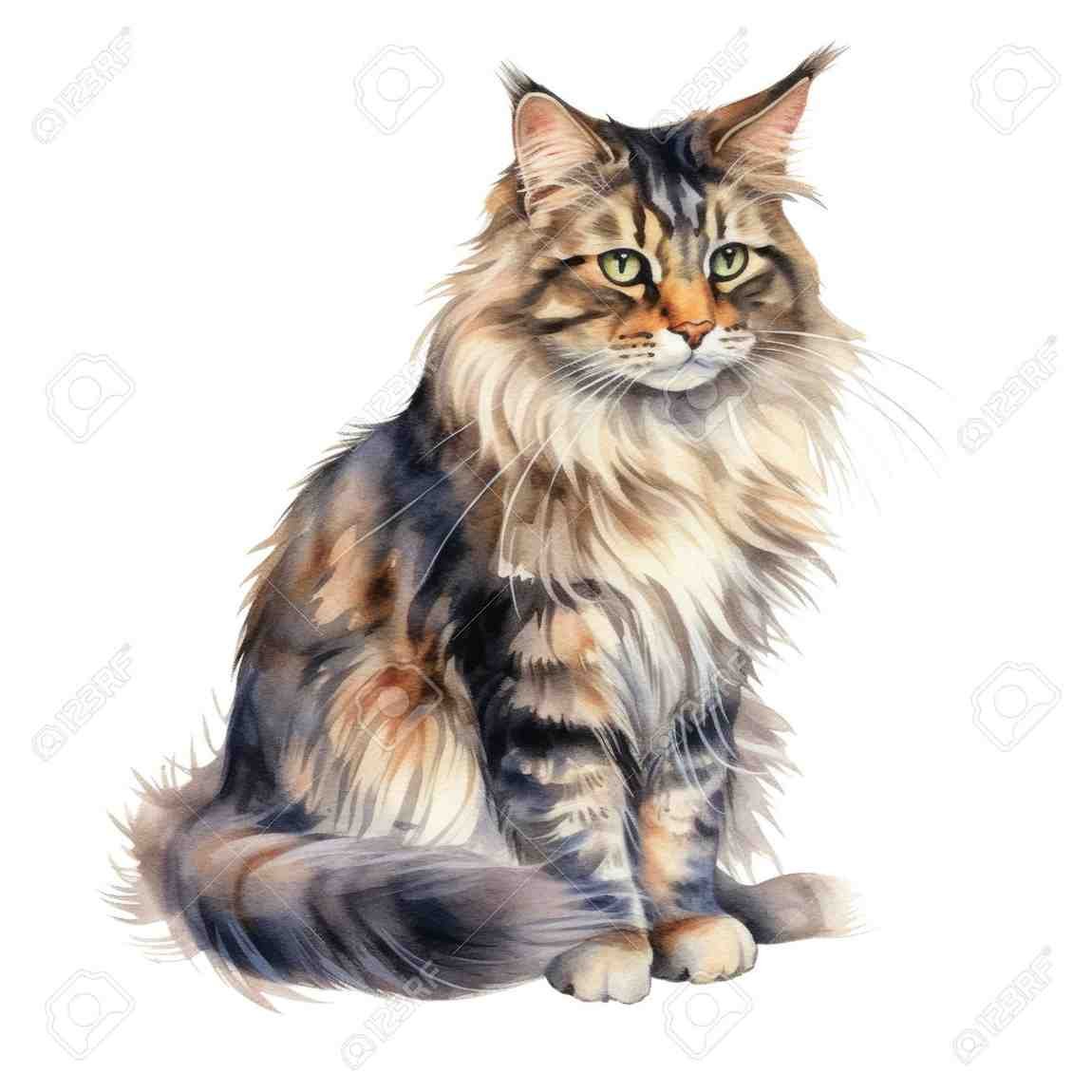
The most likely outcome is a medium to semi long coat that feels thicker than a pure Maine Coon coat. The British Shorthair side adds density and a plush undercoat, while the Maine Coon side adds length, a softer topcoat, and often a modest ruff. Many of these cats look like oversized plush toys for the first year, then fill out and lengthen as they mature.
Some kittens surprise everyone and stay closer to the short British coat, just with extra density. Others grow a genuinely long coat with britches on the back legs, a fuller tail, and longer fur between the toes. Coat length in a litter is a lottery, and a fluffy eight week old does not always stay the fluffiest adult.
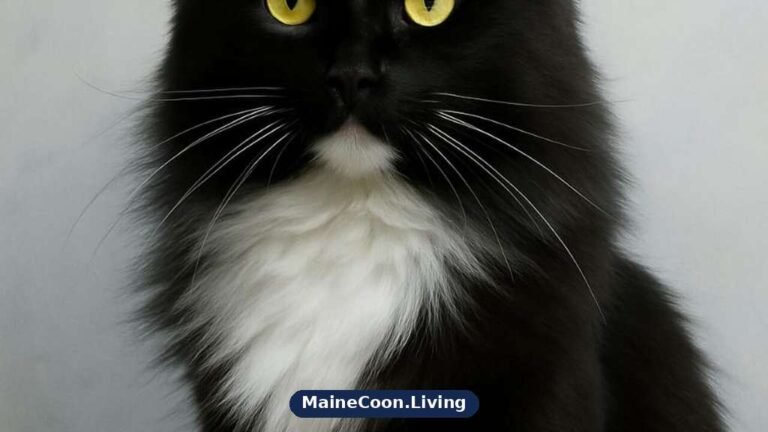
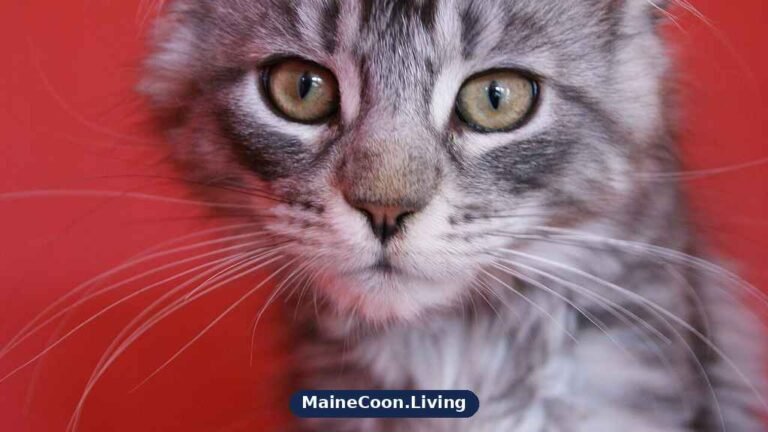
Colour and pattern can come from either side of the family. Blue, the famous British colour, is common in descriptions of this cross, but tabby, black, white, cream, silver, and bicolour all appear too. Eye colour often lands in the copper to gold range, though green and other shades show up depending on the coat.

Build, Face and Ears
Expect a sturdy, heavy boned cat that feels solid when you lift it, because both parent breeds carry real substance. The body often lands between cobby and rectangular, shorter and rounder than a pure Maine Coon but longer than a typical British Shorthair. Legs tend to be thick, paws tend to be large, and the tail is usually full without always reaching Maine Coon plume proportions.
The face is where the contrast shows most clearly at first glance. Cheeks are often fuller than a Maine Coon face, the head rounder, and the muzzle shorter and softer than the strong, squared Maine Coon muzzle. It is a broader, gentler expression overall, though a kitten that leans Maine Coon can still grow a fairly striking profile.
Ears usually fall between the two parents as well. They tend to be medium sized, wider at the base than British Shorthair ears, and sometimes lightly tufted at the tips. Full lynx tips and heavy ear furnishings appear in some cats, but they are a bonus to enjoy, not a feature to count on.
How Big Will Yours Get?
Most adults land in the region of 10 to 18 pounds, with males usually heavier than females. That puts the mix above the average house cat, even when it never reaches the size of a large male Maine Coon. A cat that leans British can finish nearer the lower end, while a long, heavy boned male can push past it.
Growth is slow on both sides of this family, so do not judge final size at six months. British Shorthairs and Maine Coons both keep filling out for years, and many mixes are still broadening at three years old. Judge size by the parents where you can, and expect a long kittenhood with several awkward, uneven growth spurts along the way.
Plan your home around a big cat from the start, even if your kitten looks modest. That means a large litter box, a sturdy tall cat tree with wide platforms, and carriers rated for a heavy adult. Buying once for the adult size saves money and saves your cat from outgrowing everything by its second birthday.
As a sense of scale, PetMD notes that male British Shorthairs can weigh as much as 17 pounds and females as much as 12 pounds, so the mix’s 10 to 18 pound range sits between a stocky British and a long Maine Coon. Growth is slow on both sides, and many mixes are still broadening at three years old, so judge size by the parents where you can and expect several awkward, uneven growth spurts along the way. Our guide to Maine Coon weight by age gives month by month numbers for the Coon side.
Temperament: Calm Meets Chirpy
The British Shorthair temperament is calm, patient, and quietly affectionate on its own terms. TICA notes that these cats prefer their feet firmly on the floor and usually dislike being carried around. They tend to sit beside you rather than on you, follow household routines, and wait patiently rather than demand attention.
The Maine Coon temperament pulls the other way, toward company, conversation, and involvement in everything. My own experience is of a cat who supervises cooking, greets visitors, and answers back with chirps and trills when spoken to. Many Maine Coons stay kittenish and clownish for years, which is a very different energy from the dignified British style.
A mix often settles in the middle, friendly and loyal without being clingy, and playful in bursts rather than all day. Some lean British and become serene, sofa side companions who rarely raise their voice. Others lean Maine Coon and trail you from room to room, so tendencies, not promises is the honest way to read every prediction in this section.
Being picked up is a common flashpoint, so watch your individual cat and respect the answer. A mix with strong British leanings may tolerate a brief lift and then ask politely to be put down. Letting the cat choose lap time usually builds far more trust than insisting on cuddles it never asked for.
The first weeks shape the adult more than most buyers realise. The primary socialisation window runs roughly from two to seven weeks of age, so ask the breeder how the kittens were handled in those weeks, what sounds, people and handling they met, and whether they were raised underfoot in the home. A kitten that met visitors, the vacuum and gentle grooming before twelve weeks settles into a new home far faster than one raised away from people, and no amount of patience later fully replaces that early start.
The video above follows a British Shorthair grooming routine in detail, and it is a useful taste of the plush coat side of this cross. Watching that dense coat being washed and dried shows why density, not just length, drives the work. Your mix may need less washing than a show cat, but the brushing lessons carry over.
Grooming Reality, Honestly
Do not believe anyone who calls this a low maintenance coat. A medium to semi long coat with a dense undercoat needs brushing two to three times a week in normal times, and daily during the spring and autumn coat changes. That routine lifts loose undercoat before it packs down into felted patches behind the ears, under the front legs, and along the belly.
The good news is that this coat usually mats less than a pure Maine Coon coat of the same length. The British density gives it more body and spring, so tangles tend to form slower and brush out easier. The bad news is shedding, which can be heavy, because you are brushing out a double helping of undercoat in season.
Start grooming in kittenhood, keep sessions short, and stop before your cat has had enough. Add nail trims, a weekly ear check, and attention to teeth, and you have the full routine. A cat that learns early that brushing means treats and calm handling will be far easier to care for at full adult size.
Use a steel comb and work down to the skin in sections, because a brush alone slides over the top and leaves the dense undercoat untouched. Our guide to the best brush for a Maine Coon shows which type does the job. For teeth, lift the lip at home from time to time and expect a dental check at every vet visit, and our guide to Maine Coon dental care covers the brushing routine that actually works.
Health Watch Points
Hypertrophic cardiomyopathy, usually shortened to HCM, is the watch point that appears on both sides of this cross. TICA stresses echocardiogram screening by a veterinary cardiologist for British Shorthairs, because the disease does not always show up in the early years. Maine Coons carry their own well known HCM risk, so a mix deserves the same serious approach to heart screening and regular vet checks.
Hip dysplasia comes mainly from the Maine Coon side, where large, heavy joints can develop poorly and lead to stiffness or arthritis. Keeping a big mix lean is one of the kindest things you can do for those hips and joints. Report limping, reluctance to jump, or a bunny hopping gait to your vet rather than assuming your cat is just lazy.
Weight gain is the everyday risk, and it comes mostly from the British Shorthair side. This is a calm cat with a hearty appetite and a talent for looking genuinely hungry ten minutes after a meal. Measure food, keep treats small and counted, and build short play sessions into every day, because extra pounds worsen both joint and heart strain.
None of this means the mix is unhealthy, and many live long, comfortable lives with ordinary care. It does mean breeder health testing matters, and that an untested bargain kitten can become an expensive heartbreak. Annual vet visits, dental checks, and honest conversations about screening are part of the real cost of this cross.
Ask for the screening by name on both sides. For the British side that means an echocardiogram by a cardiologist for HCM, and a DNA test for PKD1, because UC Davis lists the British Shorthair among the breeds appropriate for the PKD1 DNA test. For the Maine Coon side it means the MYBPC3 A31P DNA test plus an echocardiogram, since Cornell notes that a DNA test alone cannot diagnose HCM, plus hip screening before breeding and a DNA panel covering spinal muscular atrophy and pyruvate kinase deficiency. Ask for every result with the cat’s registered name and a date, not a verbal summary.
Living With One Day to Day
Expect a cat that fits calm homes well, keeps reasonable hours, and enjoys company without redecorating the house. Most mixes manage apartment life happily if they get vertical space, a window perch, and daily play. They are usually tolerant with respectful children and can live with dogs, especially when introductions are slow and the cat can always walk away.
Play style tends to be grounded rather than acrobatic, with floor toys, boxes, and short chases beating high flying leaps. A British leaning cat may watch a toy for a long time before committing, which I find funnier than any frantic game. Build play into the routine anyway, because a bored, under exercised mix is exactly the cat that gains weight.
Food, litter, and furniture all need scaling up for size and appetite. Offer measured meals rather than an always full bowl, and choose scratchers and trees that will not tip under a heavy adult. In return you get a big, soft, steady companion who is usually happy simply sharing the room with you.
Can You Tell One by Looks?
Honestly, no, looks alone cannot prove this cross. A round face, a plush coat, and a big frame can appear in ordinary domestic cats and in several other mixes, and a genuine mix can look almost entirely like one parent. Our guide to how to tell if your cat is part Maine Coon walks through the clues and their limits in detail.
The only solid proof is paperwork and parentage, meaning known parents, breeder records, or a DNA test read with care. Even DNA results are estimates built on reference populations, so treat a surprising percentage as information, not gospel. If a seller guarantees the mix from appearance alone, that confidence is a reason to ask harder questions.
None of that changes the value of the cat already living in your home. A possible mix with no papers is still the same affectionate animal it was before you wondered about its ancestry. Enjoy the detective work, but let the cat, not the label, set your expectations.
Is This Mix Right for You?
This cross suits someone who wants a large, calm, people oriented cat and accepts real grooming and real uncertainty. If you want a guaranteed lap cat, a guaranteed talker, or a guaranteed giant, a mix cannot promise you any of those. If you can love the middle ground, and enjoy finding out which parent your cat takes after, it is a rewarding combination.
Rescue is a genuine route to this mix, since big, plush, round faced cats turn up in shelters more often than people expect. You may never prove the parentage, but you will know the adult size and temperament before you commit. For many owners, that trade is the best version of this cross.
On price, keep the same honest frame as the rest of this guide. A mix should not be sold at pedigree prices, because there is no registration or show value behind the label, and most of these mixes come from rescues at adoption fees or from breeders at well below pedigree money. Our guide to Maine Coon prices shows what pedigree kittens actually cost, and our guide to adopting a Maine Coon covers the rescue route. If a seller charges pedigree money for a cross, ask what health testing and paperwork justifies it, and you can search adoptable cats at Adopt-a-Pet.
Frequently Asked Questions
How big does a Maine Coon British Shorthair mix get?
Most adults weigh between 10 and 18 pounds, with males usually larger than females. Growth is slow, and many cats keep filling out until they are three to four years old. A cat that leans toward the British Shorthair side often finishes smaller than one that leans Maine Coon.
Does a Maine Coon British Shorthair mix shed a lot?
Yes, shedding is moderate to heavy, especially during the spring and autumn coat changes. The dense undercoat from the British Shorthair side comes out in surprising amounts. Brushing two to three times a week keeps loose fur on the brush instead of on your furniture.
Are Maine Coon British Shorthair mixes affectionate?
Most are affectionate in a calm, undemanding way, preferring to sit beside you rather than on top of you. Some lean Maine Coon and follow their people around, chirping and joining in with daily life. Others lean British and show love quietly, so judge the individual cat rather than the label.
How much grooming does this mix need?
Plan on brushing two to three times a week, and daily when the coat is changing with the seasons. The medium to semi long coat mats less than a pure Maine Coon coat, but the thick undercoat still packs down if it is neglected. Short, gentle sessions started in kittenhood make the routine easy for most cats.
What health problems should I watch for in this mix?
The main watch points are HCM, a heart condition found on both sides of this cross, and hip dysplasia from the Maine Coon side. Weight gain is the everyday risk, because the British Shorthair side gains easily and extra pounds strain the heart and joints. Regular vet checks, heart screening where advised, and measured meals are the practical defences.