
Maine Coon Ragdoll Mix: Size, Temperament and Care
This cross comes up in conversation more than almost any other, and I am Umar, a Maine Coon owner, so I hear the same hopeful picture again and again.
People picture a huge, floppy, blue eyed cat who chirps like a Maine Coon and melts like a Ragdoll, all in one animal.That picture is partly right and partly wishful thinking, and the honest version is more interesting. A Maine Coon Ragdoll mix is a blend of two large, long coated, people loving breeds, but no kitten is a neat fifty fifty split of the two.
In this guide I will walk through how the cross usually looks, why the pointed coat works the way it does, and what size to realistically expect. I will also cover temperament as tendencies, the grooming load of two long coats, and the health points worth watching from both sides.
What This Cross Actually Is
A Maine Coon Ragdoll mix is simply a cat with one Maine Coon parent and one Ragdoll parent, or with ancestry from both breeds further back. It is a crossbreed, not a recognised breed with its own standard, show class, or predictable type.
That matters because there is no governing body setting what the mix should look like or how it should behave. One kitten in a litter may lean strongly toward the Maine Coon side, while a littermate leans just as strongly toward the Ragdoll side.
For a side by side look at the two parent breeds before we blend them, see my comparison of the Maine Coon vs Ragdoll. Reading the parents clearly first makes everything about the cross easier to judge honestly.
The same parent first thinking applies to the other popular cross, and my guide to the Maine Coon British Shorthair mix walks through how that chunkier, calmer blend usually turns out.
How the Cross Usually Looks
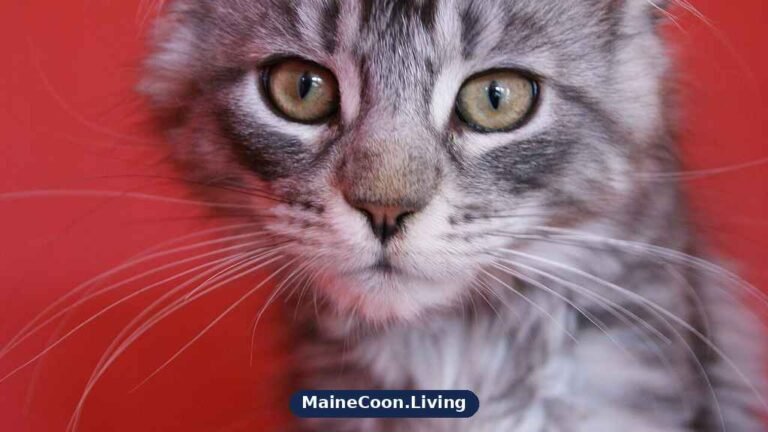
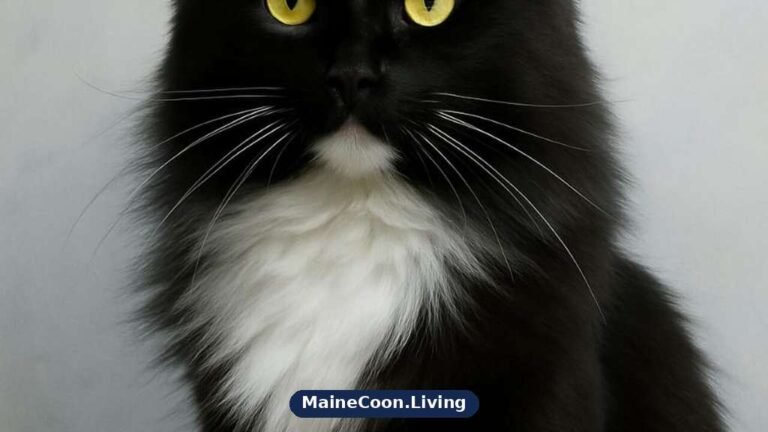
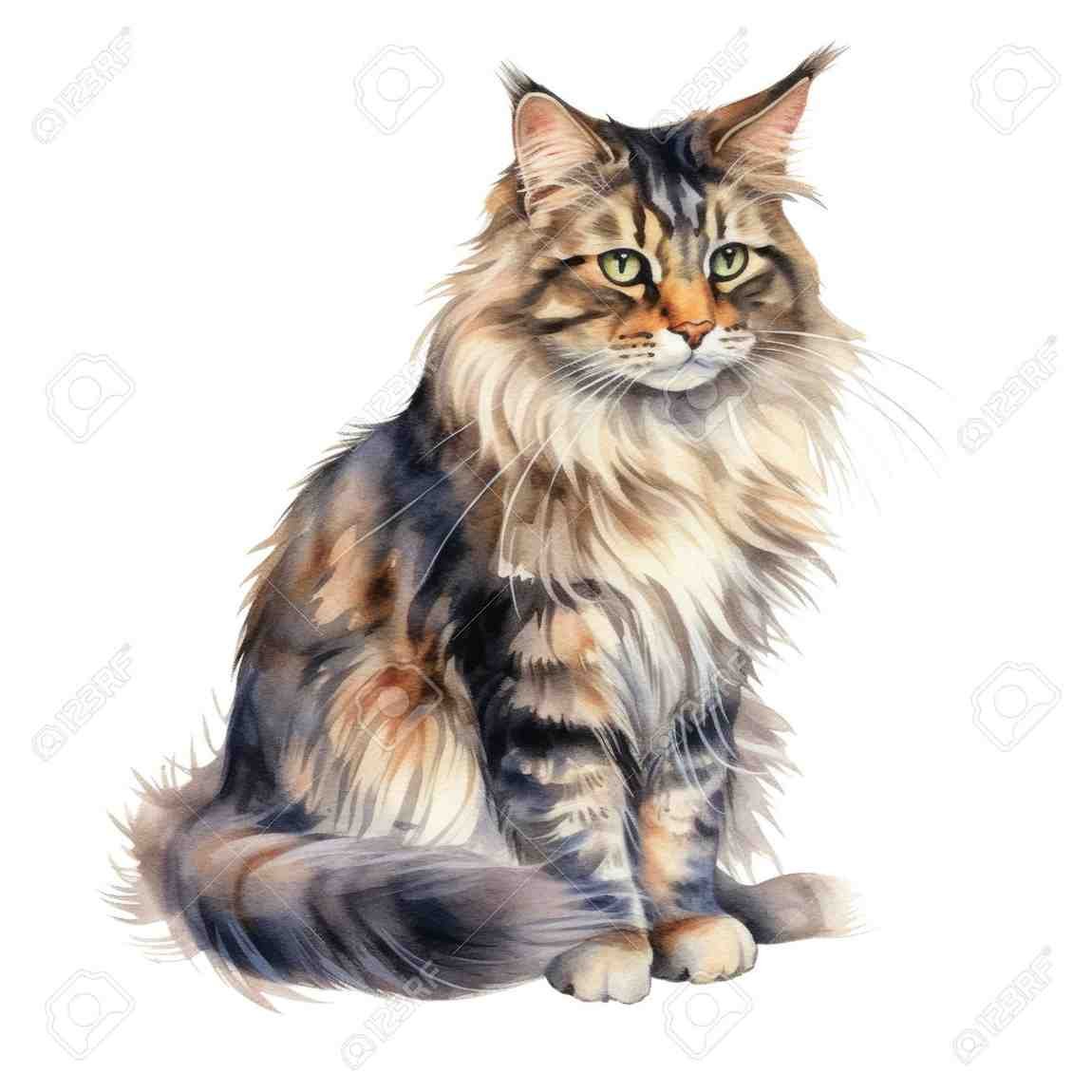
Most crosses I see described by owners are large, long bodied cats with a substantial chest, strong legs, and a long, plumed tail. The head often sits somewhere between the Maine Coon squarish muzzle and the Ragdoll broader, softer wedge.
Ear tufts and a neck ruff, two classic Maine Coon features, appear in many crosses but not in all of them. When they do appear, they often come in softer or smaller than on a pure Maine Coon, and the coat underneath tends to feel silkier.
The Ragdoll influence often shows in a rounder eye shape, a slightly softer expression, and a coat that lies smoother over the body. None of these clues on its own proves anything, and I will come back to identification later in this guide.

The Pointed Coat, Explained Plainly
This is the part most listings get wrong, so I want to state it clearly and correctly. True colourpoint pattern, with a pale body and darker ears, face, legs, and tail, comes from the Ragdoll side of this cross.
Colourpoint is recessive, which means a kitten needs two copies of the point gene, one from each parent, before the pointed pattern can show. A pedigree Ragdoll is pointed, so a Ragdoll parent always passes one copy of that gene to every kitten.
A typical Maine Coon is not pointed and, in a straightforward first cross, passes a normal full colour gene instead. The result surprises many buyers: first generation kittens from a pointed Ragdoll and a non pointed Maine Coon are usually not pointed at all.
Those non pointed kittens are not missing the Ragdoll influence, they are carrying it quietly. Every one of them carries a single hidden copy of the point gene, even though their own coats show full colour, tabby, tortoiseshell, or whatever pattern the Maine Coon side brought in.
Pointed kittens appear when a kitten manages to receive the point gene from both sides at once. That can happen if the Maine Coon parent happens to carry the gene unseen, or in later generations when a carrier cross is bred to a pointed cat or to another carrier.
So if you see a litter of solid or tabby kittens advertised from this cross, that is exactly what basic genetics predicts. And if you see a pointed kitten, ask careful questions about both parents, because that outcome tells you the gene came through from both lines.
Blue Eyes Follow the Points
Blue eyes and the pointed coat travel together, and this is where a lot of marketing quietly overpromises. A truly pointed kitten from this cross will have blue eyes, because the same gene that restricts pigment in the coat also leaves the eyes blue.
A non pointed kitten, even one carrying the point gene, does not get blue eyes from that hidden copy. Its eye colour follows the wider range seen in Maine Coons and other full colour cats, most often gold, green, or hazel tones.
That means a first generation litter will usually have gold or green eyed kittens, not a row of blue eyed lookalikes of the Ragdoll parent. Any seller promising blue eyes on every kitten from a first cross is promising something genetics does not support.
Mitted, Bicolour and the Names Sellers Use
Ragdolls come in three recognised patterns, and the names get borrowed loosely once a cross is for sale. Colourpoint is the pale body with darker points. Mitted adds white on the chin, chest, belly and paws. Bicolour adds a white inverted V on the face and white legs.
A first generation cross rarely shows a clean mitted or bicolour pattern, because the white spotting gene must arrive from the Ragdoll side in the right combination. A kitten with white paws is not automatically a mitted Ragdoll cross, so call it white markings, not a pattern name. The TICA Ragdoll breed page lists the three patterns, and our guide to Maine Coon colours explains how the same marking genes behave on the Coon side.
Coat Colours and Texture
Without points, the colour range opens up to almost everything the Maine Coon brings, including tabby patterns, solid colours, smoke, silver, and tortoiseshell. With points, in the litters where they do occur, expect the familiar Ragdoll colours such as seal, blue, chocolate, and lilac on the points.
The texture is usually a middle ground between the two parents, and honestly it is a pleasant one. The Ragdoll coat is famously silky with relatively little dense undercoat, while the Maine Coon coat is fuller, with a heavier undercoat built for cold weather.
A cross often ends up long and silky on top with a moderate undercoat underneath, rather than the full double coat of a Maine Coon. It still counts as a high maintenance coat, just for slightly different reasons, which I will cover under grooming below.
How Big Does the Mix Get
Both parents are among the largest domestic cat breeds, so a large adult is a reasonable expectation here. According to TICA and its Ragdoll breed page, Ragdoll males commonly weigh 15 to 20 pounds and females 10 to 15 pounds, and the breed takes up to four years to mature fully.
Maine Coons sit in a similar range, with males often heavier and longer than females and the same slow, multi year growth pattern. Put together, most crosses I would plan for land somewhere around 10 to 20 pounds as adults, with males at the top end.
Length and height follow the same pattern, with a long body that can look even bigger once the full coat comes in. Plan your home around the top of the range, not the average, because carriers, litter trays, and cat trees all need to fit the finished cat.
Growth is slow on both sides, so do not judge final size at six months or even at one year. Many of these cats keep filling out into their third and fourth years, gaining chest, coat, and substance long after a typical cat has finished.
What a Mix Costs, and Where It Comes From
Most of these crosses come from one of three places: an accidental litter, a breeder who crosses deliberately, or a rescue. A mix should not carry a pedigree price, because there is no registration or show value behind the label. Our guide to Maine Coon prices puts pedigree Maine Coons at 1,500 to 3,500 dollars and pedigree Ragdolls at 1,200 to 2,800, and a cross should sit well below either of those bands.
Rescue is the honest route for many buyers (see our guide to adopting a Maine Coon). Be wary of any seller marketing the cross as a named breed, usually under the label Ragcoon, at pedigree prices, because no registry recognises that name as a breed. On lifespan, Ragdolls commonly live into their mid to high teens, and PetMD gives a typical Ragdoll lifespan of up to 17 years, against 12 to 15 for a Maine Coon in our guide to Maine Coon lifespan, so a mix that stays lean and screened has a long life ahead.
Temperament: The Flop Meets the Chirp
The Ragdoll side is famous for two things: a strong focus on people and a tendency to relax completely when picked up, the flop the breed is named for. Ragdolls tend to follow their humans from room to room, greet visitors calmly, and settle close rather than watching from a distance.
The Maine Coon side brings a different flavour of affection in my experience: dog like loyalty, playfulness well into adulthood, and a chatty voice full of chirps and trills. Maine Coons tend to be a little more independent in how they show it, choosing their moments rather than constantly asking to be held.
A cross often lands somewhere between those poles, sociable and people oriented, playful, and moderately vocal. Some lean Ragdoll and flop happily in your arms, while others lean Maine Coon and prefer to supervise the room from the arm of the sofa, chirping at birds through the window.
I frame all of this as tendencies, never certainties, because temperament is not inherited like coat colour. Early handling, socialisation, health, and plain individual character shape the adult cat at least as much as which breed contributed which grandparent.
What you can fairly expect is a cat who wants company and does not thrive on being ignored for long stretches. If your household is out all day, a companion pet, a predictable routine, and real daily play sessions matter more than which parent the cat takes after.
Grooming Two Long Coats in One
Whichever parent the coat favours, you are signing up for regular grooming, and it helps to go in with your eyes open. I would set aside two or three combing sessions a week for most crosses, with daily attention during the heavy shedding weeks in spring and autumn.
Work through the friction zones first: behind the ears, under the front legs, along the belly, and around the trousers at the back. Those are the spots where a silky topcoat over a softer undercoat quietly turns into mats, especially on a cat who dislikes being handled there.
Use a steel comb and work down to the skin in sections rather than skimming a brush over the surface. Surface brushing makes the cat look tidy while tangles build underneath, and by the time they surface they often need clipping out by a groomer or vet.
Bathing is an occasional job rather than a routine one for most indoor cats, and many crosses tolerate it reasonably well if introduced gently. Keep nails trimmed, check ears during your grooming sessions, and treat the whole routine as handling practice that will pay off at the vet.
Feeding, Space and Daily Life
A large, slow maturing cat needs kitten or growth appropriate food for longer than a typical cat, following your vet guidance on when to switch. Portion control matters because both parent breeds can gain weight quietly under all that coat, and you will not always see it early.
Weigh the cat regularly and learn to feel the ribs under the coat, because your hands will tell you the truth before your eyes do. Interactive play every day helps with weight, boredom, and the midnight energy that big young cats are famous for.
For equipment, think up a size in everything: a large litter tray, a sturdy tree with wide platforms, and a carrier rated for a heavy cat. Cheap, wobbly furniture built for average cats does not survive a determined 18 pound cross for long.
Feeding a Slow Grower, Month by Month
Keep a slow maturing cross on growth food through the first year and often into the second, following your vet guidance on when to switch. Weigh the cat monthly in year one and quarterly after that, because a heavy coat hides weight gain until it is well advanced.
Two short play sessions a day keep a big young cat lean, and our guide to the best food for Maine Coon cats and kittens covers portions in detail. As a rule of thumb, choose a litter tray at least one and a half times the length of the cat, because a large cat that cannot turn around comfortably in its tray will find somewhere else to go.
Health Watch Points From Both Parents
A cross does not erase the health history of either parent breed, so the honest approach is to watch the known points from both sides. I am an owner, not a vet, so treat this section as a list of questions to raise with your own vet, not as a diagnosis checklist.
Hypertrophic cardiomyopathy, usually shortened to HCM, is the heart condition watched in both breeds, and known genetic mutations have been identified separately in Maine Coons and in Ragdolls. A good breeder tests breeding cats for the mutation relevant to their breed and has hearts scanned, and you should ask to see those results.
On the Ragdoll side, polycystic kidney disease, or PKD, is the other established watch point, where cysts develop in the kidneys over time. DNA testing exists for the known form, so again, ask what testing the parents have had rather than accepting a verbal promise.
Ask for the gene names, not just the condition names. For HCM the Maine Coon mutation is MYBPC3 A31P and the Ragdoll mutation is MYBPC3 R820W, and a DNA test identifies carriers of each. But a DNA test alone cannot diagnose HCM, which is diagnosed by echocardiogram, and Cornell notes that not every cat carrying a mutation develops the disease.
For PKD, the known form is PKD1, and UC Davis notes the cysts are often present before 12 months of age. On the Maine Coon side, add spinal muscular atrophy and pyruvate kinase deficiency to the DNA panel, and ask for hip screening before breeding (PawPeds recommends testing every Maine Coon for hip dysplasia before breeding). Ask for the most recent heart scan date.
On the Maine Coon side, hip dysplasia is the structural concern that comes with size, and it can affect a heavy cross as well. Keeping the cat lean, providing ramps or steps for an older cat, and reporting any stiffness, reluctance to jump, or gait change to your vet are the practical owner level steps.
None of this means a cross is an unhealthy cat, and many live long, comfortable lives. It means your vet visits should be regular, your questions specific, and any breeder or seller for this cross should welcome health questions instead of brushing them off.
Can You Tell If a Cat Is This Mix
Here is the honesty I owe you as an owner: without pedigree papers for a known cross, or a DNA test, you cannot be sure a cat is a Maine Coon Ragdoll mix. A big, fluffy, affectionate cat with ear tufts might be this cross, another cross entirely, or a domestic longhair with no pedigree breed in the mix at all.
Looks mislead because the traits people rely on, size, coat length, tufts, and a sweet nature, all occur widely outside these two breeds. Even pointed colour only tells you that point genes are present, not which breed delivered them generations back.
If you are working through the clues on a cat you already own, my guide on how to tell if your cat is part Maine Coon lays out what each sign can and cannot prove. A reputable DNA test can add real information about breed ancestry, though even those results come with limits your vet can help you read.
And if certainty never arrives, the cat in front of you is still the same cat, with the same needs and the same personality. Papers settle a pedigree question, they do not change the daily job of feeding, grooming, and enjoying the animal you have.
Is This Mix Right for You
This cross suits a home that genuinely wants a large, involved, long coated cat and has the time to match. If you love the idea of a cat who follows you, plays daily, talks back in chirps, and needs combing several times a week, the blend will feel like a gift.
It suits less well if you want a low maintenance pet, travel constantly, or fell in love only with a promised blue eyed pointed look. That look, as the genetics section explained, is the one outcome a first generation litter usually does not deliver.
Go in expecting a big, friendly, high upkeep companion whose exact traits will reveal themselves as it grows. Owners who adopt that mindset, in my experience, are the ones who end up delighted by whichever version of the blend they get.
If a quieter, chattier blend sounds closer to your house, my guide to the Maine Coon Siamese mix covers the other popular cross, where the Siamese voice meets Maine Coon size.
Frequently Asked Questions
Will a Maine Coon Ragdoll mix kitten be pointed with blue eyes?
Usually not in a first generation litter, because colourpoint is recessive and the kitten needs the point gene from both parents. A pointed Ragdoll always passes one copy, but a non pointed Maine Coon usually passes full colour, so kittens are non pointed carriers. Pointed, blue eyed kittens appear when the gene comes through from both sides.
How big does a Maine Coon Ragdoll mix get?
Most adults land around 10 to 20 pounds, with males usually at the heavier, longer end of the range. Both parent breeds mature slowly, so the cross may keep filling out until three or four years of age. Plan litter trays, carriers, and cat trees for the top of the range.
Does the mix really flop like a Ragdoll?
Some do, some partly do, and some never do, because the flop is a tendency rather than a guaranteed trait. Many crosses are relaxed and happy to be held, while others prefer Maine Coon style affection beside you rather than in your arms. Early gentle handling helps, but individual character decides the rest.
How much grooming does this mix need?
Expect two or three combing sessions a week, plus daily attention during heavy shedding periods. Focus on behind the ears, under the front legs, the belly, and the back trousers, where mats form first. A steel comb worked down to the skin prevents most tangles from becoming a clipping job.
What health problems should I watch for in this mix?
Watch the known points from both parents: HCM in both breeds, PKD on the Ragdoll side, and hip dysplasia on the Maine Coon side. Ask any breeder for the parents test and scan results, and keep regular vet checks through the cats life. Report breathing changes, stiffness, or reduced jumping to your vet promptly.