Norwegian Forest Cat Maine Coon Mix: Size and Personality
I am Umar, and this mix causes me the most double takes. I live with Maine Coons, I know their faces well, and yet a Norwegian Forest Cat Maine Coon mix can still stop me mid scroll and make me look twice.
That confusion is not a beginner mistake. These are two large, long coated breeds shaped by similar winters on opposite sides of the Atlantic, and crossing them blends traits that already overlap heavily.
So this guide stays honest about what can be predicted and what cannot. You will get the usual size range, the coat you will actually be brushing, the temperament most owners describe, and the health checks inherited from both sides, plus a straight answer on how anyone can really know a cat is this mix at all.
Why these two breeds get mixed up
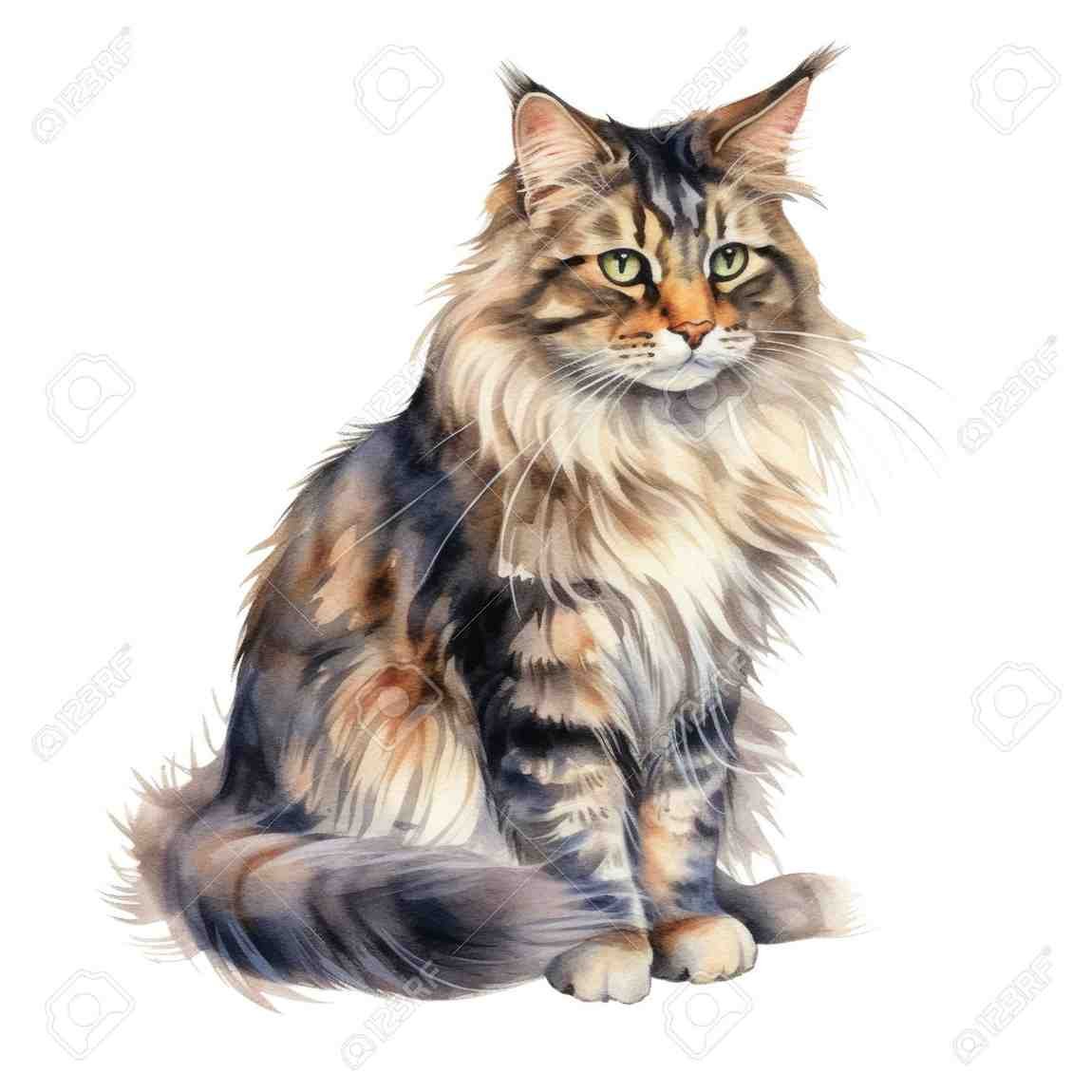
Put a Maine Coon and a Norwegian Forest Cat side by side in winter coat and most people see the same cat twice. Both are big boned and muscular under a lot of fur, both carry a full ruff around the neck, and both trail a long, heavily plumed tail behind them.
Both breeds earned their keep outdoors in hard weather. The Maine Coon developed on farms in New England, while the Norwegian Forest Cat, often called the Wegie or skogkatt, comes from the farms and forests of Norway.
Cold shaped the same solutions in both places. A dense double coat, ear and toe tufts, and a solid padded frame all make sense when winter is the main design problem.
If you want the purebreds compared trait by trait before we blend them, our Norwegian Forest Cat vs Maine Coon comparison lays the two standards out side by side. Both breeds are formally recognised, and the breed standards published by TICA show how much of the written description genuinely overlaps.
Two parents, one cold climate blueprint
The Norwegian Forest Cat side
The Wegie is built like a climber. Its hind legs are slightly longer than its front legs, which gives it a high rump and a powerful push off when it jumps, and owners of the pure breed talk a lot about how much time the cat spends at the top of things.
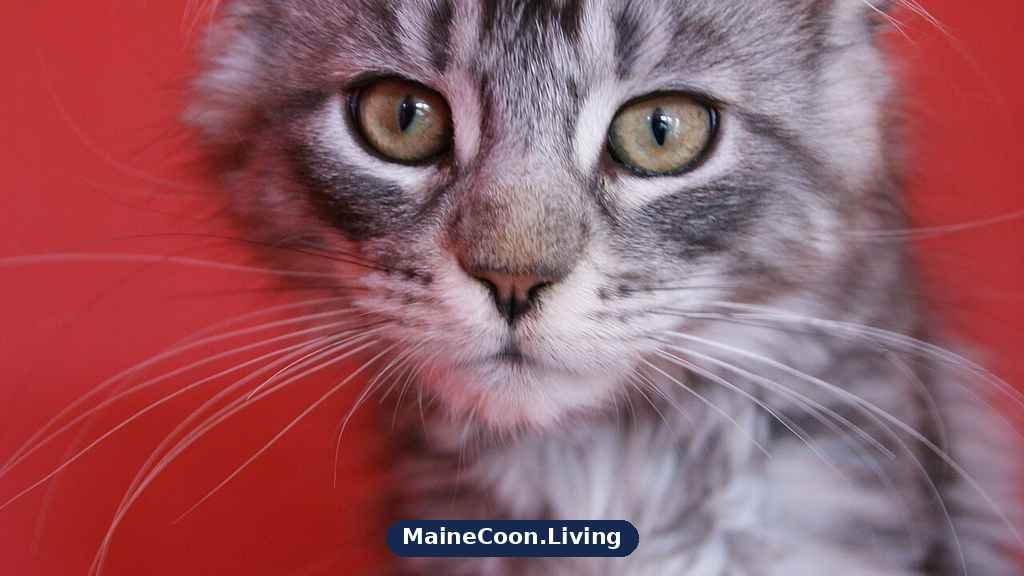
Its head is the clearest signature. In profile the Norwegian Forest Cat shows a long, straight line from the brow to the tip of the nose, set into a head shaped close to an equilateral triangle, with almond shaped eyes set at a slight angle.
The coat is a true working double coat. A woolly, dense undercoat sits under longer, glossy guard hairs that repel water, and in winter the cat grows a heavy ruff and full trousers that make it look far bigger than it is.
The Maine Coon side
The Maine Coon is the longer, more rectangular cat. The body stretches out, the chest is broad, and the head carries a distinctly square muzzle with high cheekbones, which gives the face that boxy, slightly stern look I know from my own sofa.
The profile differs from the Wegie in a small but telling way. Instead of one straight line, the Maine Coon nose has a gentle shallow dip below the brow, and the big ears sit high on the head and often finish in lynx tips.
The coat is shaggy rather than sleek, with a lighter undercoat and a tail people compare to a feather duster. Our guide to what a Maine Coon looks like breaks the purebred look down piece by piece.
What the mix usually looks like
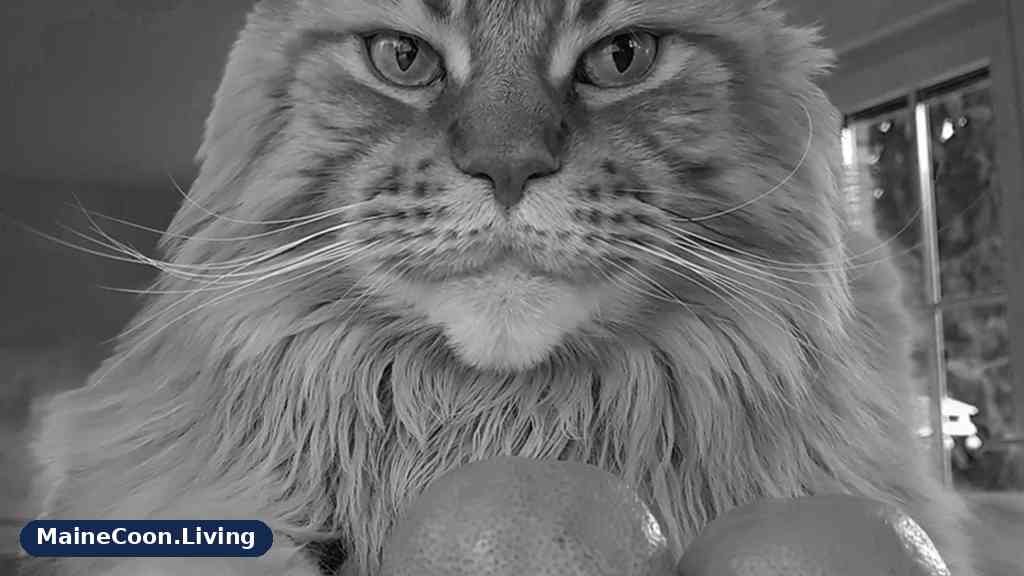
A mix kitten does not arrive as a neat average of its parents. Genes shuffle trait by trait, so one kitten in a litter can lean hard toward the Maine Coon muzzle while its sister shows the straighter Wegie profile, and both are equally this mix.
What you can count on is the broad outline. Expect a large, sturdy cat with a long double coat, a big plumed tail, tufted ears, and enough presence to make standard cat furniture look slightly undersized.
Size and build
Most adults settle between the parent ranges. Males commonly reach 13 to 20 pounds and females 9 to 15 pounds, standing roughly 9 to 14 inches at the shoulder.
Build varies with the lean. A Coon leaning mix tends to look long and rectangular, while a Wegie leaning mix looks a touch more compact and athletic, sometimes with that slightly raised rump from longer hind legs.
Growth is slow either way. Both parents mature late, and mixes commonly keep filling out until age four or five, so a gangly two year old is nowhere near the finished cat. Our Maine Coon size guide shows the growth curve on the Coon side if you want a reference point.
The double coat
The coat is where the two parents agree most, so it is the safest prediction of all. Expect a thick double coat with a soft to woolly undercoat and longer outer hairs that shrug off damp weather, plus a seasonal ruff that thickens noticeably in winter.
Texture lands somewhere on a range. Some mixes feel silky and shaggy like a Maine Coon, others feel denser and more weatherproof like a Wegie, and many feel like both depending on where on the body you run your hand.
Colours follow the wide catalogue of both breeds. Tabbies in brown, silver and red are common, as are solid and white marked cats, and the pattern tells you nothing about which breed contributed more.
Head, ears and eyes
The head is the most discussed feature, because it usually lands between the two blueprints. Many mixes show a moderately triangular head with a muzzle that is squarer than a pure Wegie but softer than a pure Maine Coon, and a profile with only a hint of the Coon dip.
Ears tend to be medium to large with good furnishings inside, and lynx tips appear often but not always. Eyes are usually large and expressive, somewhere between the Wegie almond and the Coon oval, most often in green, gold or copper shades.
None of these clues works alone. I have seen purebred Maine Coons with surprisingly straight profiles and purebred Wegies with chunky muzzles, which is exactly why the identification section further down matters.
Temperament: what owners describe
The good news is that both parents are known as steady, people oriented cats, so the mix rarely produces a difficult temperament. Most owners describe a cat that is affectionate and sociable without being constantly underfoot or demanding.
Where an individual lands still varies. One mix may shadow you like a Maine Coon, narrating the day in chirps, while another supervises the household from the top of a bookcase.
Company and affection
Expect a cat that chooses to be in the same room as you. Maine Coon influence usually brings the following from room to room and the greeting at the door, while Wegie influence adds a calmer, more self contained way of showing the same loyalty.
Many are lap cats on their own terms rather than yours. They will settle beside you for hours, then leave when they have had enough, and forcing the issue rarely ends well with a cat this size.
With children and other pets, a well socialised mix is usually patient and tolerant. Supervision and a quiet escape route still matter, as with any cat.
Energy, play and climbing
These are clever cats with a real need for things to do. Puzzle feeders, wand toys and short training games with treats all go down well, and a bored mix will invent its own entertainment, usually involving your shelves.
The climbing instinct deserves respect. Wegie heritage produces a cat that wants height, so a tall, anchored cat tree and some cleared shelf space will save your curtains.
Playfulness tends to last for years in both parents. Most owners count that slow maturing streak in the mix as a bonus.
Voice and communication
Maine Coons are famous for chirps and trills rather than loud meowing, and many mixes inherit exactly that soft, conversational style. Wegies are generally quieter cats, so a mix often ends up chatty in sounds but modest in volume.
When a usually quiet mix suddenly becomes vocal, treat it as information. Check food, water, litter and health before assuming it is just personality.
Grooming: the honest workload
Here is the part to read twice before falling for the kitten photos. Two double coated parents means the mix has a serious coat, and the grooming load is the single biggest daily cost of this mix, bigger than food, bigger than space.
The weekly routine
A thorough comb through two or three times a week keeps most coats in order. Use a steel comb and work down to the skin in sections, because brushing only the top layer polishes the surface while mats quietly build underneath.
Pay extra attention to the friction zones. Behind the ears, in the armpits, along the belly and through the trousers are where tangles start, and a small mat teased out gently today is a painless job compared with a felted patch next month.
Keep sessions short and rewarding. Most of these cats learn to enjoy grooming if it starts young, stays gentle and ends with something good, and ten calm minutes beats a monthly battle that leaves you both stressed.
Shedding seasons and extras
Twice a year, usually in spring and autumn, the undercoat lets go in earnest. During those weeks daily combing is realistic, loose fur appears on every surface you own, and a lint roller by the front door stops being optional.
Baths are an occasional tool rather than a routine. The water resistant coat handles dirt well, so bathe only when the coat is greasy or genuinely dirty, and dry right down to the undercoat.
Round out the routine with the basics. Trim nails every few weeks, check ears at grooming time, and keep up dental care.
Health watch points from both sides
Mixing two breeds widens the gene pool, which can help, but it does not delete the health lists of either parent. A mix can inherit a problem from the Maine Coon side, from the Norwegian side, or, for the conditions both breeds share, from either direction.
I am an owner, not a vet, so treat this as a checklist for conversations with your own vet and with any breeder you consider. Our fuller overview of Maine Coon health problems goes deeper on the Coon side of the list.
From the Maine Coon side
Hypertrophic cardiomyopathy, a thickening of the heart muscle, is the best known Maine Coon concern. A DNA test exists for one known mutation in the breed, but it does not catch every case, so breeders with good records also use heart scans by ultrasound.
Also on the Coon list are hip dysplasia, spinal muscular atrophy, which has a DNA test, and a form of polycystic kidney disease. Ask what the Maine Coon parent was screened for, and ask to see the results rather than a verbal summary.
From the Norwegian Forest Cat side
The signature Wegie condition is glycogen storage disease type IV, a serious inherited disorder that responsible Norwegian breeders test for and have largely bred away from in tested lines. If one parent is a purebred Wegie, its test result is a fair and simple question.
Norwegian Forest Cats also appear on the hypertrophic cardiomyopathy lists, and older cats of the breed can develop kidney issues like any large, long lived breed. None of this makes the breed fragile, but it does mean the screening questions apply to both parents equally.
The shared list and daily habits
Heart disease and hip dysplasia sit on both sides, so they top the watch list for this mix. A yearly vet check, a stable healthy weight and attention to exercise tolerance give problems the best chance of being caught early, when they are most manageable.
The Cornell Feline Health Center publishes clear, owner friendly explainers on hypertrophic cardiomyopathy and other feline conditions, and it is the reference I send friends to when they want detail without sales talk. It is free, written by vets, and updated as the research moves.
Weight deserves its own mention. Extra pounds on a large framed cat load the hips and joints every single day, and a mix in full coat can hide a growing waistline, so weigh the cat, not just the impression the fur gives you.
Mix, purebred, or something else?
This is where honesty matters most, because this mix is genuinely hard to verify by eye. A large, longhaired cat with no papers could be this mix, could be a purebred without paperwork, or could simply be a big domestic longhair with no pedigree breed in it at all.
That uncertainty is not a flaw in the cat. It only becomes a problem when someone pays a purebred price, or makes breeding plans, based on a guess that was presented as a fact.
Paperwork and breeder history
The strongest evidence is a boring paper trail. A breeder who owns or can document both parents, with the Maine Coon registered as a Maine Coon and the Norwegian Forest Cat registered as a Norwegian Forest Cat, can show you exactly what a kitten is.
Health screening records for both parents add real weight. A seller who can produce heart scan results, DNA test reports and vet records for the parents is giving you verifiable history, while a seller offering only adjectives is asking you to take everything on trust.
Rescue cats rarely come with any of this, and that is fine. Enjoy the cat in front of you and let the label stay a pleasant guess.
What DNA tests can and cannot do
Consumer DNA tests can add useful information. The better panels estimate breed ancestry and screen for known genetic conditions, and for this mix the health screening alone can justify the price.
Set expectations before you swab, though. The two breeds are closely related, and test databases separate them imperfectly, so results may show a blend, or percentages that shift as databases grow.
Treat the result as a well informed estimate, not a court ruling. It can support what paperwork already suggests, and it can flag health risks worth discussing with your vet, but it cannot turn an undocumented cat into a registered purebred of either breed.
Living with the uncertainty
My own view is simple. Unless you are breeding or showing, which a mix cannot do in pedigree classes anyway, the exact split matters far less than the individual cat, its health and whether its needs fit your home.
The same applies to every mix on this site, from this forest cross to the very different Maine Coon Siamese mix. Know what is proven, admit what is guessed, and never let a label do the work that observation should.
Is this mix right for your home?
This mix suits a home that genuinely wants a big cat involved in daily life. You need floor space for an oversized cat tree and litter setup, a budget that covers food and vet care for a large animal, and a relaxed attitude to fur on clothing and furniture.
It suits owners who will actually do the grooming. Two or three combing sessions a week is a modest ask, but it is not optional, and a household where that will quietly stop happening should choose a shorter coated cat instead.
If that sounds like your home, this is one of the most rewarding mixes I know of. You get the size of two great northern breeds, a temperament that leans gentle from both directions, and a cat whose exact family tree you may never fully prove, which bothers the cat not at all.
Frequently Asked Questions
How big does a Norwegian Forest Cat Maine Coon mix get?
Most adults land somewhere between the two parent breeds, with males commonly reaching 13 to 20 pounds and females 9 to 15 pounds. They grow slowly and may keep filling out until they are four or five years old. A few males go bigger, but very large claims usually owe more to a thick coat and a generous owner than to the scales.
Can you tell this mix from a purebred just by looking?
Often you cannot, and anyone who says otherwise is guessing with confidence. A head that sits between the triangular Norwegian shape and the square Maine Coon muzzle is a clue, not proof. Breeder records, a known pedigree for one parent, or a DNA test give you firmer ground than looks alone.
How much grooming does this mix need?
Plan on a thorough comb through two or three times a week, and daily sessions when the undercoat is shedding in spring and autumn. Work down to the skin in the armpits, belly and trousers, where mats start quietly. Ten calm minutes on a regular schedule beats one long wrestling match every few months.
What health problems should I watch for in this mix?
The shared watch list includes hypertrophic cardiomyopathy and hip dysplasia, which appear in both parent breeds. Maine Coon lines add spinal muscular atrophy and a kidney condition, while Norwegian lines add a rare glycogen storage disease that good breeders test for. Ask for the parents screening results and keep up yearly vet checks, with a heart scan if your vet advises one.
Is a DNA test worth it for this mix?
It can be, mostly for the health panel and for a clearer picture of breed ancestry. Results for two breeds this closely related can still come back broad or surprising, so treat percentages as estimates rather than verdicts. Buy the test for information and screening value, not for a certificate style answer it cannot honestly give.

One Comment