Average Weight and Length of Maine Coon Cats
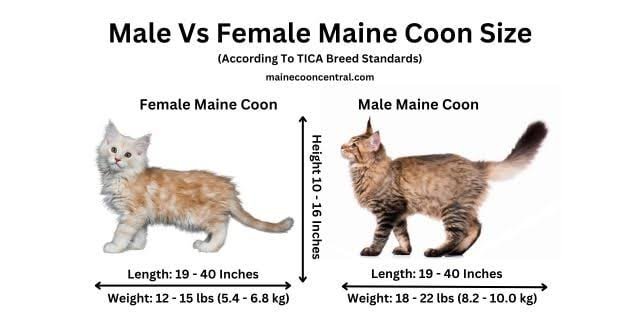
You walk into a room and see a cat that looks more like a wild bobcat than a pampered house pet. It has massive paws, tufted ears, and a tail that looks like a feather duster. You immediately wonder about the breed’s legendary scale. If you are thinking about bringing one of these gentle giants into your home, you need to know what to expect. Let’s look at the facts regarding Maine Coon Size: How Big Do They Really Get? On average, healthy adult male Maine Coons weigh between 15 and 25 pounds, while females range from 10 to 18 pounds. They can grow up to 40 inches in length from nose to tail. This makes them significantly larger than your average five-pound to ten-pound domestic cat.
When you first see a fully grown Maine Coon, the sheer mass of the animal can be shocking. These cats are built for survival in harsh climates, which explains their heavy bones and muscular bodies.
Most standard domestic cats weigh around eight to ten pounds. In comparison, a male Maine Coon easily doubles or triples that weight. A healthy male usually tips the scales at 15 to 25 pounds.
Females are smaller but still impressive. A typical female weighs between 10 and 18 pounds. Still, a 15-pound female cat looks much larger than a standard cat because of her thick coat.
Length is another area where these cats stand out. A normal house cat measures about 18 inches in length, excluding the tail. A Maine Coon easily reaches 30 to 40 inches from the tip of the nose to the end of the tail.
Their height is also notable. They stand between 10 and 16 inches tall at the shoulder. When you combine their height, length, and fluffy coats, they look truly massive.
The Growth Timeline of a Maine Coon
Most cats reach their full size by their first birthday. They stop growing and start filling out slightly. Maine Coons do not follow this rule at all.
These large cats grow at a much slower rate. They continue to grow in both length and height for three to five years. This slow development is common among giant cat breeds.
During their first year, they experience rapid growth spurts. A kitten might look awkward and gangly as its legs grow faster than its body. This is a completely normal phase.
By the second year, they begin to develop their deep chests and muscular shoulders. Their heads widen and their facial features become more prominent. Still, they are not finished growing yet.
Between years three and five, they finally reach their full skeletal size. Their coats also become denser and their famous ruffs around the neck fully develop. Patience is key when waiting for your kitten to reach its potential.
Maine Coon Size: How Big Do They Really Get?
Many people see pictures online of people holding massive cats that look as big as leopards. This makes many potential owners ask about Maine Coon Size: How Big Do They Really Get?
The truth is that the internet often exaggerates these measurements. People use forced perspective in photos by holding the cat far out in front of them. This makes the cat look twice its actual size.
Still, some individuals do grow to extraordinary sizes. The longest cat ever recorded was a Maine Coon named Stewie. He measured a stunning 48.5 inches from nose to tail tip.
Another famous cat named Barivel currently holds the record at over 47 inches. These are extreme cases and not the average for the breed. You should not expect your kitten to reach these record-breaking lengths.
A healthy 22-pound male is already a giant animal in your home. He will occupy your entire lap and overflow from standard chairs. Expecting a healthy cat to weigh 35 pounds is usually unrealistic and unhealthy.
Key Factors That Influence Their Final Size
Several things determine how large your kitten will eventually grow. You cannot control all of these factors, but knowing them helps you set realistic expectations.
Genetics play the most significant role. If the parents of your kitten are exceptionally large, there is a good chance your cat will be large too. Reputable breeders can show you the size of the parent cats.
Gender is another major factor. As we mentioned, males are almost always heavier and longer than females. If you want the largest cat possible, you should choose a male kitten.
Diet and nutrition during the growth years also matter. Kittens need high-quality protein and specific nutrients to support their growing bones and muscles. Feeding them cheap food can stunt their growth.
Spaying and neutering timing can also affect their height. Studies show that altering a cat before puberty can delay the closing of growth plates in the bones. This often results in a slightly taller, longer cat.
How to Measure Your Cat at Home
You might want to track your cat’s growth to see how they compare to the breed averages. Measuring a squirming cat can be difficult, but you can do it with a few simple tricks.
To get an accurate weight, do not try to force your cat to stand on a scale. Instead, weigh yourself first on a digital scale and write down the number.
Then, pick up your cat and step back onto the scale. Subtract your individual weight from the combined weight. This gives you the exact weight of your cat without any stress.
To measure length, wait until your cat is relaxed and lying flat on its side. Use a soft sewing tape measure to measure from the tip of the nose to the base of the tail.
If you want to measure the tail, measure from the base to the very tip of the fur. A healthy tail is often almost as long as the cat’s body.
To measure height, stand your cat on all four paws on a flat floor. Measure from the floor to the highest point of the shoulder blades.
Preparing Your Home for a Giant Cat
Living with a cat of this scale requires some adjustments to your living space. Standard cat accessories are simply too small for these animals.
First, you must throw away standard litter boxes. A large cat cannot turn around in a normal box, which leads to accidents outside the box.
Many owners use large plastic storage bins instead of commercial litter boxes. These bins have high sides to keep litter inside and offer plenty of room for a 20-pound cat.
You also need to invest in heavy-duty cat furniture. Cheap cat trees will wobble and tip over when a heavy cat jumps on them. Look for trees made of solid wood with wide, heavy bases.
Your scratching posts must be extra tall. A Maine Coon needs to stretch its entire body when scratching. If the post is too short, they will use your sofa instead.
Carriers must be strong and spacious. You might need to buy a carrier designed for medium-sized dogs. This ensures your cat can travel comfortably to the vet.
Health Considerations Related to Large Size
Their large frame makes them beautiful, but it also comes with some health risks. You must be aware of these issues to keep your pet comfortable.
Hip dysplasia is a common issue in large breeds. This occurs when the hip joint does not fit perfectly, leading to arthritis and pain. You can read more about this condition on the Cornell University College of Veterinary Medicine website.
Keeping your cat at a healthy weight is crucial. Extra weight puts pressure on their joints and can worsen hip issues. Do not let your cat become obese just because you want a heavy pet.
Hypertrophic cardiomyopathy is a genetic heart condition that affects this breed. Responsible breeders screen their cats for this disease before breeding. Always ask for health clearances before buying a kitten.
Regular vet checkups are essential to monitor their joint health and heart. Your vet can help you create a diet plan to keep your cat lean and active.
Comparing Maine Coons to Other Large Breeds
People often wonder how these cats compare to other large breeds like the Norwegian Forest Cat or the Ragdoll. While all three are large, they have distinct differences.
The Norwegian Forest Cat is very similar in appearance. However, they are generally slightly smaller and have a different head shape. Their faces are more triangular compared to the square muzzle of the Maine Coon.
Ragdolls are also very large and heavy. Still, they tend to have softer, denser coats and a much more docile personality. Ragdolls also lack the distinctive wild look and tufted ears.
Maine Coons remain the longest of the domestic breeds. Their rugged appearance and playful personalities make them unique among giant cats.
If you want a cat that looks like a wild forest dweller but acts like a friendly dog, this breed is the perfect choice. Their size only adds to their charm.
The Financial Reality of Owning a Large Cat
Before you bring home a giant kitten, you must consider the ongoing costs. Large cats require more resources than standard pets.
They eat significantly more food than a normal cat. A 20-pound active cat needs a lot of calories to maintain its muscle mass. Your monthly food bill will be much higher.
Litter consumption is also higher. Larger boxes require more litter to fill, and giant cats produce more waste. You will find yourself buying litter much more frequently.
Veterinary care can also be more expensive. Medications and anesthesia are often dosed by weight. A larger cat requires larger doses, which can increase the cost of treatments.
Still, most owners find that the joy of owning these animals far outweighs the financial costs. They are truly special companions that bring a lot of energy to a home.
Final Thoughts on Living with a Giant Companion
Owning a massive cat is a unique experience that brings endless entertainment. They are social, affectionate, and highly intelligent animals.
Their size means they can reach kitchen counters easily and open doors with their paws. You must be prepared for a pet that occupies a lot of physical space in your life.
If you provide them with the right food, plenty of space, and sturdy furniture, they will thrive. They will reward you with years of loyal companionship and affection.
Do not focus solely on getting the biggest cat possible. A healthy, happy cat of any size is a wonderful addition to your family. Focus on their health and personality first.
FAQs
How long does it take for a Maine Coon to reach full size?
These cats grow much slower than other breeds. They typically take between three and five years to reach their full physical size and weight. During this time, they will experience several growth spurts followed by periods of filling out their muscles and coat.
Are male Maine Coons always larger than females?
Yes, males are almost always significantly larger than females. A healthy male usually weighs between 15 and 25 pounds. Females are still large compared to standard cats but generally weigh between 10 and 18 pounds.
What is the average length of a Maine Coon?
An average adult measures between 30 and 40 inches from the tip of the nose to the end of the tail. Their impressive tails alone can measure up to 14 inches in length, which helps them balance and keep warm in cold weather.
Do these cats need a special diet to grow big?
They do not need a secret diet, but they do require high-quality, protein-rich food to support their bone and muscle development. Avoid low-quality filler foods and consult your vet to ensure they receive the right balance of nutrients during their long growth period.
Can a Maine Coon live comfortably in a small apartment?
They can live in apartments if you provide them with enough vertical space. Since they are large and active, you must offer tall cat trees, window perches, and plenty of interactive toys to keep them stimulated and healthy in smaller living spaces.

9 Comments