Maine Coon Lion Cut: Grooming, Shedding and Care
The first time I saw a Maine Coon in a lion cut in person, I laughed, and then I felt a bit sorry for him. He looked proud and ridiculous at the same time, all mane and bare body. What stayed with me was not the look, though, it was how relieved his owner sounded, and how quickly I realised the cut had not been done for the photograph at all.
I am Umar, and I live with Maine Coons, so I know the coat from the unglamorous side. I know the mats that form behind the ears overnight and the soft drifts of hair that collect along the skirting boards. That is exactly why I want to talk about this cut honestly, including the parts the cute pictures leave out.
What a lion cut actually is
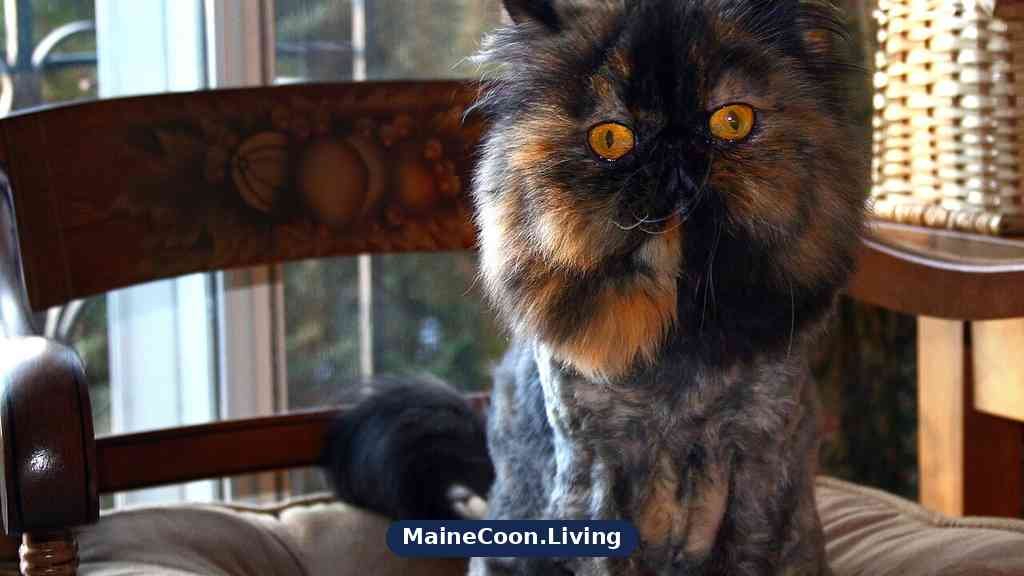
A lion cut is a very short clip over most of the body. The groomer takes the back, sides, belly and much of the legs down close, sometimes almost to the skin. What is left is deliberate: the full mane around the head and neck, the hair on the lower paws, and a tuft at the tip of the tail.
The shape is where the name comes from, and there is no point pretending the resemblance is not funny. Underneath the joke, though, it is the most drastic haircut a cat can get. Almost the entire double coat, the thing a Maine Coon is famous for, comes off in one appointment.
That coat is not decoration, which matters for everything that follows.
The two layers do different jobs, and that matters when one of them is removed. The longer guard hairs shed water and protect the skin from sun, while the dense undercoat traps still air and slows heat loss in both directions. A clipped cat has lost insulation against cold and shielding against heat at the same time, which is why the weeks after a cut need more planning than the cut itself.
The coat also carries scent other cats read. A freshly clipped cat can come home smelling different, so give the cat a quiet room and familiar bedding for the first day back.
The longer guard hairs sit over a dense, soft undercoat, and together they protect the skin, shed water and help the cat manage both cold and heat. Removing them changes far more than how the cat looks in the mirror.
When I think it is justified
There are situations where I would not hesitate, and I want to be clear about them before I get to the warnings. A lion cut done for a real reason, by someone who knows cats, can be an act of kindness. The problem is how often it gets booked for no real reason at all.
Mats that have gone too far
Severe matting is the strongest case. When the coat has felted into tight plates against the skin, combing them out hurts, pulls and can tear, and it can take hours a frightened cat does not have in him. Clipping the lot off and starting again is often the gentlest way out.
Mats are not just untidy, either. Tight ones tug every time the cat moves, trap moisture against the skin and hide sores, parasites and lumps from view. If you are at that point, my guide on how to groom a Maine Coon will help you rebuild a routine afterwards, because the cut alone solves nothing long term.
Medical reasons
Sometimes the vet asks for the hair off, and then there is nothing to debate. Skin conditions are easier to treat and inspect on a clipped cat, and creams and medicated baths actually reach the skin. Hair may also need to come off around a wound, a surgery site or an area that has to be kept clean while it heals.
Cats who soil themselves and cannot be kept clean any other way fall into this group too. So do cats whose owners physically cannot groom them and cannot get help, where the realistic choice is between a clip and a matted cat. I would rather see a comfortable clipped cat than a suffering fluffy one.
Older cats who cannot keep up
Age changes the calculation. A senior Maine Coon with stiff, arthritic joints cannot twist to wash his back and belly the way he once did, and his coat mats in exactly the places he cannot reach. For a cat like that, a shorter clip can mean comfort he cannot give himself anymore.
If that is your cat, it is worth reading alongside our notes on senior Maine Coon care, because grooming is only one part of helping an old cat stay comfortable. Talk to your vet first as well. An older cat who has stopped grooming sometimes has pain or illness behind it, and the clip should not cover that up.
What it will not do
Now the part I most want you to take away from this page. A lion cut is not a cure for shedding, and anyone who sells it to you as one is misleading you. I say that as someone who has vacuumed up enough Maine Coon hair to stuff a cushion.
Shedding is the coat renewing itself, and it runs on daylight, season, hormones and health, not on hair length. A clipped cat sheds shorter hairs, which are less visible for a few weeks, and that is the whole trick. The hair is still leaving the cat, and once the coat grows out, the tumbleweeds return exactly as before.
If loose hair is your real problem, our breakdown of how much Maine Coons shed is the honest place to start. Regular combing removes the loose undercoat before it lands on your sofa, which is more than any haircut can claim. It is slower, but it actually works.
The heat argument needs the same honesty. People assume a thick coat must make a cat hotter, but that coat also insulates against heat and protects the skin from the sun. Most healthy Maine Coons cope with summer by finding cool floors, drinking more and doing very little, which is a strategy I respect.
The video above shows a matted Maine Coon getting a lion trim at a groomer, and it is worth watching before you book anything. Notice how much handling is involved and how long the cat has to cooperate. That is the reality behind the tidy before and after photos.
The risks, stated plainly
Sunburn on bare skin
Clipped skin has almost no protection, and cats can and do get sunburned, especially pale cats and pale patches of skin. A Maine Coon who naps in a sunny window can burn without ever going outside. Repeated sun damage on exposed skin is a genuine health concern, not a cosmetic one.
After a cut, shade stops being optional. Keep a freshly clipped cat out of strong midday sun, watch ears and any pink skin closely, and never put human sunscreen on a cat, because ingredients that are safe for us can be toxic when a cat licks them off. The ASPCA cat grooming guidance is a sensible reference for basic skin and coat care if you want the wider picture.
Stress at the groomer
For many cats this is the biggest cost of all. A lion cut means travel, strangers, restraint, clipper noise against the skin and often a bath, all in one visit. Some cats take it in their stride, and plenty come home withdrawn, off their food or hiding for a day or two.
Ask how the groomer works with cats specifically, whether they will stop if a cat is overwhelmed, and what they do instead of forcing it. A groomer who shrugs at those questions is the wrong groomer.
Choosing a groomer: what to ask first
Ask whether the groomer works with cats every day or mostly with dogs, because cat handling is a different skill. Ask how they calm a stressed cat, whether they stop when a cat is overwhelmed, and what they do instead of forcing it. A good answer mentions slow handling, breaks, and a second visit rather than a finished cut.
Ask about sedation before you book, not on the day. Some groomers sedate cats for a full clip, and that decision belongs with your vet, not with a booking form. Our full routine in how to groom a Maine Coon cat is the safer first step for most coats.
And please do not attempt the full clip at home with dog clippers to save the fee, because cat skin is thin, loose and astonishingly easy to nick.
Warmth and temperature
A cat who has lost his coat has lost his adjustment system in both directions. He can chill faster in a cold house or on a winter night, and he has less shielding when it is hot. Owners sometimes find a clipped cat seeking out radiators he ignored for years, or shivering after a bath he used to shrug off.
None of this is a disaster if you plan for it.
Plan the home for the weeks after the cut, not just the day of it. A warm bed away from draughts matters in winter, and shade matters in summer, because the cat has lost the layer that used to handle both. Check the skin daily for the first few days for redness, clipper rash, or any nick that was not obvious at the groomer.
Expect the cat to seek out radiators, sunny windows and warm laps more than usual, and let him. A jumper only helps if the cat tolerates it without stress, and most cats do better with a warm spot they choose themselves. If the skin looks sore, broken, or does not settle within a few days, that is a vet question, not a wait and see.
A warm bed away from draughts, a jumper only if the cat tolerates it without stress, and common sense about sun and cold cover most of it. It is still a real change in how the cat experiences your home, and it lasts for months.
Coat changes on regrowth
Here is the risk people mention least and notice most. The coat does not always come back exactly as it left, because the two layers regrow at different speeds. The soft undercoat pushes through first, and the longer guard hairs that give a Maine Coon his sleek, weatherproof finish take much longer.
During that in between stage the coat can look fluffier, duller and sometimes a shade lighter or different in tone, since much of the colour sits in those guard hairs. Usually it settles as the full coat cycles through. Occasionally owners tell me the texture never quite matched the original, and I would rather you heard that now than discovered it later.
How regrowth works
Regrowth is slow, uneven and completely normal to look odd. In the first couple of weeks you get a soft stubble that changes the cat from bare to velvety. By about 6 to 8 weeks there is usually a short, even coat that looks tidy, if nothing like the real thing.
The full double coat takes far longer. Several months is common, and a cat clipped in spring may not look like himself again until the following season, when the new coat comes in properly. The tail is the slowest of all, and that little tuft can take an age to rebuild into a plume.
Comb gently through the regrowth as it comes in, even though it looks too short to need it.
Aftercare, week by week
The first week is about skin, not coat. Keep the cat out of strong midday sun, watch pink skin and ears closely, and check for clipper irritation every day. A bath can wait until the skin has settled, because water and shampoo on freshly clipped skin can sting.
By six to eight weeks there is usually a short even coat, and that is when combing matters most. The new undercoat tangles easily as it thickens, so a gentle comb through twice a week keeps it from felting again. If one area stays bare while the rest fills in, ask a vet to look. Our overview of Maine Coon health problems lists the skin changes worth raising.
Those few minutes keep the new undercoat from tangling as it thickens, and they rebuild the habit for both of you. Skipping it is how a cat ends up matted again by the time the coat is back, which starts the whole cycle over.
Kinder options to try first
The comb cut
If length is the problem but the coat is healthy, ask for a comb cut instead. The groomer uses a comb attachment over the clippers, so the coat is shortened evenly but keeps real length, often an inch or more. The cat stays recognisably a Maine Coon, keeps skin protection, and usually finds the appointment no worse than a lion cut.
It will not remove existing severe mats, because the comb cannot pass through them. For a cat who is merely long, thick and hard work, though, it is the compromise I reach for first. Many owners find it gives them the easier coat they wanted without the bare skin they did not.
Belly shave and hygiene trim
A surprising number of lion cuts are booked to solve a problem that only exists on one part of the cat. Mats gather on the belly and in the armpits, and long hair around the back end collects litter and worse. A belly shave removes the mat prone underside while leaving the visible coat untouched.
A hygiene trim, sometimes called a sanitary trim, tidies just the area around the back end and the back of the thighs. It takes minutes, needs no big appointment and fixes the mess problem completely for most cats. From across the room, nobody can tell anything was done at all.
A routine that holds
The unglamorous answer is a comb, used little and often. Ten minutes a few times a week, working through the armpits, belly, trousers and behind the ears, prevents nearly all the matting that leads owners to the clippers. Choosing the right tool matters, and our guide to the best brush for a Maine Coon explains why a proper metal comb does work that most brushes only pretend to do.
Keep sessions short and end them before the cat has had enough, with something good to eat.
Kittens should never be clipped for looks. A kitten coat is still growing in, the cat is still learning to trust handling, and a stressful clip at that age can make grooming harder for years. If a kitten mats, work the mat out gently with fingers and a comb, and ask a groomer or vet for help before the mat tightens.
Seniors are the other end of the same question. An older cat who cannot groom may genuinely need a shorter clip, but the appointment itself is harder on a stiff, anxious senior, so ask for the quietest slot in the day and a groomer who will stop if the cat is overwhelmed. Our notes on senior Maine Coon care cover the other comfort changes that matter at that age.
A cat who trusts the comb is a cat you will never have to shave out of desperation. That, more than any haircut, is what a manageable Maine Coon coat is built on.
If you go ahead anyway
Sometimes, having weighed it all, the lion cut is still the right call, and I am not going to pretend otherwise. Book a groomer who works with cats every day, ask about their approach to stressed cats, and be honest about your cat temperament and health. A first visit in a quieter part of the day helps more than you would expect.
At home afterwards, expect a cat who may be clingy, or quiet, or slightly offended with the world. Keep routines boring and familiar, provide warm and shaded places to rest, and check the skin daily for a few days for redness or clipper irritation. If the skin looks sore, broken or does not settle, that is a vet question, not a wait and see.
Then use the fresh start. The months of regrowth are your chance to build the combing habit while there is barely any coat to fight with. Owners who do that rarely need a second lion cut, and that is the best outcome this haircut can give you.
Frequently Asked Questions
Is a lion cut bad for a Maine Coon?
Not automatically, but it should never be the first idea. When severe matting, a medical need or an older cat who can no longer groom makes it the kindest option, a careful cut by an experienced cat groomer can be a relief. Done casually, for looks or for shedding, the stress and the risks outweigh anything it gives you.
Does a lion cut stop shedding?
No. A clipped cat still sheds, just in shorter hairs that are easier to miss for a while. Shedding is driven by the coat cycle, the season and the cat, and clipping changes none of that. Once the coat grows back, the loose hair around the house returns with it.
How long does the coat take to grow back after a lion cut?
Expect the first soft covering within a few weeks and something that looks like a short coat in about 6 to 8 weeks. The full double coat, with its length and texture back, often takes several months and sometimes a whole season. Tail hair is usually the slowest part to return.
Can a lion cut change the colour or texture of the coat?
It can, at least for a while. The soft undercoat tends to come back first, so the coat can look paler, duller or fluffier than before. Guard hairs return later and the colour and feel usually settle, but some owners notice a lasting shift in shade or texture, and nobody can promise you the old coat exactly as it was.
What can I try instead of a lion cut?
Start with a comb cut, which shortens the coat while leaving real length and protection. A belly shave or a small hygiene trim solves many litter and matting problems without touching the rest of the coat. Above all, a short combing routine a few times a week prevents most of the mats that send cats to the clippers in the first place.


2 Comments