Maine Coon Dental Care: How to Clean a Giant Cat’s Teeth
The first time I lifted my Maine Coon’s lip and really looked, I felt a bit guilty. His gums were pink and healthy looking, but a yellow line was already creeping along his back teeth. I am Umar, and like a lot of owners I had assumed a big, confident cat mostly looked after himself.
He does not, at least not his teeth. Dental care is now a small, calm part of our week, and it took patience rather than skill to get there. This guide shares the routine that works in our house, plus the warning signs I watch for.
Why Maine Coon Mouths Need Attention
Maine Coons have big heads, strong jaws, and a mouth built for gripping and shearing food. That size can fool you into thinking their teeth are tougher than other cats’ teeth. In reality, plaque builds up on their teeth in exactly the same way.
The Cornell Feline Health Center guide to feline dental disease notes that dental disease is very common in cats, especially as they get older. Gingivitis, periodontitis, and tooth resorption are the problems vets see most often. Many of them start quietly, with plaque you could have brushed away.
A Maine Coon’s calm, people focused nature actually helps here. Most will tolerate gentle handling once they trust the routine. The trick is to earn that tolerance slowly instead of wrestling for it.
Dental pain also hides well in this breed. A cat who still trots to his bowl may be chewing on one side or swallowing kibble whole to avoid a sore tooth. Regular brushing doubles as a regular mouth check, so you spot changes early.
What You Need Before You Start
Keep the kit small and keep it in one place. You need a cat toothbrush, enzymatic cat toothpaste, and a few favourite treats for afterwards. A small towel for your lap helps with drool and gives your cat something familiar to sit on.
For a Maine Coon, brush choice matters more than it does for a small cat. A finger brush gives you control and feedback when you are learning, and most cats accept it sooner. A long handled cat brush reaches the back molars more easily once your cat is relaxed about the whole idea.
I started with a finger brush and later added a long handled brush for the back teeth. Many owners end up using both, depending on the day. Neither is wrong, so let your cat’s reaction guide you.
Choose a quiet time when your cat is already sleepy and settled. After a play session and a meal works well in our house. Avoid starting when visitors are over or the house is noisy.
Toothpaste Safety, In Plain Words
Never use human toothpaste on a cat, not even a pea sized smear. Cats cannot spit, so everything you put in the mouth gets swallowed. That is where the risk comes from.
Human toothpaste contains fluoride at levels meant for people who rinse and spit. Swallowed regularly, it can upset a cat’s stomach and do real harm over time. Some human products also contain xylitol, a sweetener that is dangerous for pets even in small amounts.
Cat toothpaste is made to be swallowed safely. Enzymatic formulas help break down plaque even with light brushing, which is useful on days when your cat only allows twenty seconds. Flavours like poultry or malt sound odd to us, but they are the reason many cats cooperate at all.
Treat the toothpaste as the reward, not the medicine. If your cat loves the taste, half the training battle is already won. If the first flavour fails, try another before you decide your cat hates brushing.
Building the Habit Over Two to Three Weeks
Rushing this stage is the mistake I made first. I went straight for the brush on day one and my cat vanished under the sofa. We restarted properly a week later, and the slower route worked.
Week One: Taste and Touch
For the first few days, just let your cat lick toothpaste off your finger. Do it at the same time each day so it becomes predictable. Follow it with praise or a small treat and then stop.
Once licking is eagerly accepted, start touching the lips and lifting them briefly while your cat tastes the paste. Keep each session under a minute. You are teaching one lesson here, that hands near the mouth mean good things.
Week Two: Finger Before Brush
Now put a little toothpaste on a clean finger or a finger brush and rub it gently along the outer teeth. Start with the big canine teeth, which are easy to reach. Add a few back teeth each day as your cat allows.
Some cats accept this in two days and others need the full week. Both are normal, so do not measure your cat against anyone else’s. End every session while things are still going well.
Week Three: Short, Real Brushing
Introduce the brush with toothpaste on it and let your cat lick it first. Then brush a few teeth, stop, and reward. Build toward a full mouth over several short sessions rather than one long battle.
By the end of week three, most patient owners have a workable routine. It will not be perfect, and that is fine. Consistency over months matters far more than one perfect session.
Step by Step: Brushing a Big Cat
Positioning is half the job with a Maine Coon. I sit on the floor with my cat between my knees, facing away from me, or settle him on my lap on his towel. Facing away stops the backing away problem and keeps his weight against me.
Some owners prefer a sofa corner or a bathroom counter with a non slip mat. Pick the spot your cat already likes and always use the same one. A second person can help for the first week, but aim to manage solo so the routine survives busy days.
Here is the sequence I follow each session. It takes about a minute once your cat knows it.
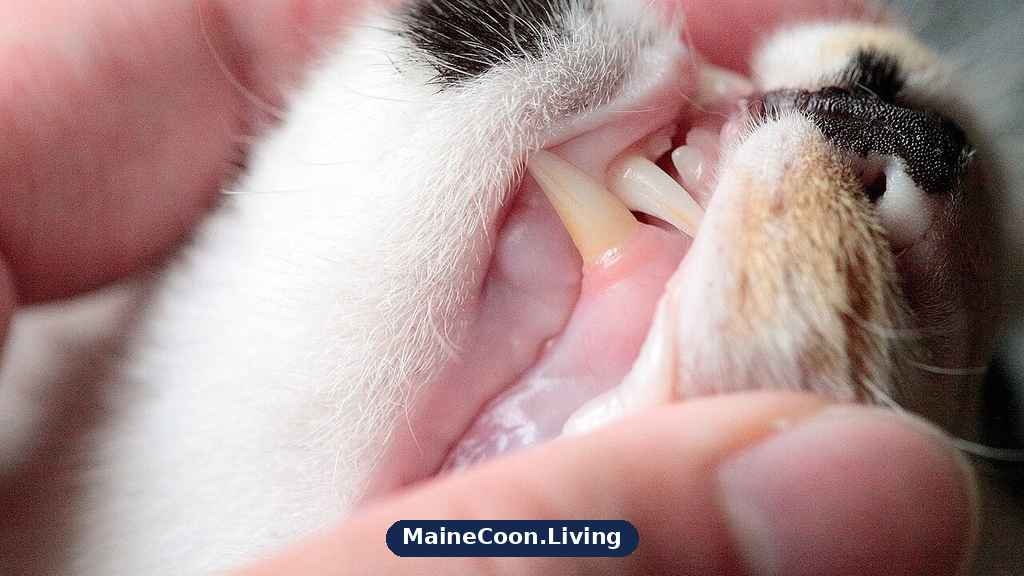
First, let your cat lick a little toothpaste from the brush as a starter. Second, use your non dominant hand to gently lift the upper lip on one side. You do not need to open the jaw or pull the mouth wide.
Third, place the brush where the tooth meets the gum, angled slightly toward the gumline. Use small circular strokes along the gumline, working slowly from the back molars forward. Light pressure is enough, because plaque is soft and scrubbing hard only annoys the gums.
Fourth, focus on the outer surfaces of the teeth, the sides facing the cheek. Plaque and tartar build up most there, especially on the upper back teeth. The inner surfaces matter less because your cat’s tongue keeps them cleaner and access is poor anyway.
Fifth, repeat on the other side, then do a quick pass over the front teeth if your cat allows it. Finish with praise and the promised treat. If your cat has had enough halfway through, stop and cover the other side next time.
One honest note on technique: short sessions done well beat long sessions done by force. Thirty calm seconds will always help your cat more than three minutes of restraint. Trust is the whole game with a cat this size.
This short vet video shows the same gentle approach in action, which helps if you are a visual learner like me.
A Simple Weekly Rhythm
Daily brushing is the goal vets usually suggest, because plaque can start hardening into tartar within a day or two. Real life gets a vote too, though. In our house, brushing happens most evenings after the last play session.
A rhythm that works for many owners looks like this. Brush on most days, even if briefly. Once a week, do a slower session and lift both lips for a proper look at the gums and back teeth.
Once a month, note anything that has changed, like a chipped fang or a gum that looks redder than last time. Tie the habit to something you already do, such as feeding the evening meal. Habits attached to existing habits tend to survive.
Dental care also sits inside wider care for this breed. Our Maine Coon cat care guide covers the grooming, feeding, and health checks that keep a giant cat in good shape. Teeth are one part of that bigger picture, not a separate project.
Alternatives When Brushing Falls Short
Some cats never fully accept a brush, and some owners have weeks where life gets in the way. Alternatives exist, but they are not all equal. Here is my honest read on the main options.
Dental Diets and Chews
Dental diets use larger or specially textured kibble so the tooth sinks in and gets scrubbed as the cat chews. Certain chews work in a similar way and some include enzymes. The evidence is decent for the tested products and thin for the rest.
Look for the VOHC seal, which means the Veterinary Oral Health Council has accepted the product for helping to control plaque or tartar. Acceptance is not a guarantee for your individual cat, but it is a real standard in a market full of claims. Products without it may still be tasty treats, just do not count on them cleaning anything.
Food choice matters for teeth as part of overall health too. Our guide to the best cat food for Maine Coon cats and kittens explains how we judge diets for this breed. Whatever you feed, remember that ordinary dry food on its own does not clean teeth in any meaningful way.
Dental Wipes
Wipes wrap around your finger and let you rub plaque off the outer teeth. They need no paste and many cats accept them sooner than a brush. The trade off is reach, since wipes struggle around the back molars where trouble often starts.
I keep wipes for travel days and stubborn days. They are a sensible second best, not a failure. Any plaque you remove is plaque that cannot harden.
Water Additives and Gels
Water additives promise fresher breath and less plaque with zero effort, which should make any owner a little suspicious. Some VOHC accepted additives have testing behind them and may help modestly. Many others rest on marketing rather than evidence, and some cats simply drink less when the water tastes different.
If you try one, watch the water bowl closely for the first week. A Maine Coon who drinks less is a bigger problem than plaque. Gels you smear on the gums sit in the same category: possibly a small help, never a brushing substitute.
The honest summary is simple. Brushing has the strongest support, tested diets and chews come next, and everything else is a supporting act. Anyone selling you a miracle product with no brushing at all is selling, not informing.
Warning Signs I Watch For
Brush often enough and you learn what your cat’s mouth normally looks like. That makes changes stand out sooner. These are the signs that move a problem from watchful waiting to a vet call in our house.
Bad breath that is stronger than normal cat breath is often the first clue. A mild food smell is fine, but a rotten or sweet, odd smell is not. Red, swollen, or bleeding gums point to gingivitis that needs attention.
Drooling, especially if it is new or one sided, deserves a look. So does dropping food, chewing on one side, or suddenly preferring soft food over kibble. These habits often mean chewing hurts.
Pawing at the mouth, rubbing the face on furniture, or pulling away when you stroke one side of the head are quieter signals. So is a cat who stops grooming or becomes grumpier than usual. Cats rarely announce pain, so behaviour change is real information.
Some problems sit inside the wider pattern of breed health, which we cover in our overview of Maine Coon health problems. Mouth pain can also cut appetite, and appetite loss matters more in a big cat than many owners realise. When in doubt, I would rather have our vet tell me a mouth looks fine than guess at home.
What a Professional Vet Dental Involves
If your vet recommends a dental procedure, it helps to know what actually happens. Cats cannot hold still or rinse and spit, so a proper dental is done under general anaesthesia. That sounds scary, but it is also what makes a thorough, pain free job possible.
Beforehand, your vet may suggest blood tests to check your cat is fit for anaesthesia. During the procedure, the team scales tartar from above and below the gumline. The below the gumline part matters most, because that is where periodontal disease does its damage.
The teeth are then polished, and each tooth is examined properly. X rays are often taken, since a tooth can look fine on the surface while the root is in trouble. If a tooth is badly diseased, loose, or resorbing, extraction may be the kindest option.
Owners often worry about a cat coping after extractions. Most cats eat comfortably again once a painful tooth is gone, many of them noticeably better than before. Your vet will explain pain relief and soft food for the healing days.
Costs vary widely by country, city, and clinic, so treat numbers as rough guides only. A straightforward cleaning under anaesthesia often costs a few hundred dollars or pounds. Add X rays, blood work, or several extractions and the bill can climb well past that, sometimes into four figures.
Ask for a written estimate that lists what is included and what extractions might add. A good clinic will explain it without pressure. Regular home care cannot replace these procedures, but it can make them rarer and smaller.
When to See a Vet Promptly
Book promptly if your cat stops eating, drools heavily, or has a swollen face or jaw. Bleeding from the mouth, a loose or broken tooth, or sudden bad breath with appetite loss also belong in the soon category. A cat who paws at the mouth and cannot settle needs help, not observation.
Do not try to brush teeth that are already painful or gums that bleed at a touch. Brushing is prevention, and sore mouths need diagnosis first. Once your vet has treated the problem, they can tell you when gentle home care can restart.
I am an owner, not a vet, and this guide shares what works in our home rather than medical advice for your cat. Every clinical decision, from antibiotics to extractions, belongs with your own vet who can examine your cat. That partnership, plus a minute with a brush most days, gives a Maine Coon mouth its best chance.
Frequently Asked Questions
How often should I brush my Maine Coon’s teeth?
Daily is the ideal, because plaque starts to harden into tartar within a day or two. If daily is not realistic yet, aim for four or five sessions a week and build up slowly. Even a few calm sessions each week are far better than none at all.
Can I use my own toothpaste on my cat?
No, never use human toothpaste on a cat. Human formulas often contain fluoride and sometimes xylitol, and cats swallow toothpaste instead of spitting it out. Use an enzymatic toothpaste made for cats instead, in a flavour your cat actually likes.
What if my Maine Coon will not let me brush at all?
Go back a step and slow down, even if that means a week of just licking toothpaste again. On days when brushing fails, a dental wipe or a VOHC accepted chew is a reasonable backup. If your cat growls, bites, or seems in pain, stop and book a vet check instead of pushing on.
Do dental treats and dry food clean a cat’s teeth?
Only a little, and only some products help at all. Treats and diets carrying VOHC acceptance have been tested for plaque or tartar reduction, while ordinary dry food does very little. Think of them as helpers alongside brushing, never as a replacement for it.
How much does a professional dental cleaning cost?
Costs vary a lot by country, city, and clinic, so treat any figure as a rough guide only. A straightforward clean under anaesthesia often runs to a few hundred dollars or pounds, and extractions push it higher. Your vet can give an estimate after an exam, and it is worth asking what is included before you book.