European vs American Maine Coon: Key Differences
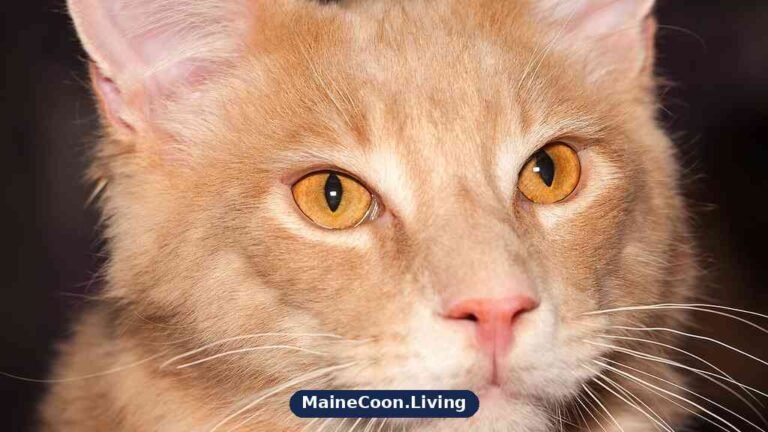
Two adverts, same breed, kittens of a similar age, and the faces looking back at you could hardly be more different. One kitten stares out from under tall, tufted ears with a heavy muzzle. The other looks softer and rounder, almost sweet by comparison.
That contrast is the whole European versus American question in miniature. It is not a split between two breeds, and it is not pure invention either. It sits somewhere less tidy, in decades of breeders choosing slightly different cats to carry a line forward.
I am Umar, and living with a Maine Coon teaches you quickly that a face is only part of the animal sharing your sofa. So here is the comparison as I would want it told to me. What genuinely differs, what is sales talk, and what should actually decide your money.
One breed, not two
Start with the paperwork, because paperwork settles arguments. Registries recognise a single Maine Coon, judged against written standards such as the CFA Maine Coon breed standard, which describes one balanced cat. Nowhere in that standard will you find a separate class for a European type or an American type.
The breed itself began in North America, a point worth holding on to when adverts imply the European cat came first. Our guide to where Maine Coons come from walks through that early history, from working farm cats in Maine to the show bench. European lines came later, built from cats exported out of the United States and then bred within Europe for many generations.
That long separation did most of the work. Partly closed gene pools, local tastes and a handful of fashionable stud cats can shift a look surprisingly fast. Give the process a few decades and two populations of one breed can end up recognisable at a glance.
Start with the face
The European look
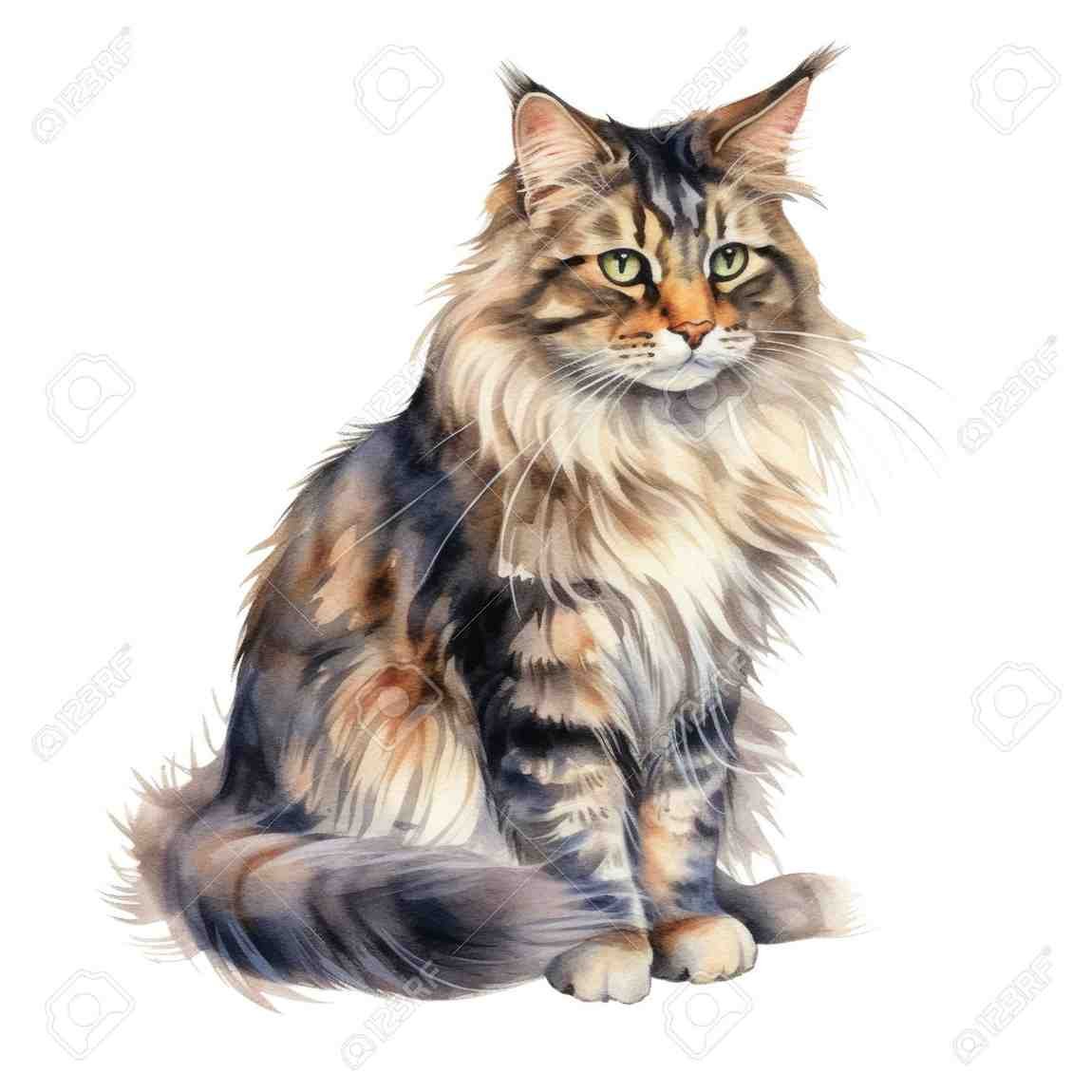
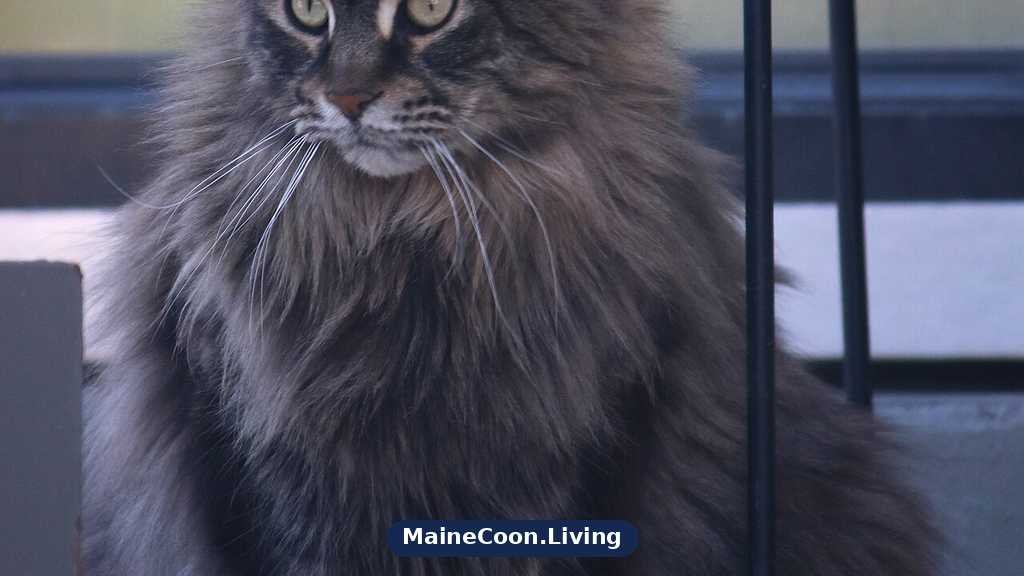
On a European line cat, the muzzle does most of the talking. It tends to be longer, heavier and more squared off, with a firm chin that completes the shape and gives the head a boxy, deliberate outline. Cheekbones sit high, and the overall impression is sculpted rather than soft.
Seen from the side, the profile is one of the easiest tells. It often runs fairly straight from forehead to nose, with less of a gentle dip, and that long line is a big part of why people reach for words like wild or feral. Breeders who favour this type sometimes use the word extreme, and for once the word fits.
The American look
American lines keep the same basic blueprint and soften almost every edge of it. The muzzle is still meant to be square, because the standard asks for that, but it is usually shorter and less pronounced, blending more gently into the cheeks. The profile more often shows a shallow curve rather than a straight run.
The expression follows from that geometry. Where a European face can look stern on a perfectly friendly cat, an American face reads open and sweet, the sort of face old breed books made famous. Plenty of owners prefer exactly that, and they are not settling for less cat when they choose it.
Ears, eyes and expression
Ears amplify everything the face is doing. European breeders have often chased tall ears set high on the head, finished with long lynx tips that can look almost theatrical in a winter coat. American ears are still large by any normal cat standard, but they are more often moderate in height, set a little wider, with shorter tips.
Eyes add the finishing touch. On European lines they are frequently a touch more slanted and deep set, which sharpens the stare. American lines more often show a rounder, more open eye, and that small change softens the whole expression out of proportion to its size.

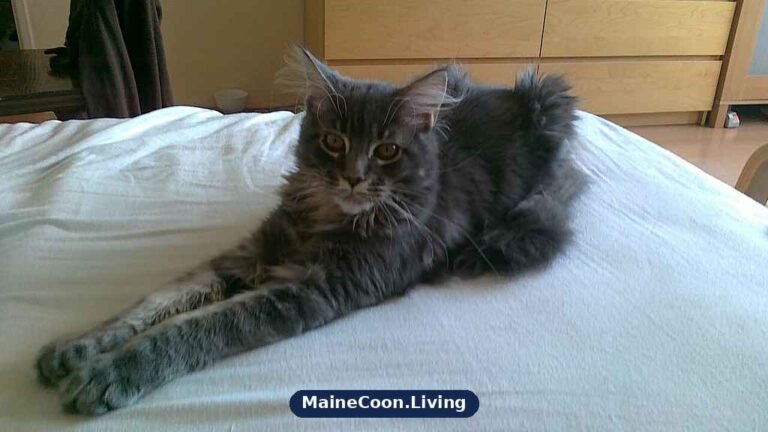
A word of caution from ordinary owner experience: kitten photos lie, politely. Ears look enormous on a twelve week old of either type, and muzzles fill out late, sometimes not fully until the second or third year. Judge the parents first, because a kitten is mostly a promise, while the parents show you what was actually delivered.
Build, bone and the size story
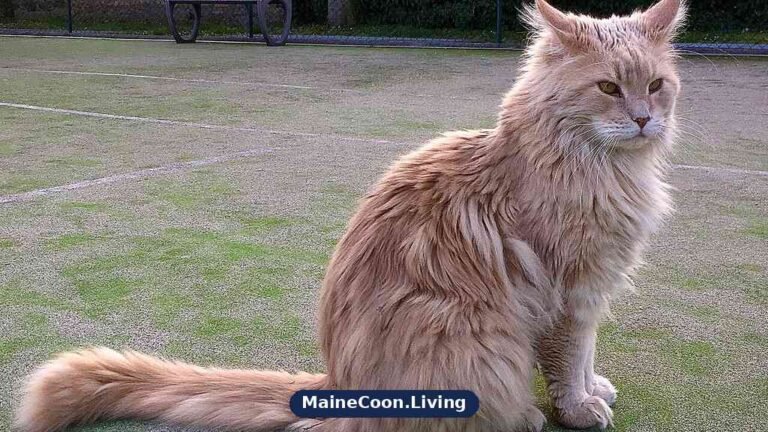
European lines are often bred long. Long bodies, heavy bone, a deep chest and a tail that seems to arrive in the room slightly before the cat does. American lines are more commonly moderate: still big, still muscular, but built around balance rather than length for its own sake.
Are European cats bigger, then? On average, a little, in my view. But averages hide the overlap, and the overlap is huge, which our guide to Maine Coon size shows in the normal growth ranges for the breed as a whole.
Treat any advert promising a guaranteed adult weight with suspicion. A male who finishes at 6 to 8 kg is a very large household cat, whatever his pedigree says, and claims well beyond that deserve a request for proof. Ask for the weights of both parents and of grown kittens from earlier litters, then believe those numbers instead.
There is a quieter point behind the size chase. Bone and joints have to carry that weight for twelve years or more, hips included. A sound, well put together cat at the smaller end will usually age better than an oversized one built carelessly.
What the coat feels like
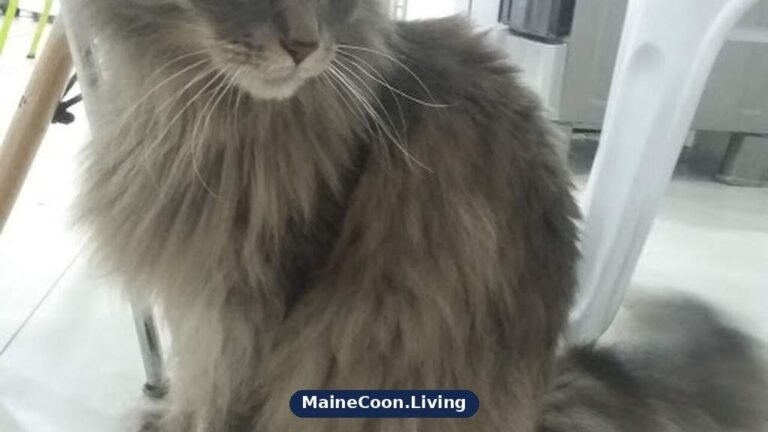
Coats differ too, though less dramatically than faces. European lines often carry a heavier, denser coat with plenty of undercoat and a full ruff that makes the head look even larger. In a cold snap it looks magnificent, and in a warm flat in July you will be combing a lot of it out.
American coats are more often silkier and a degree lighter, lying closer and tangling a little less readily. That can mean a calmer grooming routine, perhaps a thorough comb twice a week rather than a constant battle with a dense ruff. Season matters with both types, and most Maine Coons look like different cats in January and in August.
Colour is fashion more than geography, despite what adverts suggest. European breeders have made silvers, smokes and high contrast tabbies very visible online, so those colours now get read as European. American breeders offer the same broad palette in practice, including the classic brown tabby that started it all.
Still photographs only tell you so much about type, so this video comparing the two looks is worth a few minutes before you go any further.
Breeding philosophy, honestly
Underneath every visual difference sits a difference in taste. Many European programmes, particularly in Russia and parts of mainland Europe, have rewarded a stronger and more extreme type in the show ring. When judges place those cats, breeders quite reasonably breed more of them, and the look intensifies a generation at a time.
Traditional American breeding has usually prized the moderate cat: sound, balanced and with nothing exaggerated, closer to the cat the standard describes on paper. That is a genuine philosophy, not a failure to keep up. The cat in front of you matters more than the continent on the pedigree.
Both camps have their critics, and both camps have a point. Fans of the European type say the traditional American cat is drifting toward looking like any large longhaired pet. Fans of the traditional type reply that an extreme muzzle and oversized ears were never the point of a working farm cat.
My honest view is that the standard sits between the two, closer to balance than to drama. A Maine Coon should look striking without looking redesigned. When a cat is bred mainly to stop thumbs on a phone screen, the breed is not the winner.
Personality is not geography
Sellers sometimes sell temperament along with the face, claiming one type is wilder and the other more docile. I do not buy it, and I have yet to see solid evidence for it. A fierce expression is bone structure and ear furnishings, not attitude.
Raised well, both types tend to be sociable, talkative in chirps and trills, and keen to be in whatever room you are in. That follow you around quality is one of the reasons people fall for this breed in the first place. It shows up in kittens from European lines and American lines alike.
What does shape temperament is the first twelve weeks or so of life. Kittens handled daily, raised underfoot and introduced to household noise usually leave their breeder confident. Kittens raised quietly with little human contact often leave shy, and no label on an advert cancels that out.
Health testing across borders
Health is where regional habits can differ in ways that actually matter. Good breeders in both camps screen their cats, but what counts as routine is not identical everywhere, and paperwork habits vary. That is why the questions you ask matter more than the accent of the person answering them.
For this breed, the conversation usually covers heart screening for hypertrophic cardiomyopathy, by echocardiogram and, where used, DNA testing. It also covers DNA tests for spinal muscular atrophy and for pyruvate kinase deficiency, a condition International Cat Care explains in plain language. Hip health is worth asking about too, especially in heavier lines.
One caution applies to DNA results in particular. A single gene test does not clear a heart, which is why serious breeders repeat heart scans on adult breeding cats instead of relying on one early result. Our guide to finding a reputable Maine Coon breeder sets out the paperwork worth asking to see.
Imported cats can come with excellent records, sometimes better documented than local ones. They can also come with scans written in another language and pedigrees from registries you have never heard of. Ask for copies before you pay anything, and let your own vet read them over if the format is unfamiliar.
Why European kittens cost more
Price is the difference buyers feel most sharply. European line kittens are frequently advertised at higher prices, and in some markets they can cost a great deal more than a traditional American kitten. Some of that gap is real cost, and some of it is theatre.
The real costs are easy to list. Importing breeding cats is expensive, transport adds up, and a small cattery working with imported lines has fewer kittens across which to spread those costs. Thorough health testing, which good breeders on both sides take seriously, is not cheap either.
The theatre starts when the word European is asked to do all the selling on its own. Scarcity language, dramatic photographs and a wild sounding cattery name can lift a price without adding a single health test. Our Maine Coon price guide breaks down what usually sits behind a pedigree kitten price, and it makes a useful reality check.
Pay for testing, socialisation, pedigree depth and support from the breeder after you take the kitten home. Those are the things your cat will live with for years. A fashionable face shape, on its own, is a poor reason to empty your savings.
So which one should you choose?
For a pet home, I would choose the breeder first, the individual kitten second and the type a distant third. A well bred American kitten will give you a better fifteen years than a carelessly bred European one, and the reverse is equally true. That ordering sounds dull, and it will save you most of the heartbreak in this breed.
After that, be honest about your own taste and your tolerance for grooming. If you love the bold, sculpted look and you enjoy brushing a cat, European lines will make you smile every time the cat walks into the room. If you prefer a softer face and a slightly calmer coat routine, a traditional American cat may suit your home better.
Meet the mother if you possibly can. Her size, her coat and the way she treats a stranger in her house are the best forecast you will get. Then pick the kitten who chooses curiosity over hiding, and let the label be the last thing you talk about.
Frequently Asked Questions
Is a European Maine Coon a different breed from an American one?
No. Both are Maine Coons registered under the same breed standards, and the names describe breeding lines and style rather than separate breeds. The differences come from decades of breeders in different places favouring slightly different looks.
Do European Maine Coons really grow bigger?
Often a little longer and heavier boned on average, but the overlap between the two types is large. The parents and the individual bloodline predict adult size far better than the label. Ask the breeder for the grown weights of close relatives before you believe any promise.
Are European Maine Coons more aggressive because they look wilder?
No. The stern expression comes from muzzle shape, ear set and eye shape, not from temperament. Socialisation in the first weeks of life shapes personality far more than the continent a line came from.
Why are European Maine Coon kittens usually more expensive?
Importing breeding stock, transport costs, smaller breeding programmes and strong demand for the dramatic look all push prices up. That premium is only worth paying when it comes with full health testing, good socialisation and proper support from the breeder.
Which type is better for a first time owner?
Either can work well, provided the breeder is careful and supportive. First time owners sometimes find the traditional American type a little easier on grooming, but breeder quality matters far more than style. Choose the breeder first and the look second.