
Maine Coon Kitten Checklist: Everything to Buy Before Pickup Day
The week before pickup, my kitchen table disappeared under kitten shopping. Some of it was smart. Some of it, I can admit now, was me buying my own excitement rather than anything a small cat would ever ask for.
What I got wrong was not the number of things. It was the size of them. A Maine Coon kitten arrives looking like any other fluffy baby, then keeps growing for years, and standard kitten gear is built for a cat that stops at half the size.
So this maine coon kitten checklist is organised the way I wish someone had organised it for me. First, what must be ready on day one. Second, what can wait a few weeks. Third, what is mostly marketing and can stay in the shop.
If you are still choosing where your kitten comes from, read my guide on how to find reputable Maine Coon breeders first and then come back here. This page starts where that decision ends, at the front door of your home.
The One Rule Behind This Whole List
Size up, every single time. Most adult Maine Coons I know land somewhere between 6 and 9 kilos, with long bodies, big paws, and a tail that seems to need its own postcode.
That size changes ordinary shopping decisions. A tray, carrier, tree, or bowl that suits an average adult cat can feel cramped for this breed, and a kitten version of the same item can be useless within months.
My growth notes are in my Maine Coon weight by age chart if you want the numbers month by month. For shopping, the short version is enough: buy for the cat your kitten will become, not the one who fits in your two hands today.
Day One Essentials at a Glance
If you buy nothing else, have these ready before you leave to collect the kitten. Everything on this short list earns its place in the first twenty four hours.
- Large, hard sided carrier with a top opening
- Oversized litter tray, the litter the breeder uses, and a sturdy scoop
- At least two weeks of the food the kitten already eats
- Wide, shallow food bowl and a heavy water bowl
- One washable bed or a box lined with a soft blanket
- Tall, heavy scratching post
- Steel comb and small nail clippers
- Wand toy, two or three small balls, and a plain cardboard box
- Enzyme cleaner for accidents, plus spare towels and kitchen roll
- Your vet phone number saved, with the first check booked or ready to book
That is the honest core of it. A kitten who arrives to food they know, a tray they recognise, a warm place to hide, and a calm room will settle far faster than a kitten who arrives to a mountain of gadgets and a whole noisy house.
The video above is a useful general watch before pickup, full of the small things first time owners only learn afterwards. Watch it for the mindset, then shop with the size rule from this page in your head.
The Carrier Comes First
Buy the adult size now
You need the carrier before anything else, because without it there is no safe ride home. Choose a hard sided model made for a large cat, long enough for an adult to stand, turn, and lie stretched out in.
Yes, a twelve week old kitten will look lost inside it. Fill the spare space with a folded blanket or a small rolled towel, and the kitten will ride snug and warm instead of sliding around.
Why top opening matters
A lid that opens is worth paying for. Lowering a nervous kitten in from above is calmer than posting them through a front door, and lifting a heavy, reluctant adult out at the vet is far easier the same way.
Leave the carrier open in the safe room after you get home, with bedding inside. A carrier that lives as furniture stops being the scary box that only appears on vet day.
For the ride itself
Line the floor with a towel in case of a travel accident, and bring a spare in a bag. Ask the breeder if a small cloth that smells of the kitten room can travel with you, because familiar scent is a simple, real comfort.
Keep the car quiet, drive gently, and do not open the carrier at services for a cuddle. It feels kind and it is not. The kind thing is a short, boring, safe trip.
Litter Setup, Sized Honestly
One very large tray
Standard kitten trays are the false economy I hear about most. Buy a large, high sided tray from the start, ideally at least one and a half times the length of an adult Maine Coon, and put a step or a low side where a small kitten climbs in.
High sides matter because a big cat digs with enthusiasm and can throw litter a surprising distance. A litter mat outside the entrance catches what the sides miss, and it will save your socks every morning.
Same litter, same scoop routine
Start with the exact litter the breeder uses, even if you plan to change it later. Smell and texture are how a kitten finds the right spot in a strange house, and changing litter and home on the same day asks too much.
Scoop twice a day from the start. It takes two minutes, it keeps smells down, and it lets you notice quickly if stools change, which is useful information in the first weeks. My step by step guide on how to litter train a Maine Coon kitten covers placement and the usual early accidents in detail.
Where the tray goes
Put the tray in the safe room, in a quiet corner, well away from food and water. Once the kitten has the run of the house, a second tray on another floor is a sensible later buy, not a day one need.
Food and Water
Buy their food, not your food plan
Ask the breeder, in writing, what the kitten eats, how much, and how often, then buy that exact food before pickup. Bringing home a bag of your preferred brand and serving it on night one is the most common unforced error new owners make.
Feed the familiar food for at least the first week. If you switch, do it slowly over seven to ten days, mixing a little more of the new food in each day while watching appetite and stools. My notes on the best cat food for Maine Coon cats and kittens will help when that moment comes.
Bowls that suit a big face
Choose wide, shallow bowls in ceramic or stainless steel. Maine Coons have long whiskers and broad heads, and a deep, narrow bowl that presses on whiskers puts some cats off eating properly.
Buy the large bowl size now, because a kitten bowl will look like a toy saucer within a few months. Heavy bowls also survive the paw testing this breed loves, especially around water.
Water, kept separate and fresh
Many Maine Coons are fascinated by water and drink better from a wide bowl they can dip a paw near without soaking the floor. Place water away from food if your room allows it, and refresh it at least once a day.
A fountain can be a lovely later buy for a cat who loves running water. It is not a day one essential, and a plain heavy bowl does the job perfectly well while you learn your kitten habits.
Setting Up the Safe Room
Your kitten does not need the whole house on day one, and honestly, the whole house is too much. One quiet room with a door that closes is the single best preparation you can make, and it costs almost nothing.
In that room, place the tray in one corner, food and water in another, the bed and a hiding box somewhere calm, and the scratching post where the kitten can reach it after a nap. Cats love to scratch right after waking, so post next to bed is a small trick that works.
Sit on the floor in there for the first evenings and let the kitten come to you. Reading a book while a kitten decides you are safe is not wasted time. It is the actual work of the first week.
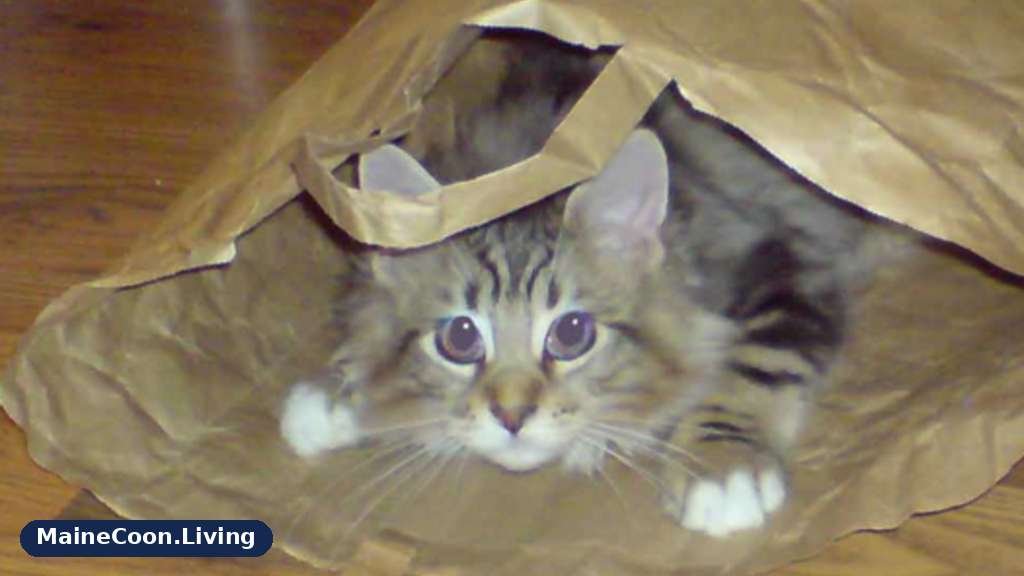
Notice what that photo is really telling you. Given a choice between a costly bed and a paper bag, plenty of kittens pick the bag, which is why one simple bed and one good box beat a pile of soft furnishings.
Kitten Proofing the House
Get down to kitten height
Before pickup day, crawl or crouch through each room the kitten will reach and look at the world from thirty centimetres up. Dangling cables, gaps behind appliances, and things stored on low shelves all look different from down there.
Bundle or cover charging cables, move cleaning products and medicines into latched cupboards, and put a lid on the kitchen bin. Hair ties, rubber bands, string, and tinsel should live in drawers, because swallowed string is a vet emergency, not a funny story.
Plants, windows, and warm machines
Check every houseplant before the kitten arrives, not after a leaf gets chewed. The ASPCA list of toxic and non toxic plants is the reference I use, and lilies in particular should not share a home with a cat.
Fit window screens or keep windows on a locked vent in rooms the kitten uses, and make a household rule about the washing machine and tumble dryer. Doors stay closed, and everyone checks before a wash goes on. Small kittens seek warm, dark, enclosed spaces with no sense of danger at all.
Small fixes that cost nothing
Close toilet lids, tuck blind cords up high, and move fragile ornaments off low tables for a few months. Block the gap under reclining chairs if you can, because a kitten can vanish into furniture in a way that makes your heart stop.
None of this needs a shopping trip. It needs an honest hour, and in my view it protects your kitten more than half the products sold for kitten safety.
Scratching, Climbing, and Sleeping
A post that will not wobble
Buy one tall, heavy scratching post and place it in the safe room. Tall matters because your kitten will grow into a cat who stretches a long way up to scratch, and heavy matters because a post that tips once often gets ignored forever.
Sisal rope around a solid post is the classic choice for good reason. Cardboard scratchers are cheap, loved, and worth adding on the floor too, since some cats prefer to scratch flat rather than upright.
The cat tree can be bought once, properly
If you want a tree before pickup, shop as if you are buying furniture for a small leopard. Wide platforms a long cat can actually lie on, thick posts, and a broad base that does not rock when a 7 kilo cat lands on the top level.
I have written a full guide to the best cat tree for Maine Coon cats because standard trees disappoint so many owners of this breed. If budget is tight, buy the post now and the proper tree in month two. That order beats a flimsy tree now and a real one later.
One washable bed is enough
Pick one bed that fits an adult cat, with a cover you can wash, and accept that the kitten may sleep beside it for a week. Cardboard boxes with a fleece inside are not a failure of shopping. To a kitten, they are a den with great walls.
Grooming and Handling Basics
You do not need a grooming salon in a cupboard, but start the habits early. A wide tooth steel comb is the one grooming tool I would call essential before pickup, because this coat grows long and a kitten who accepts combing becomes an adult who tolerates it.
Comb for two or three gentle minutes, stop while it is still pleasant, and do it often rather than heroically once a month. Add a slicker brush later when the adult coat and seasonal shedding arrive.
Small nail clippers belong in the day one drawer too. Touch the paws daily, press gently so the claws extend, and trim only the sharp tip when the kitten is sleepy and calm. Your vet can show you the safe angle at the first visit if you feel unsure, and most owners do at first.
Skip the perfumed shampoos and coat sprays for now. A healthy kitten washes themselves, and a bottle of plain kitten shampoo in the cupboard for a genuine mess is quite enough.
Toys That Earn Their Keep
Start small and learn what your kitten loves. A wand toy is the best first buy because play with you builds trust, burns energy before bed, and teaches small teeth that hands are not toys.
Add two or three balls, a crinkle toy, and something soft to carry around. Rotate them every few days instead of leaving everything on the floor, because a toy that returns after a break feels new again without costing you anything.
Put wand toys away after play. String and feathers left unsupervised are a chewing risk, and a kitten alone with a wand will eventually eat the interesting part. A laser pointer can be fun exercise, but always end by landing the dot on a treat or a real toy the kitten can catch.
Treats are a toy budget item people forget to question. Buy one small pack of plain kitten treats for training and carrier practice, and skip the novelty snacks shaped like tiny pizzas. Your kitten cannot read the packet, and neither can their stomach.
Health Admin for Week One
Book the first vet visit for the first few days after pickup, before you collect the kitten if your practice allows it. Take the vaccination record and any health paperwork the breeder gives you, and write your questions down, because everyone forgets half of them in the room.
At that visit, cover vaccinations, worming and flea treatment, microchipping if it has not been done, feeding amounts, and when to talk about neutering or spaying. I am an owner, not a vet, and that first appointment is where proper medical advice replaces internet reading, mine included.
Keep a simple folder, paper or on your phone, with dates, weights, and product names for parasite treatments. It sounds dull. Six months later, when you are trying to remember which product you used and when, you will be glad it exists.
Basic cleaning supplies count as health supplies too. An enzyme cleaner made for pet accidents, washable throws on the sofa, and a spare set of bedding will carry you through the odd upset stomach without drama.
What Can Wait
A water fountain, a second litter tray, a big cat tree, puzzle feeders, a harness, and extra beds can all wait until the kitten is settled. Waiting is not neglect. It is how you buy the right version of each thing, once you know your cat size, habits, and favourite spots.
An automatic feeder can wait until your routine is set and travel plans make it useful. A pet camera can wait forever, honestly, though I understand the temptation in week one.
Even a collar can wait unless your kitten is an escape artist in the making. If you do buy one, choose a breakaway style that releases under pressure, and check the fit weekly on a growing neck.
Pure Marketing, in My Opinion
Kitten clothes are for photos, not kittens. Most cats dislike wearing them, no kitten needs them indoors, and the money disappears in one afternoon of mild embarrassment for everyone.
Scented litter is made to please human noses, and it puts some kittens off the tray entirely. A clean, unscented tray scooped twice a day smells fine, and tray refusal is a far bigger problem than a normal litter smell.
Huge toy bundles, catnip for very young kittens who often cannot respond to it yet, designer bowls too deep for whiskers, and tiny beds shaped like fruit all sit in the same category. Fun to look at in the shop, easy to live without, and quietly replaced by a paper bag.
The test I use is simple. Will this still be useful when the cat weighs 8 kilos and stretches a metre long? If the honest answer is no, and it is not food or litter, it can probably stay on the shelf.
The Night Before Pickup
Do a final walk of the safe room with fresh eyes. Tray filled, bowls washed, food measured for the morning, carrier lined, post standing, comb and clippers in a drawer, enzyme cleaner under the sink, and the room door closing properly.
Charge your phone, save the vet number and the breeder number, and put a towel and waste bags in the car. Then stop shopping and get some sleep, because a small animal is about to rearrange your mornings for the next fifteen years or so.
Bringing a Maine Coon home is not a test you pass by owning the most equipment. You pass it, if it is even a test, by having the right sized basics ready, a calm room, and the patience to let a kitten settle at their own speed.
Frequently Asked Questions
What do I need before bringing a Maine Coon kitten home?
You need a large carrier, an oversized litter tray with the litter the breeder uses, a scoop, the food the kitten already eats, wide food and water bowls, one washable bed, a tall scratching post, a steel comb, and a few simple toys. Set it all up in one quiet, kitten proofed room. Everything else can be added once the kitten is home and you know what they actually use.
How big should the litter box be for a Maine Coon kitten?
Buy the big tray now, not the cute kitten tray. Look for a tray at least one and a half times the length your cat will be as an adult, with high sides and one lower entry side while the kitten is small. A tray that feels far too large at twelve weeks will feel about right at eighteen months.
Can a Maine Coon kitten use a normal cat carrier?
For the first ride home, sometimes, but not for long. Many Maine Coons reach 6 to 9 kilos, and a standard carrier gets tight across the shoulders and too short to turn around in. Buy a large, hard sided, top opening carrier from the start and line it with a blanket so a small kitten feels secure inside it.
What food should I buy before pickup day?
Buy the exact food the breeder has been feeding, enough for at least the first two weeks. A house move is enough change on its own, and a sudden new food on top of it is a common cause of loose stools. If you want to switch later, mix the new food in slowly over seven to ten days once the kitten is settled.
What kitten products are not worth buying?
Kitten clothes, tiny designer beds, scented litter, milk treats made for humans to feel kind, and big bundles of toys are poor buys. Most kittens prefer a paper bag or a cardboard box to anything expensive. Spend the money on size instead: a sturdier tree, a bigger tray, and better food beat novelty items every time.