How to Find a Reputable Maine Coon Breeder
Falling for a Maine Coon kitten takes about ten seconds. Falling for the wrong breeder can cost you years of vet bills and worry, and that part is much easier to miss in a cute photo.
I am Umar, and I live with this breed. The longer I have spent around Maine Coons and the people who breed them well, the more I have realised that vetting the breeder is the whole job at the start.
This guide sticks to that one job. For the wider buying process, work through our Maine Coon buying guide, and for money, see the separate Maine Coon price guide instead of guessing from adverts.
Start where breeders can be checked
The cleanest starting point is a registry, not a marketplace listing. TICA and the CFA both publish breeder information and guidance for buyers, and both expect listed breeders to work to a written code of ethics.
Registration is a starting filter, not a guarantee. A cattery name on a list tells you the breeder operates in the open, but you still need to check their testing, their home and their contract yourself.
Ask for the registered names of both parents early on. A breeder who is proud of their lines will share names and pedigrees happily, while a vague answer at this stage usually stays vague all the way through.
Cat shows are worth your time too, even if you never plan to show a cat. You can meet breeders face to face, watch how they handle their cats, and hear unfiltered opinions from other owners in the same hall.
Health testing that actually matters
Health testing is where good Maine Coon breeders separate themselves from everyone else. My rule is simple: paperwork first, kitten photos second, because documents are much harder to fake convincingly than a sweet advert.
Every result should name the individual cat, match the pedigree you were shown, and carry a date. Screenshots with the names cropped off, or results belonging to a grandparent instead of the actual parents, do not count.
HCM needs an echocardiogram
Hypertrophic cardiomyopathy, usually shortened to HCM, is the heart condition this breed is known for. Cornell University College of Veterinary Medicine describes it as a thickening of the heart muscle that can stay hidden until it becomes serious.
There is a DNA test for one known Maine Coon mutation, often called the MYBPC3 or A31P mutation. That test is useful, but it only covers that one mutation, so a clear result never rules the disease out completely.
That is why serious breeders also book echocardiograms, which are ultrasound scans of the heart, repeated over the breeding cat’s life. Ask who performed the scan, when it was done, and whether the cat was scanned within roughly the last year.
A breeder who says their lines have never had HCM, so scanning is unnecessary, has it backwards. Nobody can know that without scanning, and our guide to Maine Coon health problems explains why this condition catches owners out.
Hip scoring is not optional either
Maine Coons are heavy, fast growing cats, and hip dysplasia is a real risk in the breed. Breeding cats should have their hips X rayed and scored once they are mature, with the result recorded rather than described loosely.
Ask to see the grading for both parents, not just one. A breeder might explain why they bred a cat with a borderline score, and that conversation can be reasonable, but you should never have to drag the information out of them.
The DNA panel: SMA, PKD and more
Spinal muscular atrophy, or SMA, is an inherited condition that weakens the muscles of kittens as they grow. It is not painful in the way hip problems can be, but it affects movement and quality of life, and a simple DNA test identifies carriers.
Polycystic kidney disease, or PKD, causes cysts to develop in the kidneys over time. DNA screening for PKD belongs on the list too, alongside pyruvate kinase deficiency, usually written as PKDef, which affects red blood cells.
Learn one distinction before you judge any result. A carrier cat is not automatically a cat that should never be bred, as long as it is paired with a clear cat and the kittens cannot inherit two copies, so ask the breeder to explain their pairings in plain words.
What matters most is honesty backed by lab reports. A breeder who tests, understands the results and talks you through them calmly is showing you exactly how they make decisions.
What a visit should show you
If you can visit in person, do it before any money changes hands. You are looking for a normal home where cats live alongside people, not a row of cages, a shed, or a room you are not allowed to enter.
Clean does not mean showroom perfect, because a home with kittens is a working home. It should smell like a house rather than a kennel, litter trays should be kept on top of, and food and water should look fresh and plentiful.
Meet the mother, and watch her as much as the kittens. She should look well fed, groomed and relaxed around her owner, because her temperament and condition tell you a great deal about the daily standard of care.
The adult cats matter just as much. When you see several grown Maine Coons moving comfortably around the house, you get a far better picture of the home than any advert can give you.
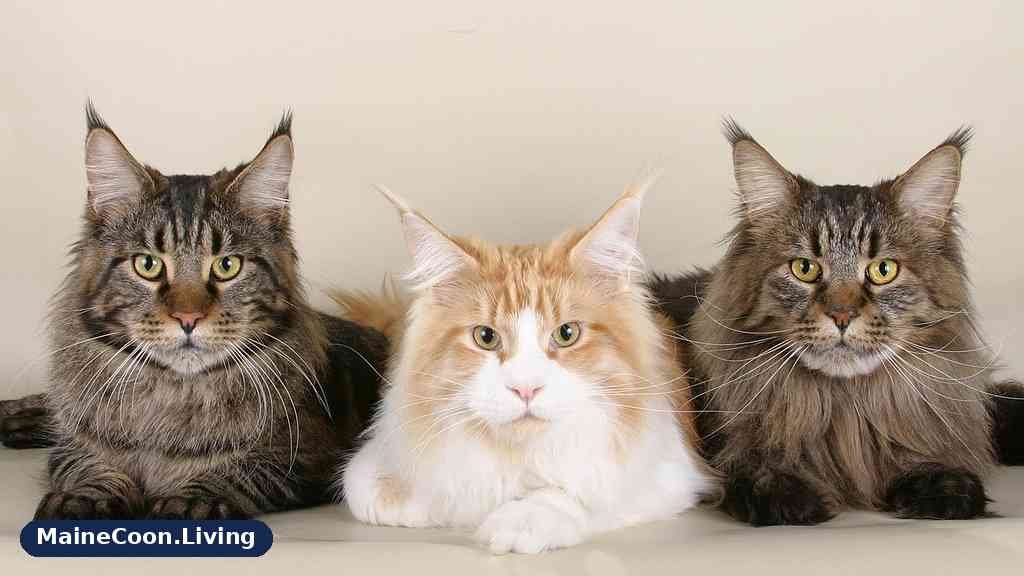
Watch the kittens themselves with a cool head. Bright eyes, clean coats, steady movement and curiosity are what you want, while sneezing, runny eyes, a pot belly or a kitten hiding from every touch all deserve honest questions.
If you cannot visit, use video properly
Distance is common with this breed, and a live video call is a perfectly fair substitute when it is done properly. It should be live, not a polished clip, so ask the breeder to walk through the rooms where the cats actually live.
Ask to see the mother with the litter, the sleeping area, the litter trays and the adult cats too. Ask simple spontaneous things, like calling a kitten by name or picking up the one you have been discussing, because live detail is hard to stage.
A good breeder will treat these requests as normal. Anyone who will only send the same few photos, or who keeps postponing a call while asking for a deposit, is telling you something important.
Socialisation and the homing age
Ask exactly how the kittens spend their days. The best litters are raised underfoot in the home, handled gently every day, and introduced gradually to household sounds like the vacuum, the television, visitors and children where that is part of normal life.
That early handling shows later. Kittens who have been picked up, played with and spoken to tend to settle into a new home with far less stress than kittens raised away from people in a separate building.
Then ask the age question directly, because it reveals a lot. Responsible Maine Coon breeders send kittens home at 12 to 14 weeks, and registry guidance from both TICA and CFA points buyers towards breeders who keep kittens to at least 12 weeks.
Those extra weeks are not dead time. Kittens wean gradually, complete their early vaccinations, and learn bite control, litter habits and basic cat manners from their mother and littermates.
Before your kitten arrives, use our Maine Coon kitten checklist to get the home ready. A breeder who hears that you have prepared properly will usually take your application more seriously too.
The short video below is a useful companion to this section. It walks through the inherited health risks every future owner should know about, including HCM, hip dysplasia and SMA, which are exactly the conditions your breeder should be testing for.
Questions worth asking out loud
Write your questions down before the call, because kitten photos have a way of emptying your head. A breeder who respects the breed will expect these questions and answer them without rushing you.
- Which health tests have both parents had, and can I see the dated results?
- When was each parent last scanned for HCM, and who did the scan?
- How many litters does each queen have in a year, and at what age do you retire your breeding cats?
- How are the kittens socialised, and who handles them each day?
- At what age do your kittens leave, and what vaccinations and vet checks will mine have had?
- What happens if my kitten develops a genetic condition, or if I cannot keep the cat years from now?
- Can I speak to your vet, or to a previous buyer?
- Why did you pair these two particular cats?
Listen to the shape of the answers, not just the content. Straight answers with dates, names and documents are a good sign, while jokes, irritation or quick changes of subject are information too.
Notice whether the breeder asks you anything back. Your home, your working hours, other pets and your plans for an indoor or outdoor life are all things a careful breeder will want to know before agreeing to sell you a kitten.
Read the contract like it matters
A written contract is not bureaucracy. It is the breeder putting their promises somewhere you can point to later, and both TICA and CFA buyer guidance treats written terms as a normal part of buying a pedigree kitten responsibly.
The health guarantee deserves your closest reading. Look for the named conditions it covers, the length of cover, and the exact remedy, because a refund, a contribution to vet costs and a replacement kitten are three very different outcomes.
Check the early vet visit clause. Many contracts ask you to have your own vet examine the kitten within a set number of days, and the guarantee may depend on it, so book that appointment before the kitten even comes home.
The take back clause is the one I weigh most heavily. A breeder who states in writing that they will take the cat back at any age, for any reason, is making a lifetime commitment that poor breeders simply do not make.
Expect a spay or neuter clause for a pet kitten, with breeding rights sold separately and rarely. Also check the deposit terms, what the price includes, when registration papers and the microchip transfer reach you, and what food the kitten is currently eating.
Walk away from guarantees that only work if you return a kitten you have bonded with, or that vanish if you feed a different food. Terms like that protect the seller, not the cat, and a fair breeder will explain every clause without getting defensive.
Red flags that mean walk away
Some warning signs are so consistent that you can treat them as a checklist. One on its own might have an explanation, but two or three together should end the conversation.
- Kittens are always available, in several colours, all year round.
- The mother cannot be seen, in person or on live video.
- No health test documents, just the phrase vet checked.
- Kittens are offered for homing before 12 weeks.
- You are asked to meet somewhere neutral and hand over cash.
- A deposit is demanded before you have seen anything live.
- Many different breeds are being bred under one roof.
- Guarantees of a huge adult size, a rare colour or a perfect temperament.
- The breeder asks you nothing about your home or experience.
- Prices and stories keep changing between messages.
The scam version of this is worth naming plainly. Stolen photos, a copied cattery name and pressure to pay an untraceable deposit are common, which is why live video and verified documents matter before any payment, however small.
Walking away from a kitten you have already pictured in your home is genuinely hard. It is still cheaper, in money and in heartache, than years of treatment for a condition that proper testing would probably have prevented.
A good breeder will vet you too
Expect to be interviewed a little, and take it as encouragement. Breeders who limit litters, test properly and raise kittens in their own kitchen usually have waiting lists, because they would rather place a kitten slowly than sell it quickly.
Expect updates while you wait, photos as the litter grows, and honest input on which kitten suits your household. That steady contact after you reserve is part of the service, and it should continue after homing day, not stop the moment you pay.
My honest closing advice is to slow the whole thing down. Choose the breeder first and the kitten second, insist on seeing the testing with your own eyes, and let a kitten go if the answers do not add up, because the right breeder is worth waiting for.
Frequently Asked Questions
What health tests should a Maine Coon breeder show me?
Ask for echocardiogram reports for both parents, hip scoring results, and DNA results covering HCM, SMA and PKD, plus PKDef where the panel includes it. Every document should carry the cat’s registered name and a date. Verbal reassurance without paperwork is not testing.
Is a DNA test enough to rule out HCM in Maine Coons?
No, because the known DNA mutation is only one cause of HCM in this breed. A cat can test clear for that mutation and still develop the disease, which is why regular echocardiograms by a cardiologist matter so much. Good breeders use both tools rather than choosing one.
Should I visit in person or is a video call enough?
An in person visit is best, because you can judge cleanliness, smell and the cats’ behaviour for yourself. A live video call is a fair substitute if you ask for an unedited walk through and a proper look at the mother with her kittens. Refusing both is a serious warning sign.
At what age should a Maine Coon kitten go to its new home?
Between 12 and 14 weeks is the range that responsible breeders work to. Kittens need that time to wean gradually, finish early vaccinations and learn behaviour from their mother and littermates. An offer to send a kitten home at eight weeks should make you walk away.
What should a breeder health guarantee actually cover?
It should name the genetic and congenital conditions covered, state how long the cover lasts, and explain exactly what happens if your kitten is affected. Look for clear vet check deadlines and a clause saying the breeder takes the cat back at any age. Vague promises in messages are not a guarantee.

4 Comments