Best Cat Companions for Maine Coons
The clue that my Maine Coon wanted company was not sadness. It was the 5 am wrestling match with my feet, followed by chirping at a closed door like the house owed him entertainment.
I am Umar, and I live with this breed every day. They are sociable, nosy and oddly polite for cats, but they are also big, persistent and easily bored when life gets quiet.
A good companion can change that completely. The wrong companion, introduced badly, can turn a calm home into months of hissing behind doors.
Why company suits this breed
Maine Coons mature slowly and stay playful for years. My boy was still inventing kitten games well past his second birthday, long after most cats would have settled for serious napping.
That long, playful stretch is part of the Maine Coon temperament owners fall for. They follow you about, answer back in trills and want to be involved in whatever is happening.
Another animal gives that energy a proper outlet. Chasing, grooming and simply sleeping near a companion are things I cannot fully provide, however many wand toys I buy.
It also helps on working days. If you worry about leaving yours alone, I have covered that honestly in my guide to whether Maine Coons can be left alone, and a settled companion is a big part of the answer.
What actually makes a good match
Size is the first thing I would think about. A fully grown Maine Coon can weigh 6 to 8 kilos, and play that feels gentle to him can flatten a tiny, delicate cat.
Confidence matters just as much. You want a companion who will hold his ground, walk away when he has had enough and come back later without holding a grudge.
Energy needs to be roughly matched too. A companion who wants an hour of play a day will struggle with a young Maine Coon who wants that hour before breakfast.
Personality beats pedigree every time. I would pick a bold, cat social moggy over a shy pedigree kitten for most homes, and I would not think twice about it.
Breeds that usually fit well
Another Maine Coon
The easiest match on paper is another Maine Coon. They play at the same pace, wrestle at the same weight and understand each other from the first meeting.
Two of them together is joyful and ridiculous in equal measure. They will share a cat tree, ignore two expensive beds and both try to fit into one cardboard box.
Be honest about the cost, though. Two large cats need oversized trays, a lot of food and a grooming routine you actually keep up with every week.
Ragdoll
Ragdolls are my other easy recommendation. They are large, placid and famously relaxed about being handled, which suits a breed that likes close contact.
Most Ragdolls are indoor cats by nature, so their daily rhythm fits a Maine Coon household well. Play sessions tend to be gentle, and squabbles usually end with somebody falling asleep mid argument.
The trade off is grooming. Two long coats in one house means brushing becomes a daily habit rather than a weekend intention.
British Shorthair
A British Shorthair brings calm confidence to the pairing. They are solidly built, so play is fairly matched, and they are famously hard to fluster.
Where a Maine Coon is chatty and demanding, a British Shorthair is quiet and self contained. In my experience that contrast balances a home rather nicely.
They can be reserved at first, so do not mistake early politeness for dislike. Give them time, high perches and their own space and they usually settle without drama.
Siberian or Norwegian Forest Cat
These forest breeds speak the same language as a Maine Coon. They are sturdy, athletic and built for climbing, wrestling and long games.
Expect a lively house if you choose one. You may end up with two large cats following you from room to room, both convinced you need supervision.
Fur is the honest downside. Two heavy shedding, longhaired breeds will coat your sofa, your clothes and probably your lunch if you are not careful.
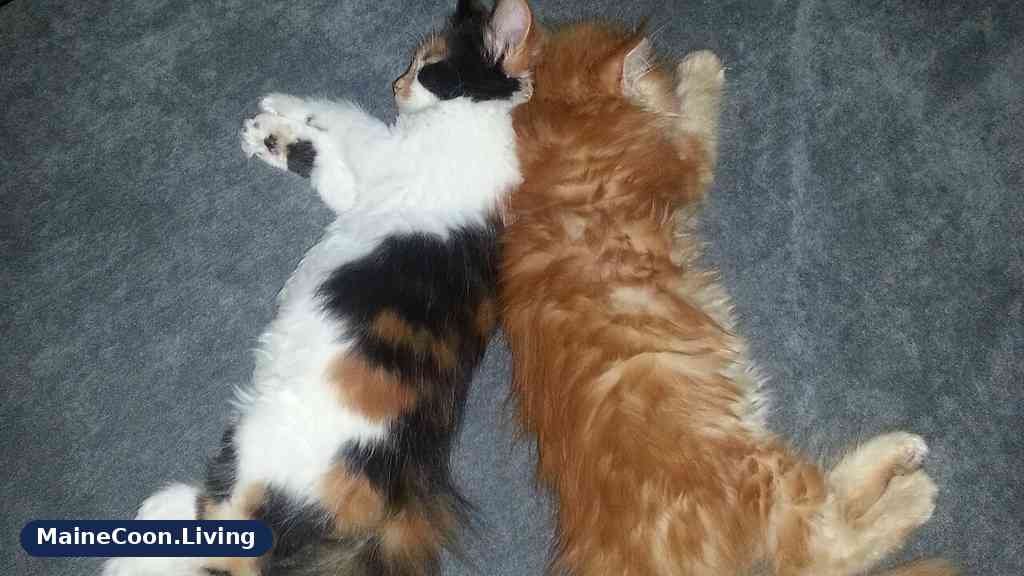
A calm rescue moggy
Please do not overlook the ordinary domestic cat. A confident rescue moggy who already likes other cats can be the best companion of the lot.
A shelter lets you choose an individual, not a stereotype. Ask which cats are playful, relaxed around other cats and happy to share space without guarding it.
An adult rescue also skips the wildest kitten months. A settled 2 to 3 year old who grew up with other cats is often a safer bet than a tiny kitten of any breed.
I have written more on early signs of harmony in my post on whether Maine Coons get along with other cats. The same signs apply whatever breed you bring home.
Age matching, honestly
Matching ages is usually smarter than matching colours or breeds. A young adult Maine Coon pairs best with another young adult who still wants daily play.
An older Maine Coon is a different story. A senior who has enjoyed a quiet decade alone may find a manic kitten exhausting rather than charming.
Kittens are not automatically easier either. A kitten will adore your Maine Coon and follow him everywhere, which is sweet until the older cat wants one hour of peace.
My rule of thumb is simple. If the age gap means one cat wants sprinting and the other wants sleeping, expect friction and plan a slower introduction.
Sex matching without the myths
Neutering comes before everything else. Two unneutered males are the pairing most likely to scrap, spray and guard territory, and no introduction plan fixes that.
Once both cats are neutered, sex matters far less than owners fear. A neutered male with a spayed female is the mix I see settle fastest, but it is a tendency, not a law.
Male Maine Coons are often the goofier, more tolerant ones. Females can be a touch more territorial about favourite spots and favourite people, so introductions may take longer.
Same sex pairs work perfectly well when temperaments suit. Two laid back neutered males, in particular, often become properly inseparable.
Pairings that can go wrong
A very territorial cat is the hardest companion to add or to live with. If a cat has a history of attacking other cats, a gentle Maine Coon will not magically change that pattern.
Very small or fragile cats need careful thought too. The issue is rarely malice, because Maine Coons are seldom nasty, but rough play with a much bigger cat can still frighten or hurt.
Highly nervous cats are another poor fit. A companion who hides all day is not company, and constant hiding is a welfare problem, not a settling in phase.
Then there is single kitten syndrome. A lone kitten raised without feline feedback can grow up mouthy, frustrated and poor at reading other cats, which makes later introductions harder.
None of this means those cats are bad cats. It means the pairing asks too much of one or both animals, and honest owners walk away from a bad match early.
What about a dog instead
For some homes, the best companion is not a cat at all. Maine Coons are confident enough that many live happily with a calm, cat savvy dog.
A steady adult dog who ignores cats when told to is ideal. A boisterous young dog with a strong chase instinct is a much riskier prospect and needs careful management.
I have covered breeds, warning signs and safe first meetings in my full guide to whether Maine Coons are good with dogs. Read that before you commit to a dog as the companion.
Whichever species you choose, the principle stays the same. Slow meetings, escape routes for the cat and supervision until trust is proven, never assumed.
Introductions, step by step
Most failed pairings fail here, not at the breed stage. Bringing a new cat home and opening the carrier in the lounge is the fastest route to a proper fight.
Step 1: A room of their own
Set the newcomer up in one room with food, water, a litter tray, a scratcher and hiding places. Your Maine Coon keeps the rest of the house, and nobody meets face to face yet.
Keep this separation for several days at least. It feels slow, but it lets the new cat eat, sleep and use the tray without fear.
Step 2: Scent before sight
Swap bedding between the rooms so each cat can investigate the other smell safely. Feed both cats either side of the closed door, so the new scent starts to mean good things.
Rub a soft cloth on one cat cheek and leave it near the other cat food bowl. Calm sniffing and eating nearby are exactly what you want to see.
Step 3: Swap the rooms
Let the newcomer explore the house while your Maine Coon spends time in the newcomer room. Each cat learns the other territory without the pressure of a meeting.
Watch how they behave in that borrowed space. Eating normally, playing and sleeping in the open are all encouraging signs that stress is dropping.
Step 4: Seeing without touching
Next, let them see each other through a cracked door or a sturdy baby gate. Keep sessions short, offer treats and end while things are still calm.
A hiss at this stage is communication, not failure. Step in only if you see fixed staring, lunging or one cat trying hard to corner the other.
Step 5: Short meetings, then freedom
Finally, meet in the same room with space between them and toys or food as a distraction. Ten calm minutes is a success, so stop there and repeat tomorrow.
Build up gradually over several days. Only allow unsupervised time after several relaxed sessions in a row, with both cats eating, playing and ignoring each other peacefully.
If things go backwards, return to the previous step for a few days. The ASPCA guidance on introducing a new cat backs this patient approach, and it matches what has worked in my own home.
Two kittens and the single kitten question
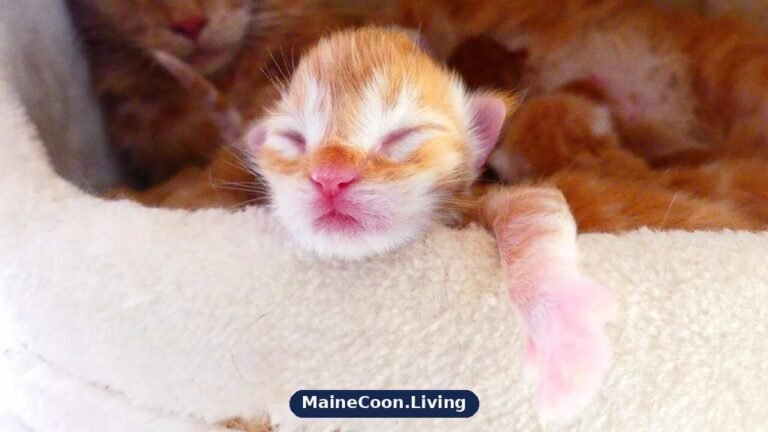
If you have not got your Maine Coon yet, two kittens together is the easiest pairing of all. There is no resident cat to offend and no territory to renegotiate.
Littermates entertain each other, burn off energy together and teach each other when a bite is too hard. Your hands, ankles and curtains all benefit from those lessons.
That is the heart of the single kitten syndrome debate. One kitten alone with working owners can become bored and mouthy, while two happily occupied kittens are often less work overall.
The cost is real and I will not gloss over it. Two kittens mean double food, double insurance and double vet bills, so budget for both animals properly from day one.
When to wait
Sometimes the kindest answer is not yet. If your Maine Coon is unwell, recovering from surgery or newly diagnosed with something, let him get fully better first.
Big life changes are another reason to pause. A house move, a new baby or a new job already gives your cat plenty to adjust to without a rival arriving too.
Money deserves a blunt mention as well. A second large animal needs food, insurance, litter and an emergency fund, not just a spare bowl and good intentions.
And remember what a companion is for. A second cat adds to your attention, it does not replace it, and a Maine Coon will still expect you to be his favourite person.
My checklist before you commit
Ask yourself whether your current cat actually seems lonely or just normally sleepy. Boredom signs include restless night activity, over grooming and demanding play at odd hours.
Check your space honestly too. You need room for separate trays, separate feeding spots and quiet corners where either cat can be completely alone.
Meet any candidate cat more than once if you can. One visit tells you very little, while shelter staff who see that cat daily can tell you a great deal.
Done patiently, this is one of the best decisions you can make for a Maine Coon. Watching two cats choose each other, slowly and then completely, is worth every careful day it takes.
Frequently Asked Questions
What is the best companion breed for a Maine Coon?
Another Maine Coon, a Ragdoll or a British Shorthair usually fits well because the size and energy levels are similar. A calm, confident rescue moggy can work just as well. Match temperament first and worry about the breed label second.
Is a male or female companion better for a Maine Coon?
A neutered male paired with a spayed female is often the smoothest mix, but it is not a guarantee. Two neutered males or two spayed females can also become close friends. Energy level, confidence and neutering matter far more than sex alone.
Can a Maine Coon live happily with a small cat?
Yes, provided the smaller cat is confident and has places to escape to during play. A very timid or fragile cat may find boisterous Maine Coon wrestling stressful. Supervise play early on and step in if the smaller cat keeps hiding or avoiding contact.
How long should introductions between two cats take?
Most introductions need 2 to 4 weeks from separate rooms to relaxed time together. Nervous or older cats may need 6 weeks or longer, and that is completely normal. Going back a step after a bad day works better than pushing forward too quickly.
Should I get a second kitten to prevent single kitten syndrome?
If you are adopting a young kitten and you are out for long stretches, a second kitten is often the kinder choice. Kittens learn bite control and social manners from each other. It costs more at the start, but it can prevent months of bored, frustrated behaviour.