Polydactyl Maine Coon: Extra Toes Explained
I am Umar, and I keep Maine Coons. The polydactyl version of this breed is the one that stops visitors mid sentence, because a cat walks into the room on paws that look a size too big and faintly like mittens.
People then ask the same three questions. Is it normal, does it hurt, and can it be passed on? This page answers all three properly, plus the practical bit most guides rush past, which is how you actually look after the extra nails.
What the word means
Polydactyl joins two Greek words, poly for many and daktylos for a finger or toe. A polydactyl cat is simply a cat born with more toes than the standard set, on one paw or on several.
A typical cat carries 18 toes in total, five on each front paw and four on each back paw. A polydactyl Maine Coon might carry 20, 22 or 24, and the extras turn up on the front paws far more often than on the back ones.
The overall cat underneath is an ordinary Maine Coon in every other respect. Same size, same coat, same slow growing, dog like temperament. If you want the full picture of how big these cats get, our Maine Coon size guide covers weights and lengths in detail.
Two shapes of extra paw
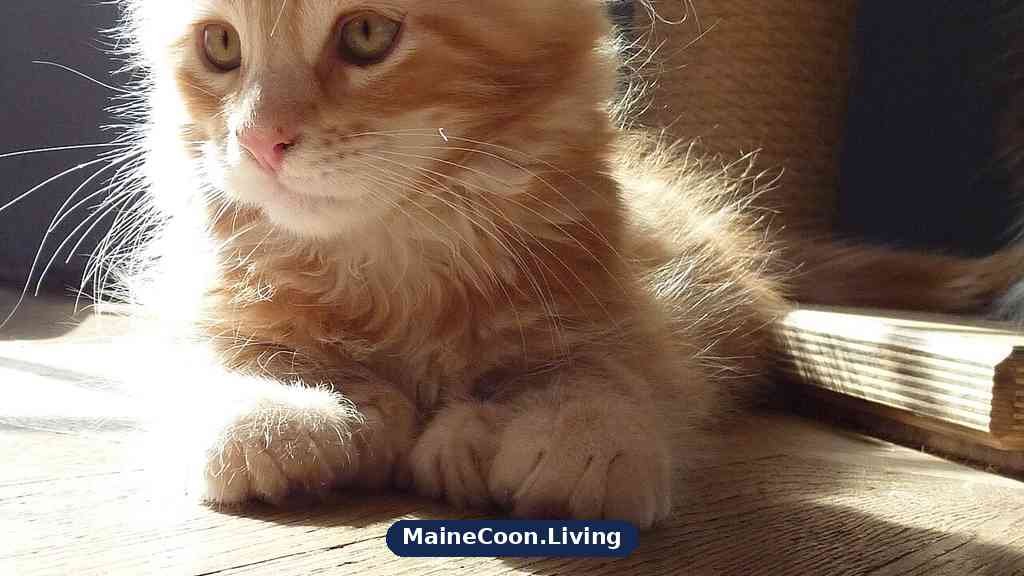
Owners tend to describe two broad shapes. In the first, the extra toes sit close together on the inner side of the paw and the whole foot rounds out, which is where the mitten nickname comes from.
In the second, one extra digit sits a little apart from the rest and reads clearly as a thumb. Cats with this shape often look startlingly handy when they pin a toy down or scoop food out of a puzzle feeder.
Neither shape is better than the other. What matters is whether each toe is fully formed, well spaced and carrying a nail that grows in a sensible direction.
The genetics, in plain words
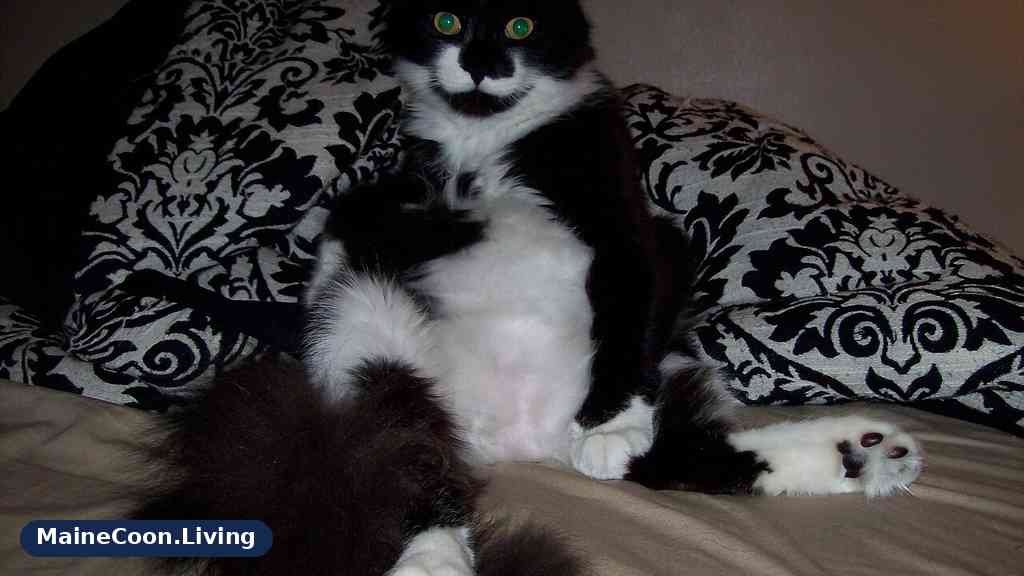
Polydactyly in cats is a dominant trait. Dominant means a kitten needs only one copy of the gene, passed down from just one parent, for the extra toes to show up in the paws.
The gene involved is often referred to as the Pd gene. It acts early, while the kitten is still developing, by changing the signal that tells the edge of the paw bud how many digits to build.
That one copy rule explains the litter patterns breeders see. Pair a polydactyl cat with a normal pawed one and roughly half the kittens, on average, will arrive with extras, though any single litter can beat or miss that average.
Expression is the unpredictable part. Two kittens with the same gene can end up with different toe counts, extras on different paws, or a thumb shape on one side and a mitten shape on the other.
So an honest breeder can tell you what a pairing is likely to produce, but nobody can promise an exact number of toes. Anyone who guarantees a precise count is guessing, and you should treat the rest of their claims with the same caution.
Ship cats and good luck
To understand why this trait clusters in Maine Coons, you have to go back to the working cats of the North Atlantic. Ships carried cats as crew, there to keep rats away from stored food on long crossings.
Sailors valued cats with extra toes and, by many accounts, treated them as lucky. The thinking at the time was that broader paws meant surer footing on a wet, moving deck and a better grip on prey.
Those cats came ashore in port towns all along the New England coast and bred with local cats. Because the trait is dominant, it travelled easily from one generation to the next without needing both parents to carry it.
That coastal history is also why polydactyl cats remain noticeably more common in parts of eastern North America than in many other places. Our Maine Coon origin guide tells the wider story of how the breed itself took shape in that same seafaring world.
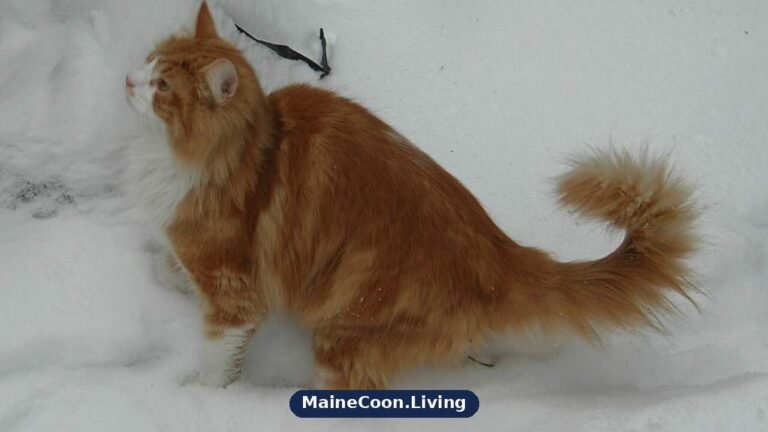
There is a second folk explanation closer to home. Wide paws spread a heavy cat over soft snow, a bit like a snowshoe, which would suit a breed shaped by Maine winters. It is a neat idea and it may contain some truth, but it has never been properly tested.
The Hemingway cats, handled carefully
The best known polydactyl story in the world is not actually a Maine Coon story. The writer Ernest Hemingway was given a white six toed cat, said to have come from a ship captain, and polydactyl cats have lived at his former home in Key West, Florida ever since.
Many of the cats on the property today are described as descendants of that first cat, and a good number of them carry extra toes. Visitors go as much for the cats as for the house, and the animals are a protected part of the place.
I mention it here because the story shows the same two threads you see in Maine. A sea captain, a cat valued aboard ship, and a dominant gene doing quiet work down the generations. The video below tells the Hemingway house story in full.
How common was it in Maine Coons?
Older accounts suggest extra toes were once very common in this breed, with some estimates putting the share as high as 40 percent of Maine Coons in earlier times. Treat that figure as an informed estimate from breed history, not a counted statistic.
What is certain is the direction of travel. Once written breed standards treated the standard toe count as the correct one, pedigree breeders selected away from the trait, generation after generation.
The gene survived anyway. It held on in pet bred lines, in farm and coastal cats, and with the small group of breeders who simply liked the old type and kept breeding it on purpose.
Health: usually nothing to worry about
Let me put the main point plainly. For most cats, extra toes on their own are not a health problem, and they need no treatment, no surgery and no special diet.
The toes are proper toes, with bone, joints, pads and a nail, and most polydactyl cats use them without thinking about it. They run, jump, climb and knead exactly like their standard pawed relatives, and vets who see them regularly tend to file the trait under harmless variation. Guidance from the Cornell Feline Health Center on normal feline anatomy is a useful backdrop if you want to read around general cat health.
When an extra toe does need a vet
There are a handful of situations worth acting on. The most common is a nail on an oddly angled extra toe that curls round and presses into the pad, which can become sore and, if missed, infected.
Snagging is the second one. A toe that sticks out at an unusual angle can catch on carpet loops, scratching posts or bedding, and a cat that keeps catching the same toe needs that paw looked at.
The third sign is movement. A change in gait, a new limp, reluctance to jump down, or growling when a paw is handled all deserve a vet visit, whatever the toe count. Our guide to Maine Coon health problems covers the conditions that matter far more in this breed, such as hip and heart disease.
One distinction is worth knowing so you do not worry needlessly. A rare forearm condition called radial hypoplasia, where the front leg bone develops poorly, is a different and more serious matter from ordinary extra toes. A normal polydactyl paw on a straight, strong leg is not that condition.
The record holders
Toe counting has an unlikely competitive side. The highest verified total most often cited belongs to a Canadian cat named Jake, recorded by Guinness World Records with 28 toes, seven on each paw.
Another cat, a Minnesota cat named Paws, was later reported with the same total of 28. Whether you count her as a joint holder depends on whose record keeping you trust, but the shared lesson is that 28 is the ceiling anyone has credibly documented.
Most polydactyl Maine Coons live well below that ceiling. One extra toe on each front paw, giving 20 in total, is the everyday version you are most likely to meet.
Looking after extra toes, day to day
The care routine is the same as for any Maine Coon, with one adjustment. There are more nails, and at least one of them will be hiding somewhere you do not expect.
Trimming the extra nails
Work paw by paw and count as you go. Press each toe gently so the nail extends, take off only the sharp tip, and keep clear of the pink quick inside, which bleeds and hurts if you cut into it.
The extra nails are the ones owners miss, particularly a small one tucked on the inner side of a mitten paw. A missed nail is the one that curls, so the counting habit matters more than any special tool.
Every 2 to 3 weeks suits most indoor cats. If your cat resists, do one paw a day across a week rather than staging a battle, and finish each paw with food. Most cats learn the routine quickly once it stays short and predictable.
Checking between the toes
Once a week, while your cat is settled on your lap, spread each paw and look between the toes. You are checking for nails turning toward the pad, red or sore skin, and litter or grit packed into the longer fur between the digits.
Maine Coon paw fur is generous, and polydactyl paws have extra folds for debris to sit in. A quick check takes under a minute and catches the small problems while they are still small.
Start this handling with kittens from their first week at home, a few seconds at a time, so paw checks become boring rather than alarming. Our Maine Coon grooming guide walks through the rest of the routine, from combing the coat to cleaning ears.
What the breed standards say
Here the honest answer is that the cat world disagrees with itself. Historically, extra toes were treated as a fault in the Maine Coon standard, and cats carrying them were kept out of championship showing.
That position still holds in some associations. The CFA Maine Coon breed page reflects a standard built on the normal toe count, and extra digits remain a disqualifying fault under it.
Other registries have moved. TICA registers polydactyl Maine Coons and accepts them within its rules, so owners who want to show a polydactyl cat do have a route, provided they read the current standard first.
Rules in this area have changed before and can change again, so check the wording of the registry you care about rather than relying on forum summaries. For a pet cat, of course, none of it changes a single day of your life together.
Should you look for one?
If the mittens charm you, yes, with the usual conditions attached. Choose the breeder before you choose the toes, and look for health screening, well socialised kittens and honest answers about what a pairing typically produces.
Expect a smaller pool to choose from. Fewer breeders work with polydactyl lines, waiting lists can be longer, and some breeders price these kittens a little higher because demand is strong.
What you get in return is a cat with genuine history in its feet. Every time mine plants a wide paw on my keyboard and deletes a paragraph, I am reminded that this trait outlasted sailors, show standards and a century of fashion. It has earned its place.
Frequently Asked Questions
Is a polydactyl Maine Coon healthy?
Yes, in the great majority of cases. The extra toes are fully formed and pain free, and affected cats walk, run and climb normally. Book a vet check only if a nail grows into the pad, a toe catches repeatedly, or the way your cat walks changes.
How many toes can a polydactyl Maine Coon have?
Most have one or two extra toes, usually on the front paws, taking the total from 18 to somewhere between 19 and 24. Rare cats go higher, and the official record stands at 28 toes in total. Every paw can differ, even on the same cat.
Do extra toes help a cat on snow or on a ship?
That is the old belief, and it makes intuitive sense because a wider paw spreads weight over a bigger area. Nobody has proved the advantage in a proper study, though. Treat it as a good story with a plausible idea inside it, not as settled science.
Can a polydactyl Maine Coon be shown?
It depends on the registry. Some associations, TICA among them, register and accept polydactyl Maine Coons, while the CFA standard treats extra toes as a disqualification. If showing matters to you, check the current rules of your registry before you buy.
How do I care for the extra nails?
Trim them on the same schedule as the rest, usually every 2 to 3 weeks, and count the toes on each paw so the small inner ones are not missed. Check between the toes weekly for curling nails, trapped litter or sore skin. Little and often beats one long, stressful session.