Maine Coon Growth: How Long Do They Keep Growing?
The first thing I did after bringing my Maine Coon home was start a little height mark on the kitchen door frame, like families do with children. It felt like a joke at the time. It stopped feeling like a joke when the marks kept creeping up long after every other cat I had known would have been finished.
Friends would visit, look at this big kitten sprawled across the sofa, and ask if he was done yet. For a long time my honest answer was no, not even close. He was large, yes, but large and finished are two very different things in this breed.
Here is the short answer I wish someone had given me on day one. Most Maine Coons keep growing for 3 to 5 years, and that slow build is completely normal for them.
I am Umar, and I write as an owner who has lived through this long timeline, not as a vet or a breeder. What follows is the timeline as I have watched it unfold, phase by phase, including the worrying plateaus in the middle.
The Long Timeline at a Glance
A typical domestic cat is close to adult size by about a year old. A Maine Coon at a year old is really just a teenager with a good start. The frame is mostly there, but the substance that makes the breed famous is still years away.
By fully grown, most adult males settle somewhere in the mid teens to around 20 pounds, and most females land a little lower than that. Those are broad adult ranges, not targets to chase. If you want the month by month picture, my Maine Coon weight by age guide covers it in detail.
Think of growth in this breed as two jobs happening at different speeds. First the skeleton has to be built, and only after that can the chest, muscle and coat fill the frame out properly. That order explains almost everything owners find confusing later.
0 to 6 Months: Rapid Skeletal Growth
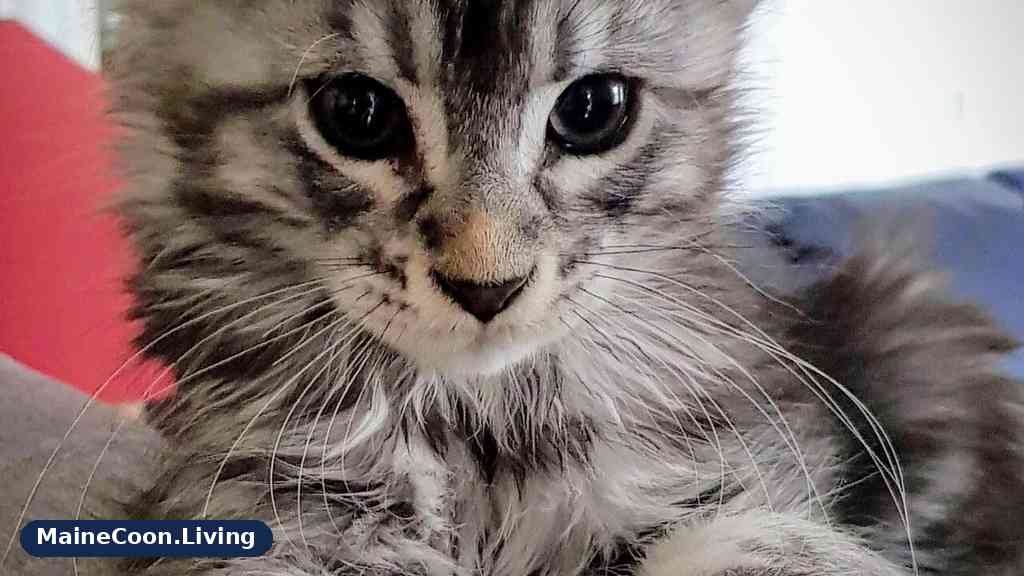
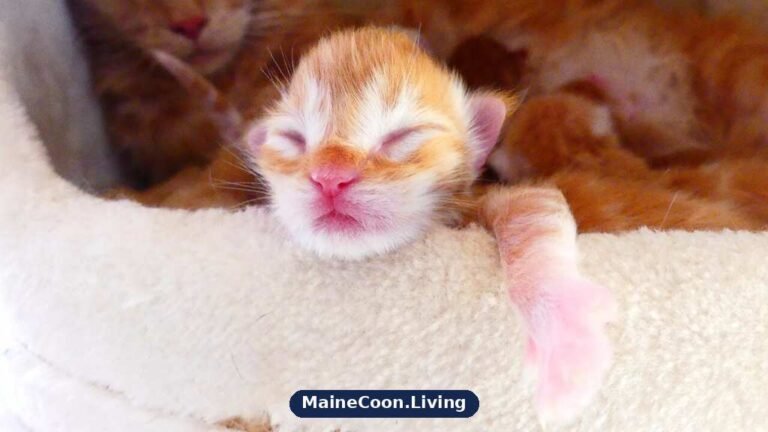
The first six months are the fastest chapter of the whole story. Kittens seem to change between breakfast and dinner, and photos taken a fortnight apart can look like two different cats. Legs shoot up, paws look comically oversized, and the appetite matches the construction work.
This is mainly skeletal growth, with long bones lengthening and joints forming under a still light body. The ears often look too big for the head, and the tail already hints at the plume it will become. It is charming, slightly awkward, and entirely healthy.
Feeding matters a lot in this window because the body is building its foundations. I kept meals regular, used a good quality kitten food, and resisted the urge to add extras just because the bowl looked empty again. A kitten that is bright, playful and steadily gaining is usually a kitten that is doing fine.
Growth at this age still is not one smooth line. A kitten may look rounder one week and leaner the next as length briefly outruns weight. As long as the trend over a month points up and your vet is happy, those small wobbles are part of the pattern.
6 to 12 Months: The Lengthening Stage
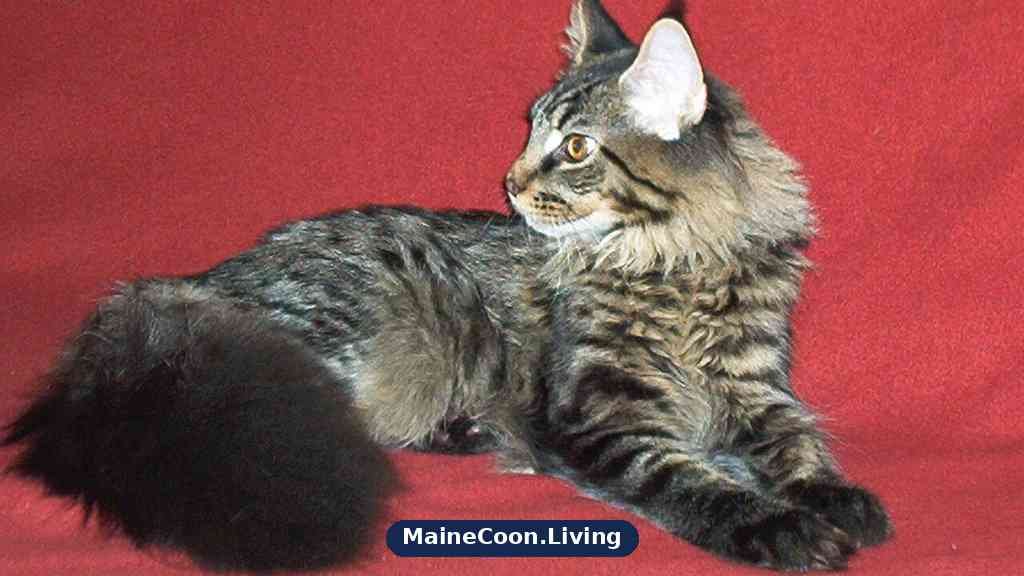
Somewhere around six months, the growth changes character. The kitten look fades and a longer, rangier young cat takes its place. The body stretches, the face narrows a little, and the whole cat can look as if it has been gently pulled from both ends.
This lengthening stage catches many owners off guard. Your cat may weigh more than ever yet look thinner, simply because the new weight is spread over a longer frame. It is the first of several moments where the eyes say one thing and the scales say another.
Energy levels in this phase are not subtle. Play sessions get longer, climbing gets bolder, and furniture starts to feel the difference that a few extra pounds of determined cat can make. I learned to offer sturdy scratching posts and high spots early, before my shelves made the decision for me.
By the first birthday, many Maine Coons already outweigh adult cats of smaller breeds. That size can fool visitors, and honestly it fooled me too. Underneath, the growth plates are still open, the chest is still narrow, and the real filling out has barely begun.
Watch the Early Months
Reading about the early growth is one thing, but seeing a litter change day by day makes the pace click. The clip below follows young Maine Coons through their first hundred days, and the difference between the opening and closing scenes says more than any chart. Watch the paws and ears in particular, because they give the game away early.
Notice how the change is fast but never frantic. Even in a compressed view, the kittens move through distinct little stages rather than simply inflating. Your own cat will do the same thing, just at a speed your daily routine can easily hide.
1 to 2 Years: Filling Out
After the first birthday, upward growth slows right down and outward growth takes over. This is the year the chest starts to deepen and the shoulders gain real width. The cat stops looking stretched and starts looking substantial.
The famous ruff around the neck begins to show properly in this phase, especially in males. Muscle builds along the back and hindquarters, helped by all that climbing and play. The coat also thickens, which can make progress look faster than it really is in winter.
Owners often tell me this is when strangers finally say the words gentle giant. I understand why, because the shape at last matches the reputation. Still, a two year old is usually a work in progress, with more breadth and finish yet to come.
Appetite can stay surprisingly strong through this stage, which tempts people to keep feeding like the kitten days. I found measured meals worked better than free feeding once the rapid phase passed. Steady condition, not maximum food, is what supports muscle without piling on fat.
2 to 3 Years: Broadening Out
Between two and three years, the changes get quieter but they still matter. The chest broadens further, the head widens a touch, and the whole body gains a settled, rectangular look. Friends who had not visited for six months noticed it more than I did.
This is also when the personality often seems to mature alongside the body. Many Maine Coons become a little calmer and more deliberate, without losing their playful streak. The teenage chaos softens, and routines around food, sleep and company feel more fixed.
Because the weekly changes are now small, this phase is easy to underestimate. Compare photos from the second and third birthdays side by side and the difference is obvious. The cat in the later photo is not taller so much as more completely itself.
3 to 5 Years: Final Maturity
The final phase is the slowest of all, and for many cats it is mostly about finish. Coat reaches its full length and density, the head completes its broadening, and muscle settles into its adult density. Some males keep adding small amounts of bulk well into this window.
Growth plates close along the way, which is the biological full stop for skeletal growth. After that, any change on the scales is about muscle condition or fat, not new frame. That distinction becomes important when you judge feeding later in life.
I remember looking at my cat at around four and realising the door frame marks had truly stopped moving. Nothing dramatic happened on any single day. The finish line in this breed is less an event and more a quiet absence of change.
If you want the full picture of adult dimensions once this stage arrives, my Maine Coon size guide covers length, height and build in depth. This timeline is about how they get there. The destination only makes sense when you have watched the journey.
Spurts and Plateaus
Maine Coon growth does not follow the smooth curve printed on a vet chart. Real growth arrives in spurts, pauses, and then surprises you with another jump. A few weeks of rapid change may be followed by a month where almost nothing seems to happen.
During a spurt, appetite often rises and sleep gets longer and deeper. Growing is expensive work for a young body, and rest is part of how it pays for it. I learned not to panic when a lively kitten suddenly napped like a retired farm cat.
Plateaus are just as normal, and they are where most owner anxiety lives. The cat eats well, plays well and looks well, yet the scales barely move for weeks. In a breed built over years, a flat month is a pause, not a verdict.
The vet curve looks smooth because it is an average drawn through thousands of messy individual paths. Your cat only has to follow his own path in a healthy way. Judge the trend over months, keep body condition in mind, and let single weigh ins carry less weight, if you will forgive the pun.
Season can play a small visual part too. A thick winter coat can make a plateau look like a spurt, and a summer shed can make real progress look like loss. Hands tell the truth better than eyes here, so feel the ribs and chest rather than trusting the fluff.
Why Owners Panic at 8 Months
Eight months deserves its own mention because it is peak worry age for this breed. The kitten roundness is gone, the adult bulk has not arrived, and the cat in front of you is all legs, ears and tail. Put that cat next to a chunky one year old domestic shorthair and the comparison does your head in.
I have been there, quietly comparing photos online at midnight and wondering what I had done wrong. The answer, in my case and in most cases I hear about, was nothing. The lengthening stage simply makes a healthy young Maine Coon look unfinished, because it is unfinished.
What helped me was shifting from daily judgement to monthly evidence. One photo, one weigh in and one body condition check a month showed steady progress that daily fretting had completely hidden. If appetite drops, energy fades or weight actually falls, that is different, and that is a vet conversation.
Males vs Females: Who Finishes When?
Males and females follow the same basic timeline, but they rarely finish it together. Females tend to look complete earlier, often by around three years. Their frames are a little smaller, and the final broadening is usually less dramatic.
Males are the slow finishers of the breed. Many keep widening through the chest and head until four years, and some carry on quietly until five. That late male bulk is a big reason the breed has its outsized reputation.
The difference is one of degree, not kind. A female is not done at one year just because she matures faster, and a male is not behind just because he still looks lean at two. Each sex still needs the same patience, measured feeding and regular health checks.
Individual variation sits on top of all of this. Genetics, litter size, early nutrition and general health can move any single cat months ahead of or behind these rough timings. Treat the timeline as a map of the territory, not a train timetable your cat must obey.
What Can Slow Growth
Poor nutrition is the most common brake on healthy growth. A diet that is short on quality protein, badly balanced or simply fed in inconsistent amounts gives a growing body too little to build with. The effect is rarely dramatic overnight, but over months it shows in condition, coat and pace.
Parasites are the quiet thieves in this story. Worms and other parasites take nutrients meant for growth and can leave a kitten eating well yet gaining poorly. Regular prevention and prompt treatment, guided by your vet, protect far more than comfort.
Illness slows growth for a simple reason: the body spends its resources on recovery instead. A significant infection, ongoing digestive trouble or an untreated health condition can all pause the timeline. My overview of Maine Coon health problems explains the conditions owners should know about.
Chronic stress belongs on this list too, even though it is less visible. A chaotic home, constant disruption or poor socialisation can suppress appetite and rest, and both feed directly into growth. Calm routines are not a luxury for a young Maine Coon; they are part of the building materials.
None of this means every slow grower has a problem. Some cats are simply built to finish smaller or later, and that is a normal outcome, not a failure. The warning signs are a stalled trend plus poor condition, low energy or a coat that looks dull and thin.
What Does Not Slow Growth
Neutering gets blamed for a lot, so it deserves honest and balanced wording. Neutering does not stunt a Maine Coon, and neutered cats follow the same long timeline as any other. Your cat will not stop growing at the surgery date, whatever the internet comments claim.
There is one real nuance worth knowing. When a cat is neutered early, before the growth plates have closed, those plates can stay open a little longer than they otherwise would. The result can be slightly longer long bones, not a smaller cat, and the overall effect on final size is modest.
What neutering can change is appetite and energy balance afterwards, which is a feeding issue rather than a growth issue. A neutered young cat that is overfed will gain fat, not frame. Adjust portions with your vet and the long timeline carries on much as before.
Ordinary things like a quiet month, a summer coat change or a brief fussy phase with food do not derail growth either. This breed has years of runway, and short interruptions rarely matter. Patterns over time are what count, not single weeks.
Supporting Growth Without Overfeeding
The biggest feeding mistake I see is treating a big breed like a bottomless project. More food does not make a bigger skeleton, because genetics set the frame and time builds it. Extra calories mostly become extra fat, which growing joints really do not need.
Feed for the stage your cat is actually in. Kittens need more food per pound of body weight than adults, and the Cornell Feline Health Center guidance on feeding frequency explains how those needs change with age. I found that steady, measured meals made condition far easier to judge than a constantly full bowl.
Use your hands as much as the packet. You should feel ribs under a light covering, see a gentle waist from above, and notice muscle over the shoulders and hindquarters. If the ribs vanish under padding, the portion, not the growth plan, needs adjusting.
Play is the other half of healthy growth. Daily interactive play, climbing and scratching build the muscle that fills the frame out in years one to three. A growing cat that moves well and rests well is usually a cat whose body is developing as it should.
Keep vet visits regular through the whole timeline, not just the kitten months. Those appointments track the trend, keep parasite prevention current, and catch small problems before they steal months of progress. Bring your monthly notes and photos, because they make those conversations far more useful.
Signs Growth Has Finished
The first sign is boring, and that is exactly the point. Weight, chest width and overall shape stay essentially the same across many months, through different seasons. When a full year of photos looks interchangeable, your cat is telling you the building work is done.
The head and ruff look settled rather than promising. The face has its adult width, the coat cycles with the seasons without getting longer each year, and the body feels dense and finished in your hands. Owners often notice this in hindsight rather than on the day.
Behaviour can echo the change too. Many cats become more consistent in appetite, sleep and play once maturity arrives, though plenty keep a kittenish streak for life. A settled routine is a supporting clue, not proof on its own.
After the finish, keep watching the scales with a different question in mind. Any gain now is condition, not growth, and any loss deserves the same attention you would give any adult cat. The long project is complete, and the job shifts from building a cat to keeping one well.
My Honest Take
If I could give one piece of advice to a new owner, it would be to relax into the timeline. This breed rewards patience like few others, and almost every worry I had at eight months answered itself by eighteen. The cats are not in a hurry, and we do our best work when we are not in one either.
Feed steadily, play daily, keep the vet in the loop, and take the monthly photo. Years from now, that little row of pictures will show a transformation no single day ever revealed. That, honestly, is half the joy of living with a Maine Coon.
Frequently Asked Questions
How long do Maine Coons keep growing?
Most Maine Coons keep growing for 3 to 5 years, far longer than a typical domestic cat. The fastest gains happen in the first year, and the rest is slow filling out of the chest, head, muscle and coat. A few cats finish closer to 3 years, while big males often use the full timeline.
Why does my Maine Coon look lanky at 8 months?
At 8 months the skeleton is lengthening faster than the muscle can fill it in, so legs, ears and tail look oversized. It is a normal in between stage, not a sign that growth has gone wrong. Keep feeding a balanced kitten diet, watch body condition, and let the frame catch up in its own time.
Do males take longer to finish growing than females?
Yes, in most cases males finish later than females. Many females look close to complete by around 3 years, while males often keep broadening and adding muscle until 4 or 5 years. The gap is about timing and final bulk, not about one sex growing in a completely different way.
Does neutering stop a Maine Coon from growing?
No, neutering does not stop a Maine Coon from growing. Early neutering can delay the closing of the growth plates slightly, which sometimes makes the long bones a touch longer, but it does not stunt the cat or rewrite the timeline. Genetics, nutrition and general health matter far more to final size.
How can I tell when my Maine Coon has finished growing?
The clearest sign is stability, with no real change in frame, weight or shape across many months. The chest stays the same width, the head and ruff look settled, and seasonal coat change becomes the only obvious difference. If weight still creeps up after that point, it is usually extra condition rather than true growth, so check with your vet.

2 Comments