Maine Coon Colors: The Complete Guide to Colours and Patterns
The first time a friend asked what colour my Maine Coon is, I gave three answers in one sentence. Mostly brown, sort of a tabby, black if you part the fur, I said, and every word was true and none of it was the cat’s actual colour name.
That small confusion is the honest starting point for this chart. Maine Coon colour names are not single labels, they are short stacks of information, and once you see how the stack is built the long lists stop looking endless.
I am Umar, and I live with these cats. This page is the map of the whole system, with a link onward whenever one colour deserves a page of its own.
How the chart is organised
Every coat in this breed starts with just two pigments. One is the dark pigment behind black based coats, and the other is the red pigment behind every orange and cream cat you will ever meet.
Other genes then act like switches and dimmers on top of that base. They can soften the colour, arrange it into tabby markings, wash the roots of each hair pale, mix two colours in patches, or lay white over part of the coat.
That stacking is why the counts you read run past seventy five combinations. The Cat Fanciers Association breed standard organises Maine Coon colours in these same layers, and TICA works in a very similar way.
The base colours
Black and red
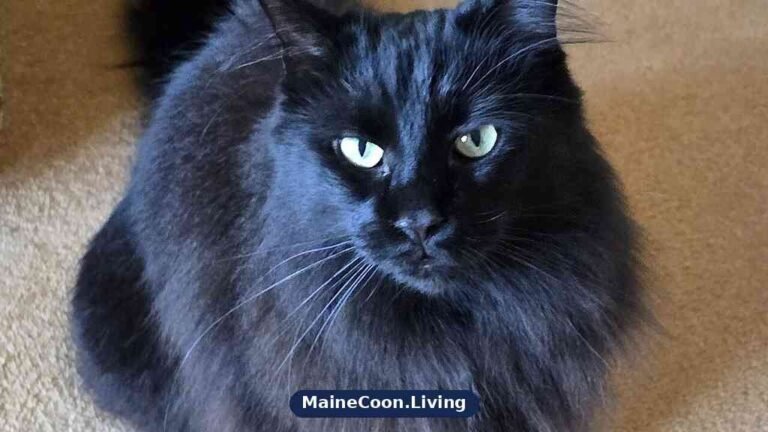
Black is the dark pigment at full strength. Kept plain it gives you the black Maine Coon, a coat that looks simple until sunlight pulls a warm, rusty sheen out of the long fur.
Red is the warm pigment at full strength, and it is the colour almost everyone outside pedigrees calls orange or ginger. Our orange Maine Coon guide covers that cat properly, including why so many reds are male.
Blue and cream, the dilutes
A dilute gene softens pigment along each hair, and a kitten needs two copies of it to show the effect. Black softens into blue, which is really a slate grey with a cool cast, and red softens into cream, a pale buff that can look nearly white in baby photos.
Dilution can apply to almost everything further down this page, from tabbies to tortoiseshells to smokes. If the softer end of the palette appeals to you, our blue Maine Coon guide follows the dilute family in full.
Solid coats, the simplest layer
A solid cat wears one colour from the root of each hair to its tip, with no tabby markings and no white. Black, blue, red, cream and white make up the recognised solid list, and a genuinely clean solid is less common than kitten adverts suggest.
Many solid kittens wear faint ghost markings in their first months, stripes you can only see in certain light. Most fade as the adult coat grows in, although red and cream solids usually keep a whisper of tabby pattern for life.
White sits apart from the other solids because it is not really a pigment at all. A white Maine Coon carries a masking effect that covers the colour underneath, which is why eye colour and hearing deserve extra attention in whites.
Tabby, the original pattern
Tabby is a pattern, not a colour, and it is the breed’s ancestral coat. Tabby hairs are banded light and dark along their length, and that banding draws the stripes, swirls and spots while the forehead keeps the familiar M shape.
Classic tabby
The classic pattern draws bold, wide markings: swirls on the cheeks, a butterfly shape across the shoulders and a round target on each flank. On a big, long coated cat it reads like marbling, and it is the pattern strangers most often stop to admire.
Mackerel tabby
The mackerel pattern trades swirls for narrow vertical stripes running down from a dark line along the spine. It looks tidier and more tiger like than the classic, and the two patterns can appear in the same litter from the right parents.
Ticked and spotted
A ticked tabby carries its pattern in the banding of each hair rather than in stripes across the body, so the coat looks flecked and even, with clearer markings left on the face, legs and tail. A spotted tabby is what happens when stripes break up into distinct spots along the sides.
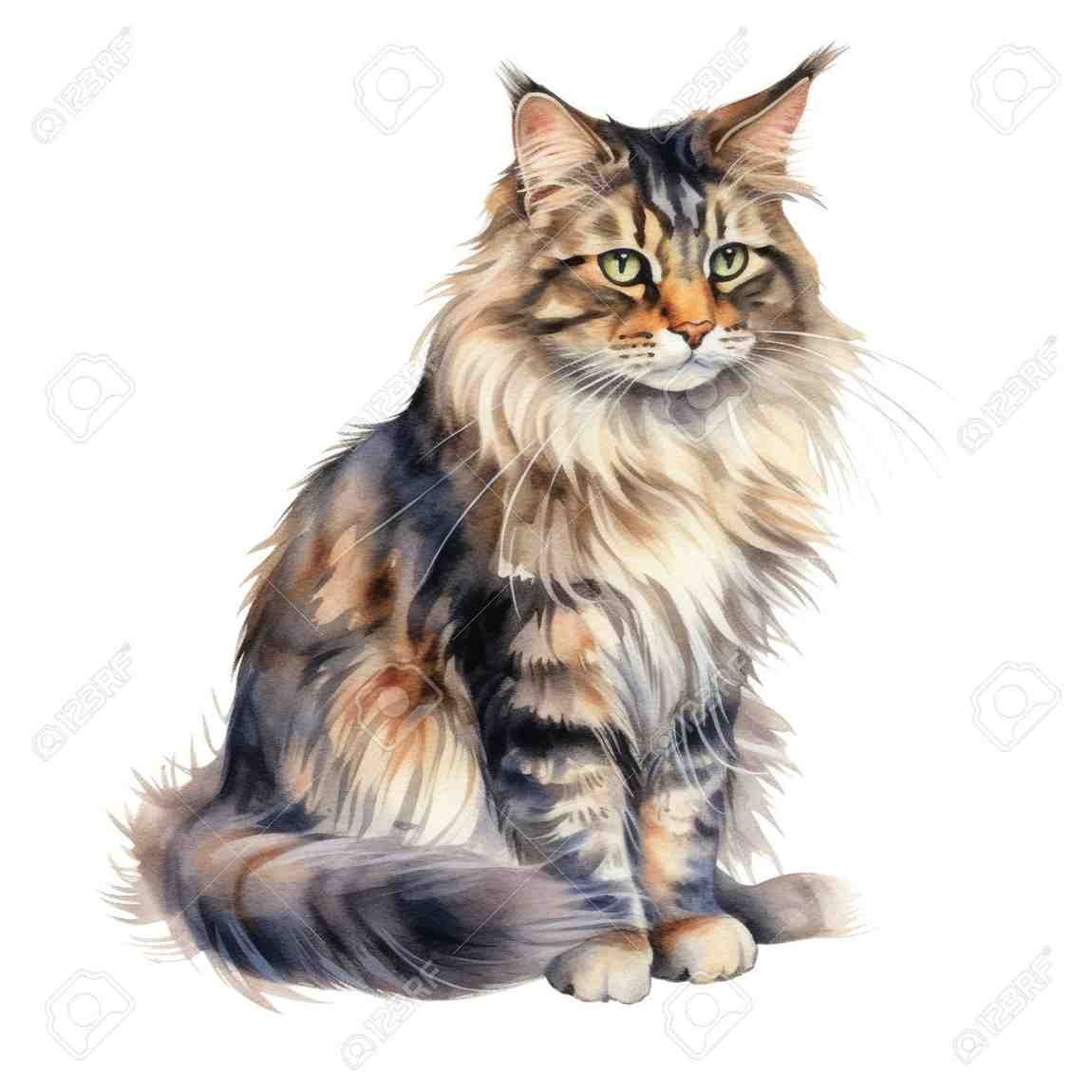
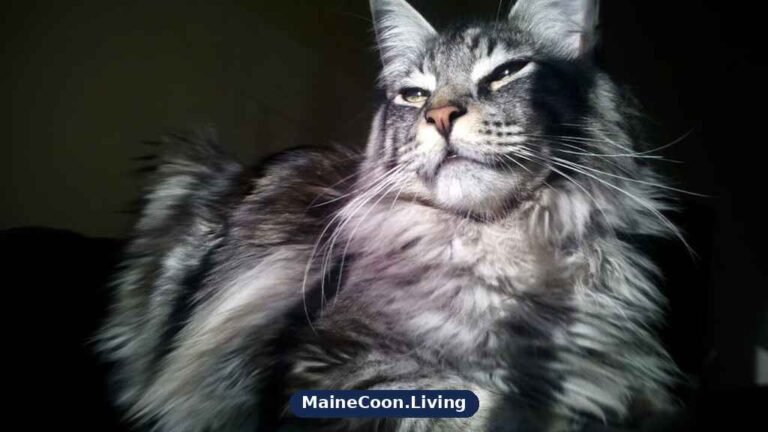
The most famous tabby of all needs a word of its own. The brown Maine Coon is not a separate pigment, it is a black tabby whose warm brown ground colour shows between the black markings, the woodland look in most people’s first picture of the breed.
Smoke, silver and shaded
One more gene, usually called the silver or inhibitor gene, can clear pigment from the lower part of each hair. What it produces depends on the coat underneath, and this one layer explains three of the most confused names in the breed.
Smoke
A smoke is a solid cat whose hair roots have been left pale, close to white. Standing still it passes for an ordinary solid, then it moves, the long coat opens, and the pale undercoat flashes through like light under a door.
Black smoke is the dramatic one, but blue smoke, red smoke and cream smoke all exist. Tortie smokes exist too, and they tend to look softer and smokier still.
Silver and shaded
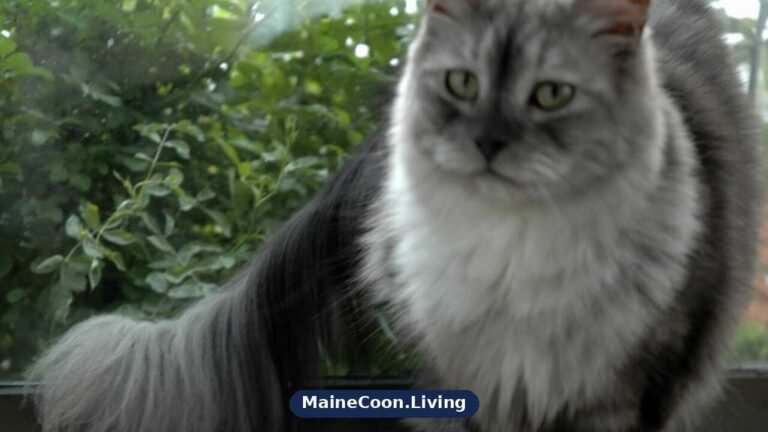
Put the same pale roots under a tabby and you get a silver tabby, sharp dark markings over a bright, icy ground. Let the colour shrink to the outer part of each hair on a non tabby style coat and the names become shaded, or shell at the extreme, where only the very tips carry colour.
The red series version of that pale tipped look is called cameo. Our silver Maine Coon guide places silver tabbies, smokes and shaded cats side by side, which is honestly the easiest way to learn them.
Tortoiseshell and calico
A tortoiseshell carries black and red instructions at the same time, in patches or in a fine brindled mix. That is possible because the red gene rides on the X chromosome, so a female with two X chromosomes can run both colours in one coat.
The dilute version swaps the pair for blue and cream, and a tortie whose coloured areas show tabby striping is called a torbie. In a coat as long as this breed’s, the colours often blend like watercolour rather than sitting in hard blocks.
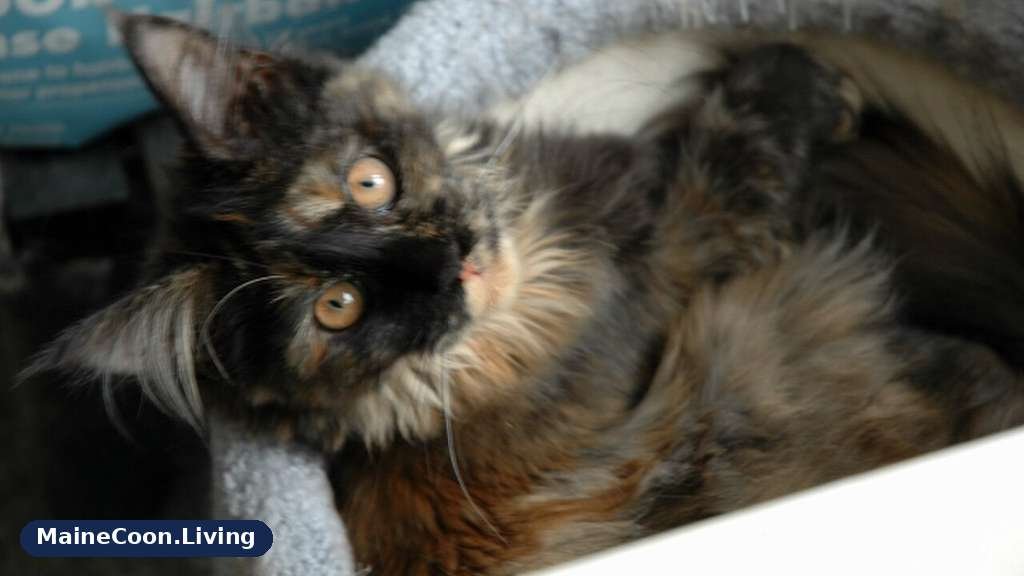
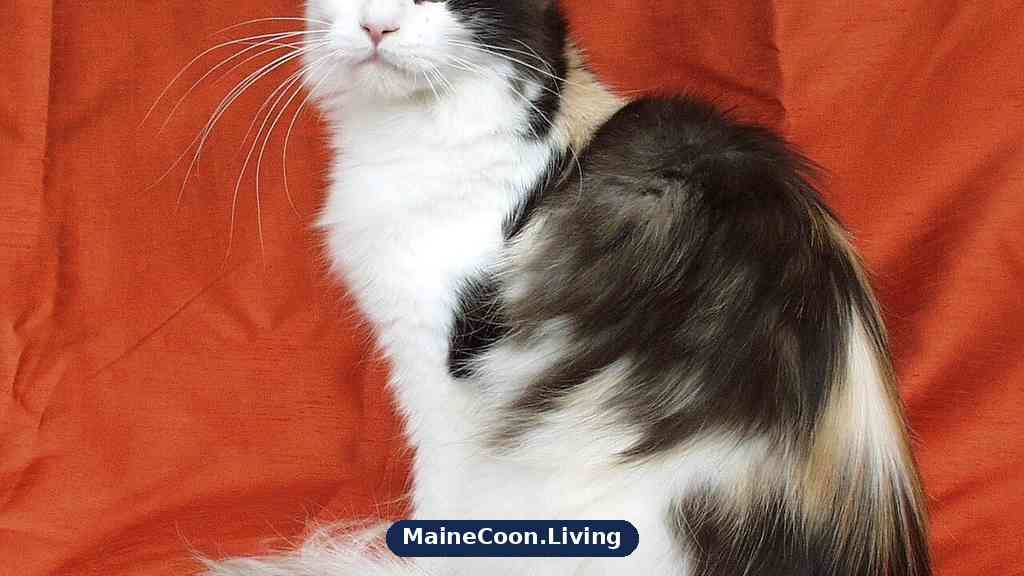
Add a clear amount of white to a tortie and everyday language changes the name to calico, while most pedigrees write tortoiseshell and white. The white pushes the colours apart into cleaner patches, which is why a calico reads so differently from the blended kitten pictured above.
White spotting, from a locket to a van
White spotting is its own separate layer, and it arrives in doses. At the smallest end you get a locket, a single white patch on the chest, or white toes and a white chin on an otherwise fully coloured cat.
In the middle range sit the cats most people know: the tuxedo look of a coloured coat with a white chest, belly and paws, and the true bicolor, where white covers roughly half the cat and often climbs the face in a neat inverted V. A tabby or tortie with this much white simply adds the words and white to its name.
At the top end, a harlequin is mostly white with a few coloured patches, and a van keeps colour only on the head and tail, sometimes with one or two small body spots. Nobody can promise you an exact dose, because kittens in one litter can land anywhere along this scale.
Remember that spotting can land on any coat already described on this page. A red and white bicolor, a blue tabby with white, and a black smoke with a white chest are all this same final layer working on different cats underneath.
Colours the breed does not have
A few names you will see in adverts do not belong to this breed at all. Chocolate, lilac, cinnamon, fawn and the pointed pattern of a Siamese style coat are not accepted Maine Coon colours under the CFA or TICA standards, because they point to other breeds in the family tree.
A cat wearing one of those colours can still be a lovely pet, and I would never judge one as a companion. It should not, though, be sold to you as a rare purebred Maine Coon at a premium price.
The honest rarities live inside the accepted chart: a truly clean solid red, a crisp shaded silver, a tidy van pattern. When a breeder uses the word rare, those are the coats worth asking questions about.
Eyes and finishing touches
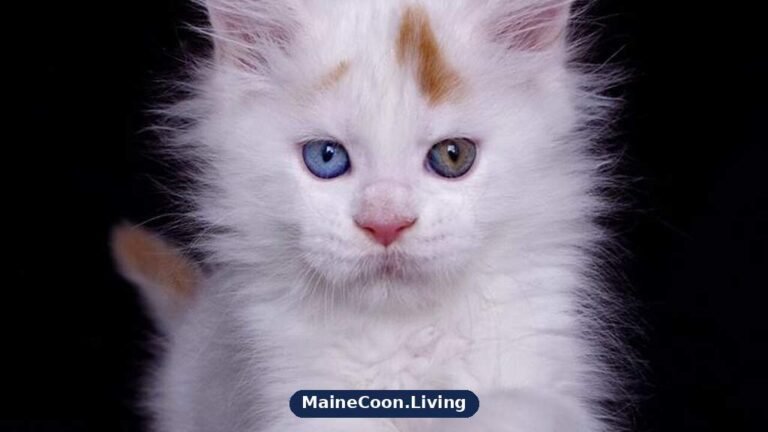
Eye colour runs mostly independent of coat colour in this breed. Green, gold, green gold and copper eyes all appear across the chart, while blue eyes and odd eyes, one blue and one not, belong mainly to white cats and cats with a lot of white on them.
Every kitten starts life with blue eyes, and the adult colour settles over the first few months, sometimes changing more than once along the way. Nose leather and paw pads quietly echo the coat, pink on whites and creams, dark on black based cats.
Watching the colours move
Still photos flatten a long coat badly, and smokes and silvers suffer most, because their whole effect lives in movement. This breed overview from the Facts About Cats channel is a good companion watch, and a useful reminder that the cat under the colour is the part you actually live with.
Choosing a colour, honestly
Here is the part of kitten shopping nobody enjoys hearing from me: colour is the last thing to choose, not the first. Health testing, temperament and how a kitten is raised will shape your next fifteen years far more than the difference between classic and mackerel striping.
Colour also tells you almost nothing reliable about personality. The chaos blamed on orange cats and the attitude credited to torties make fun stories, but sex, family lines and early handling are what I have actually seen shape a cat at home.
So use this chart the way I do, as a reading tool. Learn the layers, decode the names in adverts and pedigrees, enjoy having a favourite, and then go and meet the kittens and pick the one whose character fits your house.
How to read any colour name
Try the system on a long name: blue silver classic tabby and white. Read it backwards if it helps: a tabby cat, in the classic pattern, built on diluted black, with pale silver roots, plus white spotting on top.
Or take black smoke, the shortest puzzle of all: a solid black cat whose hair roots were left pale by the silver gene. Once you can unpack two names like those without help, every other name in the breed is just the same layers in a new order.
Frequently Asked Questions
How many colours do Maine Coons come in?
More than seventy five recognised combinations, depending on how a registry counts them. That number is not seventy five pigments, it is a small set of base colours combined with dilution, tabby patterns, silver effects, tortoiseshell mixes and white spotting.
What is the most common Maine Coon colour?
The brown tabby is the colour most people picture first and the one seen most often. It is genetically a black tabby, with warm brown ground colour showing between the black markings. Classic and mackerel are the two patterns you will meet most.
Is brown a real Maine Coon colour?
Not as a pigment of its own. Brown tabbies are black cats whose tabby pattern lets a warm, brownish background show through, and so called chocolate or cinnamon coats are not accepted Maine Coon colours at all. A pedigree that says brown tabby is describing that classic tabby look.
Can a male Maine Coon be a calico or tortoiseshell?
Almost never, because carrying both black and red instructions normally takes two X chromosomes. The rare males who do appear usually have an extra X chromosome and are almost always sterile. If a breeder offers one at a huge premium, ask for the paperwork and a vet opinion.
Do Maine Coon kittens change colour as they grow?
Yes, often noticeably. Kitten ghost markings usually fade, smokes and silvers darken or clear as the long adult coat grows in, and eye colour settles over the first months. Judge a kitten by the parents and the breeder, not by the exact shade in a three week old photo.

4 Comments