Do Maine Coon Cats Like to Cuddle? An Owner’s Honest Answer
The first time I tried to hold my Maine Coon properly, arms under his chest the way you see in photos, he tolerated about nine seconds. Then he put one huge paw on my forearm, pushed, and relocated to my feet. He stayed there for an hour, warm and rumbling, entirely happy, just not held.
That small push taught me the whole lesson of this breed. Maine Coons are affectionate cats, often deeply so, but physical affection runs on their terms. If you want the closeness, and it is absolutely there for the taking, you have to learn how they offer it.
The short answer on cuddling
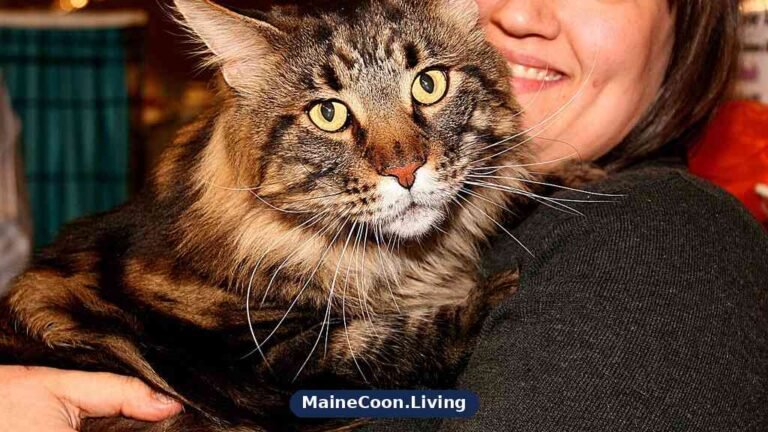
Most Maine Coons like contact, closeness, and your company. Far fewer like being picked up, pinned in arms, or parked on a lap for a long stretch. The distinction sounds small until you live with it every evening.
I describe mine as a beside cat, not an on cat. He wants the cushion next to mine, a paw resting against my leg, and regular chin scratches on request. That is not a lesser bond, and owners who accept it early enjoy their cats far more.
Beside you, on your feet, rarely on you
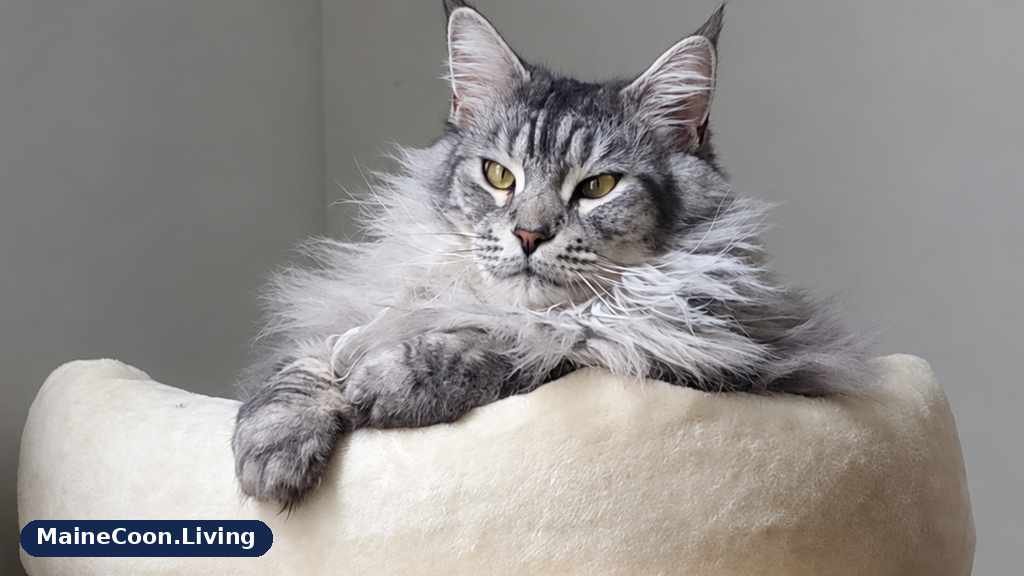
The classic Maine Coon position in my house is diagonally across the sofa arm, chin down, one paw draped over my wrist. He is touching me, he can leave in half a second, and nobody is overheating. From his point of view, that setup is perfect.
Feet are the other favourite. A cat settled across your slippers gets warmth rising from the floor, your scent at full strength, and the deep satisfaction of stopping you from going anywhere. I have missed phone calls, doorbells, and one kettle boiling dry because moving felt like a betrayal.
Being held is different. Arms lift a cat off the ground, remove every escape route, and usually squeeze in the wrong places. Even confident Maine Coons who adore their people often go politely stiff in arms, and a stiff cat is a cat asking to be set down.
Size changes everything about laps
A four month old kitten fits on a lap like a hot water bottle. An adult male Maine Coon does not, and the maths gets awkward fast. The full picture is in my guide to Maine Coon size, but the cuddle version is simple: long body, heavy bones, and a tail that needs its own postcode.
When a big cat does try your lap, he overflows it. His front half settles on your thighs while his back half slides toward the sofa, and every shift of your legs dumps him sideways. Many cats try a few times as youngsters, get tipped off once too often, and quietly retire from lap duty.
Heat finishes the job. A thick double coat on top of a warm human on a summer evening is genuinely uncomfortable, and cats vote with their feet. In winter, with a blanket over my legs and the room cool, I get noticeably more lap attempts.
Making a lap work for a big cat
Sit with your feet up so your legs form one long, flat surface instead of a short shelf. A folded blanket smooths out the gaps between your thighs and gives claws something better than your jeans. Then wait, because the whole arrangement only works if the cat boards voluntarily.
How Maine Coons actually show affection
Once you stop measuring love in lap hours, you start seeing it everywhere. My cat greets me at the door, supervises every meal I cook, and narrates his day in chirps. None of that needs a lap, and all of it is affection.
Head bumps and cheek rubs
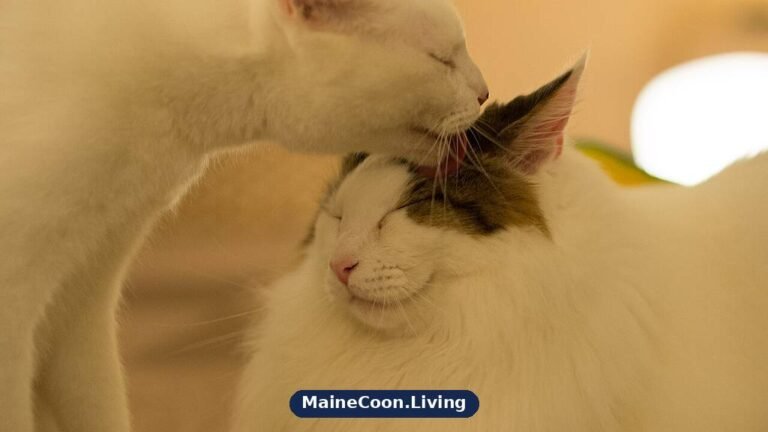
A firm head bump against your hand or shin is a deliberate greeting, not an accident. Cats have scent glands in their cheeks and forehead, and rubbing them on you mixes your scent with theirs. International Cat Care explains this kind of rubbing and greeting behaviour in its guide to cat friendly interaction, and it is worth reading before you judge any cat as aloof.
My cat head bumps the hand that feeds him, the hand that grooms him, and, memorably, the hand holding a mug of hot tea. The intent was lovely. The tea did not survive.
Slow blinks and soft eyes
The slow blink is the quietest compliment a cat owns. When my Maine Coon catches my eye across the room and closes his eyes in that long, lazy squeeze, I blink back, and half the time he answers with a second one. It is a conversation, just a very low volume one.
The flop and the follow
A Maine Coon who flops onto his side near you, belly half showing, is relaxed in your company. Following you from room to room, then flopping again in the new room, is the full routine. Owners call it shadowing, and I cover how it fits the wider Maine Coon temperament in that guide, but in daily life it simply means you are his favourite place.
Kittens, adults, and seniors cuddle differently
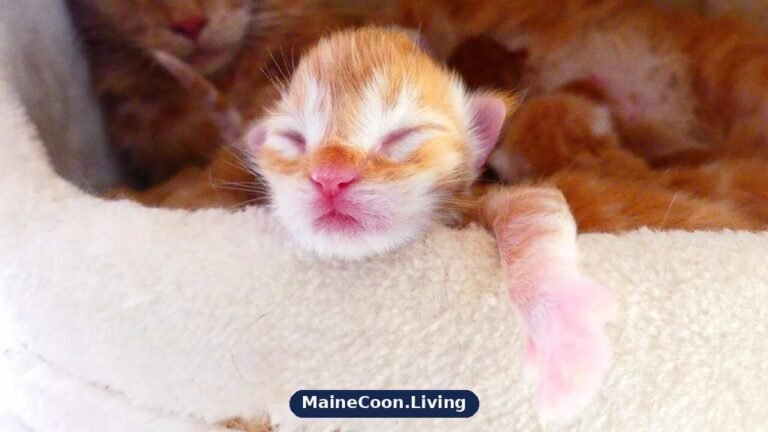
Kittens are the cuddliest version of this breed, and it is not close. Small, sleepy, and still close to the pile of littermates they grew up in, young Maine Coons climb into laps and sleeves and fall asleep mid purr. Enjoy it, take the photos, and do not assume it is permanent.
The teenage phase, roughly from six months to two years, cools things down. Your young cat has places to be, windows to patrol, and a reputation to protect. Contact becomes drive by: a head bump in passing, two minutes beside you, then off again.
Adults settle into their true pattern between two and four years old, which is when this slow maturing breed finally grows up. This is the version you will live with for a decade, so judge cuddling by the adult, not the kitten. Many owners, me included, find the adult pattern warmer than the teenage one.
Seniors often soften again. An older cat naps longer, moves slower, and starts choosing the cushion nearest to you with real intention. My advice in the senior Maine Coon care guide applies here too: give an old cat low, warm, easy access spots near you, and let him close the distance himself.
Cats who missed early handling
Not every Maine Coon arrives as a confident, people loving kitten. A cat who was not gently handled in the first weeks of life, or who came through rescue with gaps in his history, may treat hands as suspicious objects for a long time. That is not stubbornness, and it is not a life sentence either.
These cats usually bond in a specific order. First they share a room with you, then a sofa, then physical contact they initiate, and only much later, if ever, being picked up. Skipping stages by scooping the cat up for a cuddle resets the whole staircase.
I fostered one nervous boy who spent his first month behind the sofa and his third month asleep on my shoes. By month six he was leaning his full weight against my leg during films, which from him felt enormous. With a cat like that, the cat sets the pace, every single time, and your only job is to be predictable.
Building trust with a less cuddly cat
Routine does the heavy lifting
Feed at the same times, play at the same times, and sit in the same evening spot. A cat who can predict you stops spending energy watching you, and relaxed cats are the ones who wander over for contact. Boring consistency built more trust in my house than any treat.
Play first, cuddles second
A ten minute wand toy session does two jobs at once. It burns off the restless energy that makes a young cat squirm out of every stroke, and it teaches the cat that good things happen near your hands. Many of my best sofa sessions started thirty seconds after a play session ended.
Let the cat start, and let the cat finish
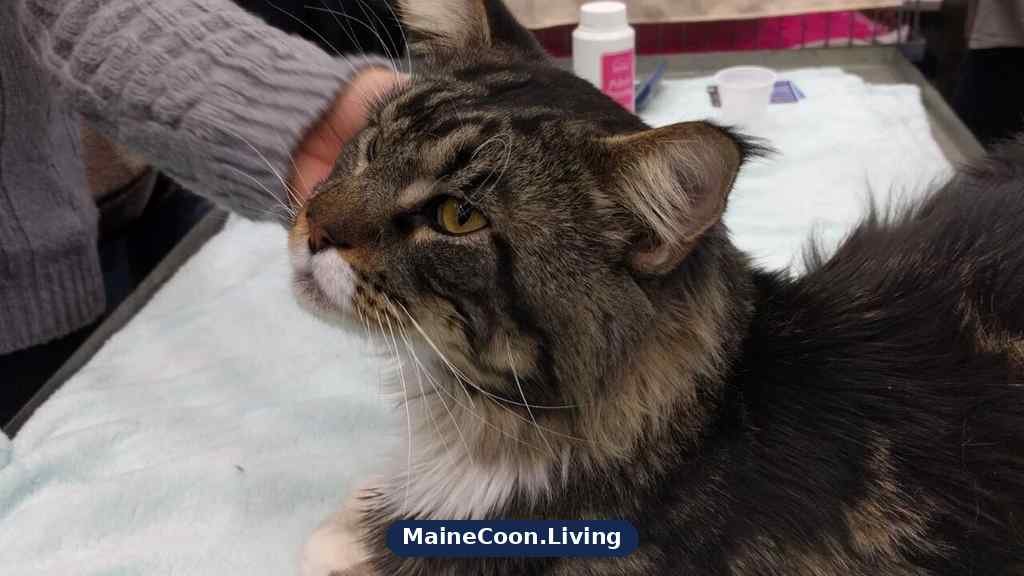
Hold a hand low, let the cat sniff it, and wait for the cheek rub that gives permission. Stroke the cheeks, chin, and top of the head, the places most cats genuinely enjoy, and keep early sessions short. When the cat moves away, the session is over, and honouring that ending is what earns you the next beginning.
Read the consent signs
A still tail, soft ears facing forward, and a cat pressing into your hand all say carry on. A flicking or thumping tail, ears rotating back, skin rippling along the spine, or a cat who suddenly goes very still all say stop. Stopping early, while the cat still thinks well of you, is the whole skill.
Mistakes that teach cats to avoid you
Grabbing is the big one. Scooping a cat off the floor for a cuddle because you want one teaches a simple lesson: your approach means capture. Within weeks you own a cat who leaves the room when you stand up, and rebuilding that trust takes far longer than breaking it did.
Holding too tight runs a close second. A cat squeezed against a chest, legs dangling unsupported, will struggle, and a struggling fifteen pound cat scratches without meaning to hurt anyone. Support the chest and hindquarters, keep holds short, and put the cat down while it is still calm.
Chasing finishes the set. Following a cat who has walked away from contact, cornering him for one more stroke, or pulling him out from under furniture all say the same thing to a cat. His choices do not count. Cats remember that message, and they price it into every future cuddle decision.
Belly traps deserve a mention too. A Maine Coon rolled on his back with his belly showing is relaxed, not issuing an invitation, and most dislike belly rubs intensely. Take the compliment, scratch his chin instead, and keep all ten fingers out of the fluffy ambush.
Living happily with a beside cat
These days I plan around the truth instead of fighting it. There is a cushion on my side of the sofa that belongs to the cat, a blanket folded at the foot of the bed, and a strict house rule that nobody picks him up for fun. In return I get a cat who chooses my company all day, every day.
That trade is the real answer to the cuddle question. Maine Coons love with proximity, loyalty, and constant small contact, and it adds up to more affection than most lap cats ever offer. You just have to stop waiting to be sat on, and start noticing you are already adored.
Frequently Asked Questions
Do Maine Coons like being held?
Some do, briefly, and many only tolerate it from people they trust completely. Most prefer all four paws supported, a short hold, and the freedom to leave the moment they wriggle. If your cat goes stiff, turns its head away, or pushes against your chest, that is a clear request to be put down.
Why does my Maine Coon sit on my feet instead of my lap?
Feet give a cat warmth, your scent, and contact without the wobble and heat of a lap. Sitting on your feet is also an easy exit, and easy exits matter to a cat that values control. Take it as the compliment it is, because your cat chose the closest spot that still felt safe.
How can I tell if my cat wants me to stop stroking?
Watch the tail first, because quick flicks or thumps usually mean arousal is building. Flattening ears, rippling skin along the back, and a sudden head turn toward your hand are also warnings. Stop, rest your hand still, and let your cat rub against you again if it wants more.
Will a shy Maine Coon ever become cuddly?
Often yes, though cuddly may always mean beside you rather than on you. Cats that missed early handling usually warm up in stages over months, starting with staying in the same room and ending with leaning against your leg. Steady routine, play, and never grabbing for a cuddle are what move those stages along.
Do senior Maine Coons get more affectionate?
Many do, and slower evenings suit an older cat that once had better things to do. Some seniors also seek extra warmth and will finally try a lap with a blanket on a cold night. If a senior suddenly becomes clingy or, the opposite, hides away, book a vet visit because pain and illness can change cuddle habits fast.