
Best Cat Food for Maine Coon Cats and Kittens
The first bag I bought for my Maine Coon was chosen in about forty seconds. Big cat on the front, big promises beside it, into the trolley it went. He ate it happily for a week, then started leaving half, gaining weight in the wrong places and producing litter box results I will spare you.
That was my lesson. With this breed, the picture on the bag tells you almost nothing, and the small print on the back tells you nearly everything.
What follows is how I feed my own cats now, and how I judge a food before it ever reaches the bowl. It is general information from one owner, not veterinary advice for your cat.
Please hold on to that last point. The feeding choices that really govern your cat are the AAFCO adequacy statement on the food itself and the guidance of your own vet, who has actually examined your cat.
Why This Breed Eats Differently
Maine Coons do not finish growing on the usual cat timetable. Most cats are done by about a year, while this breed keeps filling out for three to five years, adding muscle and bone long after other cats have settled.
That slow build changes the feeding job. You are supporting growth for much longer, but you are also guarding against a young cat getting round while he is still supposed to be getting tall and broad.
Protein does the heavy lifting
Cats are obligate carnivores, and a large muscular breed makes that easy to see. Protein from animal sources supplies the amino acids a cat cannot make well from plants, and it is what maintains all that muscle under the coat.
I look for foods where animal protein is clearly the foundation, not a garnish. A named meat or named meat meal near the top of the list is the simplest early clue.
Calories need a firm hand
Here is the trap I fell into. Kitten food and rich adult foods are energy dense, and a growing Maine Coon looks like he could eat forever, so you keep topping up the bowl.
Controlled calories matter more than generous calories. Steady growth on measured meals beats fast weight gain, because extra fat laid down during those long growing years is hard to shift later.
Joints, heart and coat
A heavy frame asks a lot of hips and elbows over a lifetime. Some owners and vets discuss nutrients often included for joint support, such as glucosamine, chondroitin and omega 3 fatty acids, as part of the wider diet picture.
Taurine is different. It is an essential amino acid for cats, vital for normal heart and eye function, and a complete cat food is formulated to contain it, which is one more reason the completeness statement matters so much.
The coat tells on the diet too. When the food suits my cats, the fur feels softer, sheds in a more manageable way and looks less dull between grooms, though grooming and season play their part as well.
How I Read a Label
Flip the bag over and ignore the front completely for the first minute. The front is marketing, the back is where the useful facts live, and you only need to find three things in order.
Start with the adequacy statement
Look for the nutritional adequacy statement, usually in small print near the ingredients or guaranteed analysis. It should say the food is formulated to meet AAFCO profiles, or has passed feeding trials, for a named life stage such as growth, adult maintenance or all life stages.
If it says for intermittent or supplemental feeding only, it is not a main diet, however meal like it looks. Treats, toppers and many broth style products sit in that category, and there is nothing wrong with them as extras.
The AAFCO guide to understanding pet food explains these statements in plain language, and it is worth ten minutes of any new owner’s time. Cornell’s veterinary college offers similarly grounded feeding guidance for cats if you want a second trusted source.
Then check the first ingredients
Ingredients are listed by weight before cooking, heaviest first. I want to see a named animal source first, such as chicken, turkey, salmon or beef, or a named meal such as chicken meal, which is that meat with most of the water removed.
Vague words make me put the bag back. Meat by products without a species named, or a first line dominated by corn, wheat or pea protein in a food sold on its meat content, tells me the priorities are not mine.
One honest caution here. A good first ingredient does not prove a food is excellent, and a food with some grains or named by products is not automatically poor, which is why the adequacy statement comes first in my routine.
Use the analysis as a rough guide
The guaranteed analysis gives minimum protein and fat and maximum fibre and moisture. For dry food I generally see protein somewhere around 30 to 40 percent on many adult foods my cats have done well on, but I compare like with like and never judge on one number alone.
Wet food numbers look tiny beside dry food because most of the tin is water. That is expected, and it is why comparing a wet label directly with a dry label misleads so many owners at the shelf.
Wet Food, Dry Food, Honest Trade Offs
Owners talk about this as if one side must win. In my house both formats earn their place, and each has a downside I have learned to work around rather than pretend away.
What wet food does well
Wet food is typically around 70 to 80 percent moisture, close to what a cat would take in from prey. For cats who barely visit the water bowl, and many Maine Coons would rather play in water than drink it, that extra moisture is genuinely useful.
It also tends to be filling for fewer calories, which helps when you are managing the waistline of a big cat with a big opinion about portion sizes. The cost is real though, feeding a 7 to 9 kg cat mostly on tins adds up quickly.
What dry food does well
Dry food is convenient, stores easily, travels well and makes measured feeding simple. It also suits puzzle feeders and slow feeding toys, which my cats enjoy far more than a plain bowl left down all day.
What I will not claim for it is dental magic. The idea that ordinary kibble cleans teeth in any meaningful way is largely a myth, and a cat who bolts kibble whole gets no benefit at all, so I rely on actual dental checks at the vet instead.
The mix that works here
I feed wet food as a main meal and a measured amount of dry food alongside it, often in a puzzle feeder. That gives me moisture, portion control and a cat who does not treat 5 in the morning as a catering emergency.
Your mix may look different, and that is fine. If you are setting up for a new arrival, my Maine Coon kitten checklist covers the bowls, storage and basics that make any feeding routine easier to stick to.
Kittens Are Not Small Adults
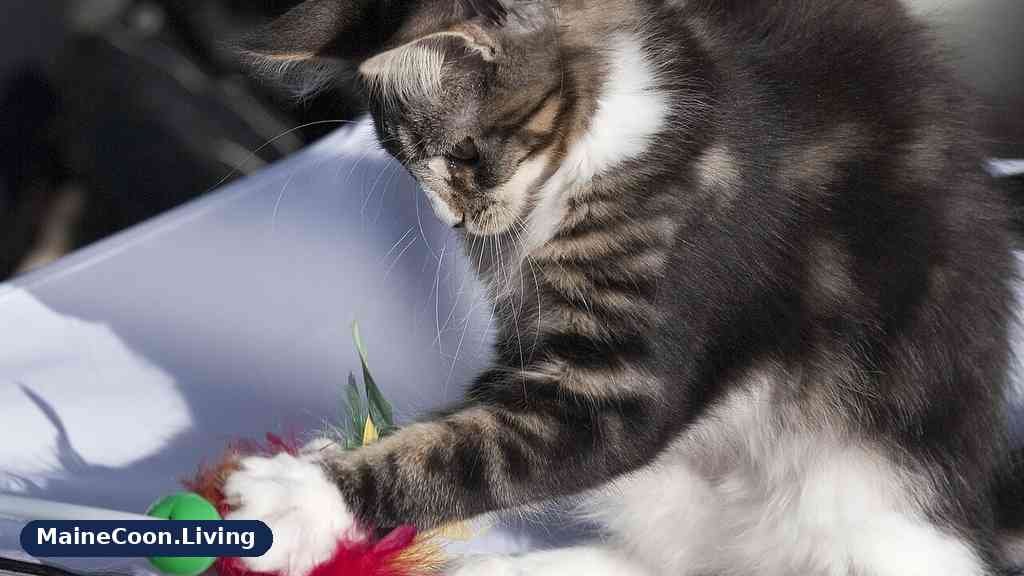
A Maine Coon kitten is building bone, muscle, brain and coat at once, on a stomach about the size of a walnut. Kitten food reflects that, with more protein, more fat and carefully set calcium and phosphorus for growth.
How long to stay on kitten food
Most owners I know keep a Maine Coon on a growth or all life stages food well past the first birthday. Somewhere between 15 and 24 months is a common switching window, guided by growth slowing down and a word with the vet.
My Maine Coon weight by age guide helps you see whether your youngster is tracking steadily. A cat still gaining length and height needs his growth food more than he needs an early promotion to adult portions.
Amounts and daily rhythm
Young kittens do best little and often, usually three or four small meals a day up to about six months. From six to twelve months, three meals suits most, and most adults settle happily into two measured meals.
As a rough starting point only, many adult Maine Coons land somewhere near 250 to 350 calories a day, with entire males and very active cats sometimes needing more. The package guide gets you close, then body condition makes the final call.
Weigh monthly while they are growing, and run your hands over the ribs every week or so. You should feel ribs under a light fat cover, not hunt for them and not trip over them.
Foods I Actually Buy
These are my own picks from mainstream ranges, foods I have bought with my own money and fed at home. I am describing types and my experience of them, not lab results, and your cat may vote differently with his feet.
Only one phrase in this whole guide deserves real emphasis, and it is this: the best food is a complete one your cat eats steadily and stays in good condition on. Everything below is just my route to that result.
A breed specific dry food
Royal Canin Maine Coon Adult is the obvious starting point, a large kibble made for a big jaw, in adult and kitten versions. My cats chew it more slowly than small kibble, and the feeding guides are unusually clear, which helps new owners.
The honest downside is the recipe style. It includes grains and chicken by product meal, so owners who want a meat first, no by product list will not love it, and it costs more than a standard adult food of similar bag size.
A high protein mainstream dry food
Wellness CORE Original, the turkey and chicken dry food, is my pick when I want a higher protein, grain free option from a widely stocked brand. The ingredient list reads meat forward, and my younger cat holds good muscle condition on it without me fighting the portions.
It is rich, so I transition onto it slowly over ten days or so. It is also firmly at the pricier end of the supermarket and pet store shelf, and rich foods do not suit every stomach in this house.
A widely available vet shelf staple
Hill’s Science Diet Adult, in its standard chicken dry and wet versions, is the unglamorous food I recommend to relatives who want something easy to find anywhere. It is consistent, the company publishes feeding guidance clearly, and cats who turn fussy on richer foods often settle on it.
Nobody buys it for an exciting ingredient story. Protein levels are more moderate than the high protein brands, and owners chasing a grain free label should look elsewhere in this list instead.
A budget friendly complete option
Purina Pro Plan, particularly the chicken and rice adult dry food and the wet entrees, is where I point owners whose budget is real. It is complete, widely available, palatable to almost every cat I have fostered or fed, and the cost per day is noticeably kinder.
The trade off is a mixed ingredient list, with grains and some less specific items further down. I accept that at this price, but I still check the adequacy statement on the exact version in my hand, because ranges change.
An everyday wet food
For wet meals I rotate Purina Fancy Feast Classic Pate varieties, the smooth pate tins rather than the gravy heavy ones. They are complete, affordable in multipacks, and the pate texture means my cats cannot just lick off sauce and leave the substance behind.
Portion maths is the annoyance. The small tins mean a big Maine Coon needs several a day if wet food is the whole diet, which creates cost and waste, so in my house it works best as the wet half of a mixed routine.
Switching Without the Drama
Change food gradually, over 7 to 10 days as a minimum. Mix roughly a quarter new food to three quarters old for a few days, then half and half, then mostly new, watching appetite and the litter box at every step.
If stools soften, hold at the previous mix for two extra days before moving on. A cat who refuses the new food entirely after a fair, slow trial has given you useful information, not a battle you need to win.
Store dry food in its original bag, sealed, inside an airtight container, and buy bag sizes you will finish within about six weeks of opening. Fat in kibble goes stale, and a cat’s nose notices long before yours does.
Watching the Cat in Front of You
Labels start the decision, but the cat finishes it. I judge a food after at least a month on it, by weight trend, coat feel, energy at playtime, appetite at meals and what the litter box looks like day to day.
Sudden weight change, a dull coat, repeated vomiting or a cat going off food altogether are vet conversations, not food aisle experiments. My overview of common Maine Coon health problems explains which signs should never just be watched at home.
Older cats change the sums again, with kidneys, teeth and appetite all needing a closer eye. When that stage arrives, the notes in my senior Maine Coon care guide pair well with a vet led feeding review.
So shop with the back of the bag, feed with a measuring cup, and judge with your hands on the cat. Do that, and the best cat food for a Maine Coon stops being a slogan and becomes a routine you can actually keep.
Frequently Asked Questions
How much should I feed an adult Maine Coon each day?
Most neutered adults I know do well on roughly 250 to 350 calories a day, split into two meals, but size and activity change that a lot. Start with the feeding guide on the package for your cat’s weight, then adjust in small steps based on ribs and waist. If you cannot feel ribs easily, cut back a little and recheck in two weeks.
When should a Maine Coon kitten move to adult food?
Later than most breeds, usually somewhere between 15 and 24 months, because Maine Coons keep growing for years. I switch gradually once growth has clearly slowed and my vet agrees the cat is ready. Moving too early can shortchange a still growing cat on protein, fat and minerals.
Is wet food or dry food better for a Maine Coon?
Neither wins on its own for every cat. Wet food brings useful moisture and often fewer calories per mouthful, while dry food is practical and easier to measure and store. Many owners, me included, feed a mix and judge the result by body condition, litter box habits and how keen the cat is at mealtimes.
Do Maine Coons need a breed specific food?
No, a breed specific bag is an option, not a requirement. What matters is a complete food for the right life stage, with named animal protein and an AAFCO adequacy statement your vet is happy with. A good all breeds adult or kitten food can suit a Maine Coon perfectly well.
Should I add supplements to a complete cat food?
Usually not without a reason and a conversation with your vet first. A complete and balanced food already contains taurine, vitamins and minerals in set amounts, and adding more can unbalance it. If you are worried about joints, coat or weight, raise that specific worry at a checkup rather than guessing with powders.







3 Comments