Siberian or Maine Coon? Which Should You Get?
I am Umar, and the cat asleep on the chair next to me as I write this is a Maine Coon. He is the reason this site exists, and he is also the reason people keep asking me whether they should have got a Siberian instead.
It is a fair question, because on paper the two breeds look like close cousins. Both are big, both wear a serious winter coat, and both have a reputation for behaving more like housemates than like aloof pets.
I know the Maine Coon side of this comparison from daily life: the feeding, the brushing, the chirping conversations at odd hours. For the Siberian side I have leaned on breed standards, registry profiles and owners whose judgement I trust, and I will keep the two clearly separated as we go.
Why these two get compared
Nobody crossed these breeds to make them look alike. The Siberian developed over centuries in the forests of Russia, while the Maine Coon developed on farms and around harbours in New England, and hard winters pushed both toward thick coats, sturdy bone and big, well furred paws.
That shared background is why first time buyers mix them up constantly. If a third name keeps coming up in your research, my Norwegian Forest Cat vs Maine Coon comparison covers the other member of this fluffy trio.
Head and body shape
Round versus rectangular
Stand the two breeds side by side and the quickest tell is geometry. The Siberian is built from circles: a rounded head that narrows to a full, short muzzle, large almost round eyes, and a face that keeps a soft, sweet expression even in big adult males.
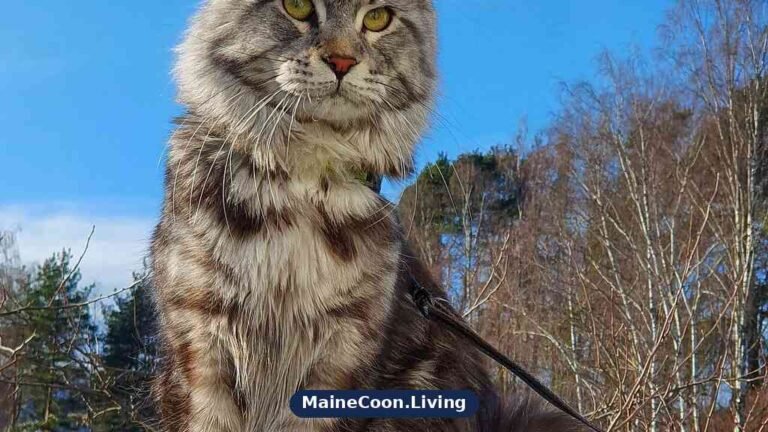
The Maine Coon is built from rectangles. The head is longer than it is wide, the cheekbones sit high, and the muzzle is strong and visibly square, finished with a firm chin. Tall ears with lynx tips complete a look that is handsome rather than sweet.
The CFA Siberian breed profile describes a head of rounded contours, and the CFA Maine Coon profile stresses that square muzzle. Once you have those two pictures in mind, you stop confusing the breeds in photos.
Build and stance
The Siberian body is medium in length but deep and barrel shaped, carried on legs that are not especially long. The hind legs are slightly longer than the front pair, the chest is broad, and the whole cat gives an impression of compact power, a bit like a small, very fluffy bulldog.
The Maine Coon is stretched out by comparison. The torso is long, the bone is heavy, and the tail runs about as long as the body itself, so the cat keeps its rectangular outline even when it sits down. It is less a ball of muscle and more a beam of it.
Size and weight
Siberian males usually weigh 11 to 17 pounds, and females 8 to 12 pounds. Those numbers undersell them a little, because the dense, stocky build makes a Siberian feel heavier in your arms than the scale suggests.
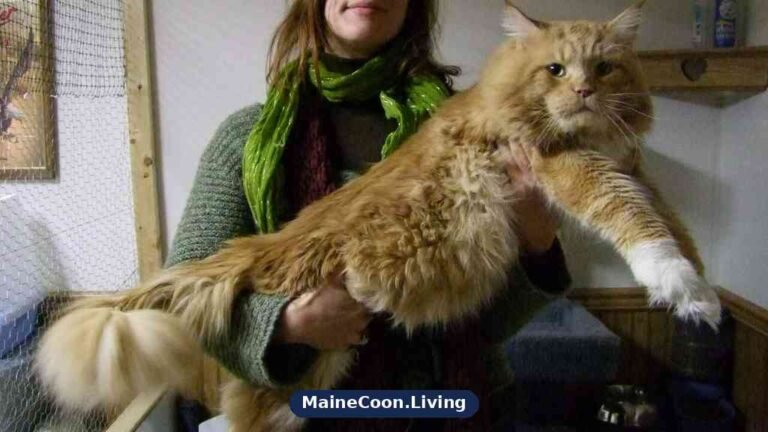
Maine Coon males commonly weigh 13 to 18 pounds, with genuinely big males passing 20 pounds, and females usually land between 9 and 14 pounds. They also grow slowly, adding size well into their third and fourth years, which I track in my Maine Coon size guide.
Be sceptical of the giant weights quoted on social media for either breed. A lean, healthy cat at the top of the normal range is far more impressive in person than an overweight cat with a record breaking number attached to it.
Practically, both breeds need the largest cat tree, carrier and litter box you can find. With a Maine Coon, it is the length that catches people out: tails included, a stretched out adult can take up most of a two seater sofa.
Coat and grooming
Triple coat versus double coat
The Siberian wears a true triple coat: a water repellent guard layer, a middle awn layer and a dense downy undercoat. It was designed by climate, not by fashion, and it changes dramatically with the seasons, growing a huge ruff and britches in winter and slimming down in summer.
The Maine Coon wears a double coat with a softer feel and uneven lengths. It hangs longer on the ruff, belly and britches, shorter over the shoulders, which gives the breed its shaggy, slightly untidy charm. It sheds water reasonably well, but it does not have that sealed, weatherproof finish of the Siberian.
The weekly reality
Here is the surprise for most people: the thicker Siberian coat is usually the easier one to live with. Its texture and slight natural oiliness help it resist matting, so a thorough comb once or twice a week keeps most Siberians tidy. The exception is the twice yearly moult, when the undercoat lets go and daily combing becomes a serious hobby for a few weeks.
My Maine Coon needs combing two to three times a week, every week, or small mats start forming behind his ears, under his front legs and in his britches. Five calm minutes with a steel comb beats one long wrestling match at the end of the month, for both of us. Neither breed needs regular baths, and both shed onto your clothes and furniture all year, so choose your sofa colour with humility.
Temperament in real life
The Maine Coon I know
Living with a Maine Coon means being supervised. Mine follows me from room to room, comments in chirps and trills rather than full meows, and settles nearby rather than on top of me. He is playful in a goofy, unhurried way, and that kitten streak has lasted far beyond kittenhood.
That pattern is typical of the breed, and I wrote about it in more depth in my Maine Coon temperament guide. Expect a cat that wants to be involved in everything you do, but rarely demands to be the centre of it.
The Siberian reputation
Siberians are the ones most often described as dog like, and owners repeat the same stories: cats that greet visitors at the door, follow their people around, learn fetch, and work out how doors and cupboards open. They are social cats that generally do well with children, other cats and cat friendly dogs.
They are also serious athletes. That longer hind leg design makes Siberians exceptional jumpers, and breed profiles consistently warn that high shelves and tall cat trees are not optional extras. A bored Siberian with that brain and that bounce will rearrange your house for entertainment.
Voice wise, the two breeds are close. Siberians trill, chirp and purr loudly rather than shouting, much like a Maine Coon, so neither breed is a good pick if you want total silence or a bad pick if you hate loud, persistent meowing. As always, the individual cat matters: a well socialised kitten from a careful breeder beats a breed label every time.
The allergy question, honestly
This is where the Siberian earns most of its fame. The main cat allergen is a protein called Fel d 1, produced in saliva and skin glands and spread over the coat when a cat grooms. Research on Siberians from the breed’s home region in Russia found that many of them produce noticeably less Fel d 1 than typical cats.
Now the part that sellers sometimes skip. Lower does not mean none, and Fel d 1 levels vary widely between individual Siberians, so one cat may suit an allergic person while another cat from the same breed sets them off within an hour. No breed is hypoallergenic, Maine Coons produce fairly typical levels, and kittens of any breed are a poor test because their allergen output changes as they mature.
If allergies are the deciding factor in your house, do this properly. Spend a few hours with the actual adult cats at the breeder, ideally the parents of your future kitten, and talk to your own doctor before money changes hands. I cover the Maine Coon side of the question in my guide to whether Maine Coons are hypoallergenic, and the honest answer there is the same: test the cat, not the label.
Health and lifespan
The Siberian is one of the hardier pedigree breeds, helped by its natural, landrace roots. The condition breeders watch most closely is hypertrophic cardiomyopathy, a heart disease found across many breeds, which in Siberians is screened by ultrasound because there is no simple DNA test for it. Kidney problems such as polycystic kidney disease appear occasionally, and good breeders screen for those too.
Maine Coons carry a slightly longer watch list. Hypertrophic cardiomyopathy is the headline issue, and for this breed there is a DNA test for one known mutation, backed up by regular heart scans. Hip dysplasia shows up more often than in smaller breeds, and spinal muscular atrophy is another condition responsible breeders test for.
Both breeds commonly live 12 to 15 years, and plenty pass that. Whichever you choose, ask to see the parents’ health test results rather than accepting a verbal promise, and budget for a big cat at the vet, because medicines and anaesthesia are dosed by weight.
Price and availability
Maine Coons are widely bred in most countries, so finding a breeder is rarely the hard part. Pet kittens from reputable breeders commonly cost around 1,000 to 2,500 dollars in the United States, with prices moving up or down by region and pedigree. My Maine Coon price guide breaks down what actually drives that number.
Siberians are a different shopping experience. The breed only spread widely outside Russia after the 1990s, breeder numbers are still small in many countries, and waiting lists are normal. Expect to pay around 1,500 to 3,000 dollars or more for a well bred kitten, with imported breeding lines pushing prices higher.
Running costs after purchase are similar for both: generous amounts of food, oversized equipment and large cat vet bills. And with both breeds, treat very cheap online listings with suspicion, because popular fluffy kittens are a favourite subject for scams.
Watch the two side by side
Still photos flatten the difference between these breeds, so here is a video comparison that walks through how to tell them apart in the flesh.
My verdict by owner type
There is no overall winner here, and anyone who gives you one is selling something. Pick the Siberian for agility, interaction and a possible allergy edge, and the Maine Coon for sheer size and an easygoing presence. Here is how I would steer four common kinds of buyer.
If you live in an apartment
Both breeds can work in an apartment, and both are generally quiet neighbours. The Siberian takes up a little less floor space but needs height to burn energy, so budget for tall furniture. The Maine Coon needs raw floor room, a very sturdy cat tree and a litter box the size of a small paddling pool.
If allergies run your house
The Siberian is the only one of the two worth testing, and testing is the key word. Visit, handle the adult cats, sit with them for hours, and judge your own reaction before committing. If your allergies are severe, get medical advice first, because no breeder’s promise should stand in for it.
If you are a first time owner
I would point most first timers toward the Maine Coon, simply because the temperament is so forgiving and the routine, once the grooming habit sticks, is predictable. A Siberian is equally friendly but busier, and that clever, athletic streak can surprise someone who expected a decorative cushion of a cat. Be honest with yourself about how much daily play and interaction you will really give, because both breeds want some.
If you hate grooming
Between the two, the Siberian asks less of you: a comb out once or twice a week for most of the year, against two to three sessions for a Maine Coon. But keep perspective, because neither breed is a low maintenance or low shedding choice. If loose hair on every surface genuinely bothers you, the honest advice is to look at short haired breeds instead.
Whichever cat you bring home, you are signing up for a slow maturing companion who will still be acting half kitten at three years old and will hopefully still be supervising your kitchen well past twelve. Choose the temperament you want to live with every day, not just the face you fell for in a photo, and you will not regret either of these wonderful breeds.
Frequently Asked Questions
Is a Siberian cat actually hypoallergenic?
No cat is truly hypoallergenic, and that includes the Siberian. Some Siberians produce less Fel d 1, the main cat allergen, than typical cats, but levels vary a lot from cat to cat. If allergies matter in your home, spend time with the specific cat or its parents before you commit.
Which is bigger, a Siberian or a Maine Coon?
The Maine Coon is the bigger breed overall. Males commonly weigh 13 to 18 pounds with a long, rectangular body, while Siberian males usually weigh 11 to 17 pounds in a shorter, rounder and stockier frame. A Siberian can feel surprisingly heavy for its size because the build is so dense.
Which breed needs more grooming, a Siberian or a Maine Coon?
The Maine Coon usually needs more grooming. Its softer double coat mats in the britches, belly and armpits, so most owners comb two to three times a week. The Siberian triple coat resists matting and often does well with one or two thorough comb outs a week, apart from heavy combing during the twice yearly moult.
Which breed is better for a first time owner?
For most first time owners I would lean Maine Coon, because the breed is famously patient and easygoing. A Siberian is just as friendly but tends to be busier, cleverer and more demanding of play and attention. Either way, start grooming and handling routines in the first week so they become normal.
Why do Siberian cats usually cost more than Maine Coons?
Mainly supply. There are far fewer Siberian breeders in many countries, waiting lists are longer and some lines are still imported from Europe, which pushes kitten prices up. Maine Coons are widely bred, so prices spread wider, although top breeders still charge serious money.