Norwegian Forest Cat vs Maine Coon: Which Is Better?
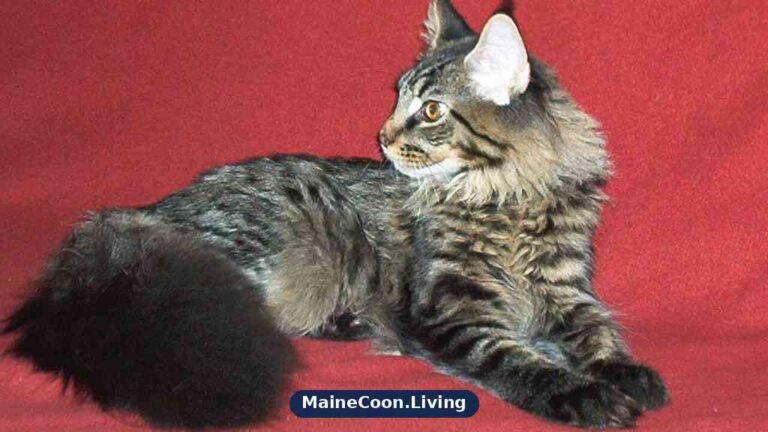
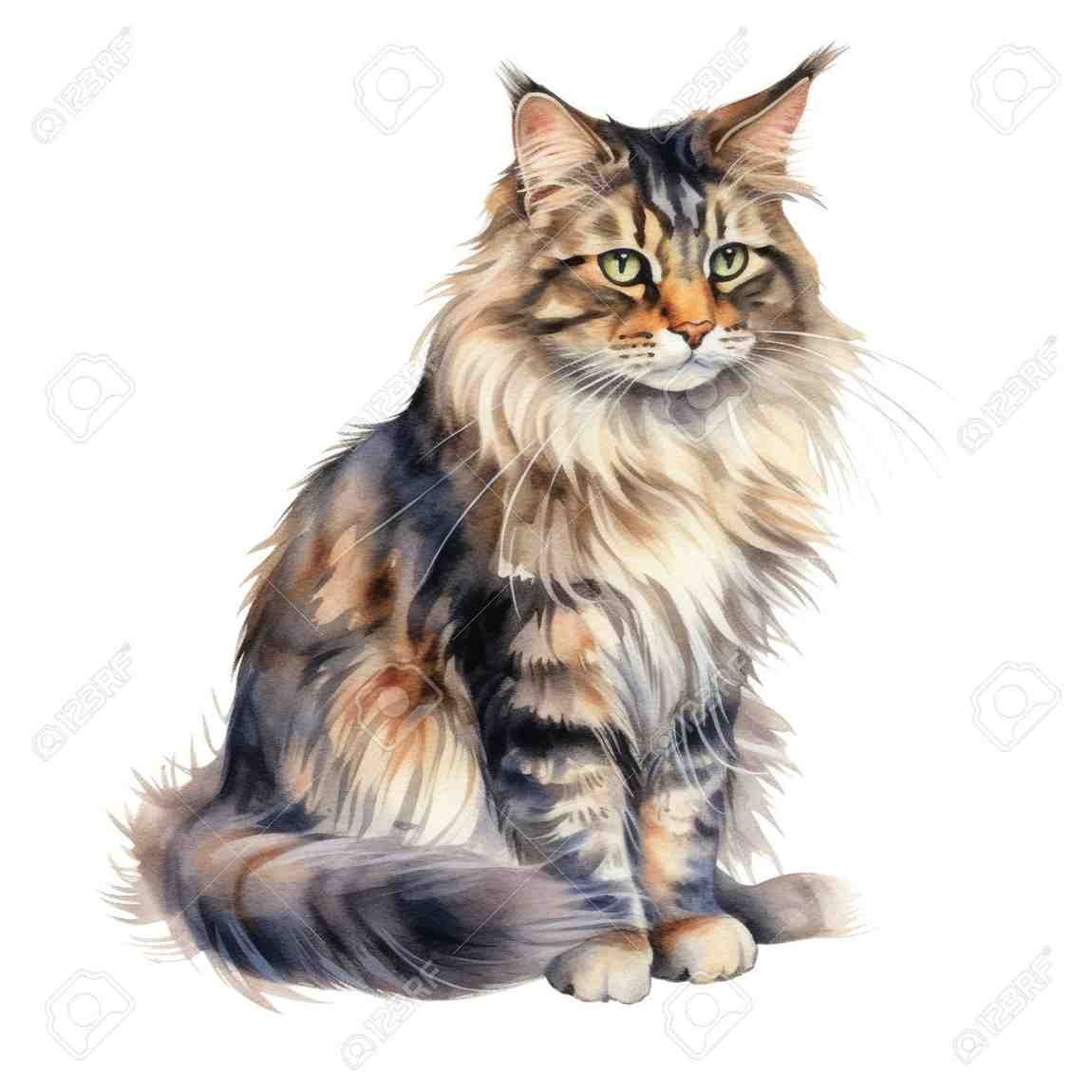
People mix these two up constantly, and I understand why. Put a big, long haired tabby in front of someone and most will guess Maine Coon, even when the cat in front of them is a Norwegian Forest Cat.
I live with a Maine Coon, so I know my own breed well. The honest differences only really show up when you look at the face in profile, run a hand through the coat, and spend time with the personality behind the fur.
This is a comparison of the two pure breeds, not their cross. If you are curious about the mix itself, I covered that separately in my guide to the Norwegian Forest Cat and Maine Coon mix.
Two cold weather originals
Both breeds are natural, not manufactured. Each one was shaped over a long time by a hard northern winter, working farm life, and very little human interference at the start.
The Norwegian developed in Norway, where local farm and forest cats grew the coat and climbing skill they needed to get through Scandinavian winters. The Maine Coon developed in the American northeast, most likely from local short haired cats and long haired cats carried across the Atlantic on ships.
That shared background explains the overlap. Big bones, heavy coats, tufted ears and huge tails are winter equipment, whichever side of the ocean a cat grew up on.
Look at the face first
If you only learn one identification trick, learn this one. The head tells you more, and faster, than size, colour or fluff ever will.
The Norwegian straight line
The Norwegian Forest Cat head forms a neat triangle, with all three sides roughly equal. The Cat Fanciers Association breed standard describes that triangle clearly, measured from the ears down to the chin.
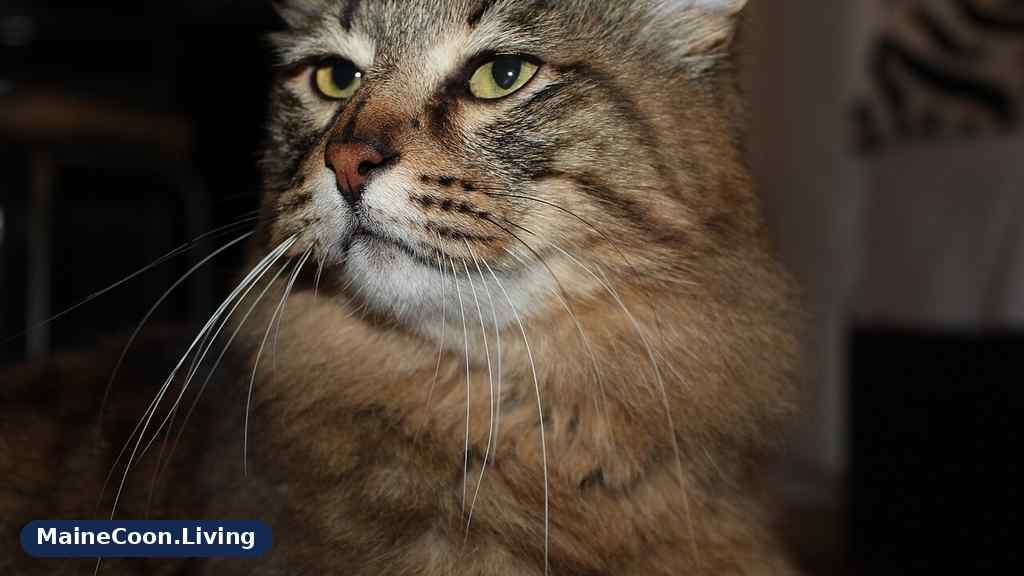
Turn the cat side on and the profile runs straight from the brow to the tip of the nose, with no dip and no break. The muzzle follows that line rather than sticking out, and there are no strong whisker pads pushing the face wide.
The eyes complete the look. They are large, almond shaped and set at a slight angle, which gives the breed a calm, alert and slightly wild expression.
The Maine Coon square muzzle
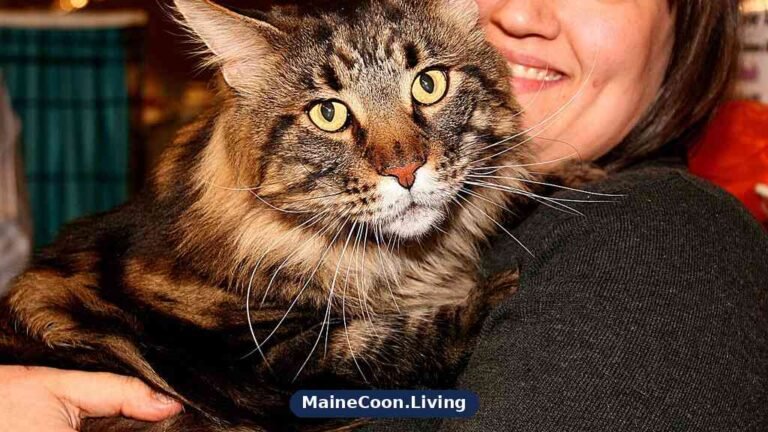
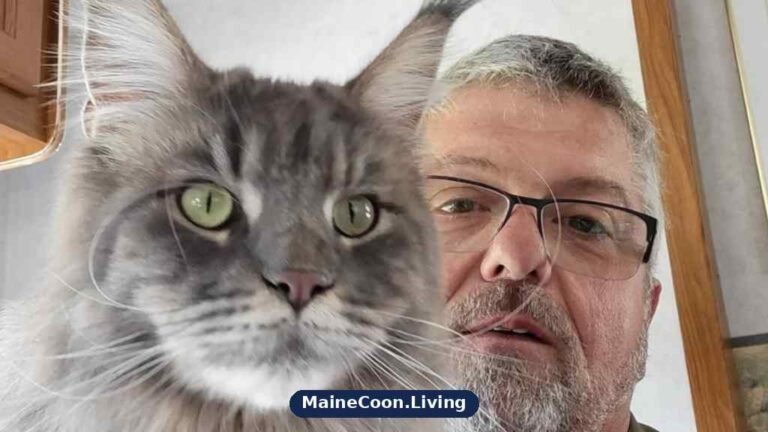
My breed breaks that straight line on purpose. A Maine Coon profile has a gentle scoop or dip below the eyes, then it runs out into a broad, square muzzle that looks almost boxy from the front.
The head is longer and wider than the Norwegian head, and the chin and muzzle carry real width. Put photos of the two breeds side by side in profile and, after a while, you stop needing the photos.
One warning from experience: kittens are a poor test. Young cats of both breeds look soft and round faced, and the adult profile can take two or three years to settle properly.
Size and build
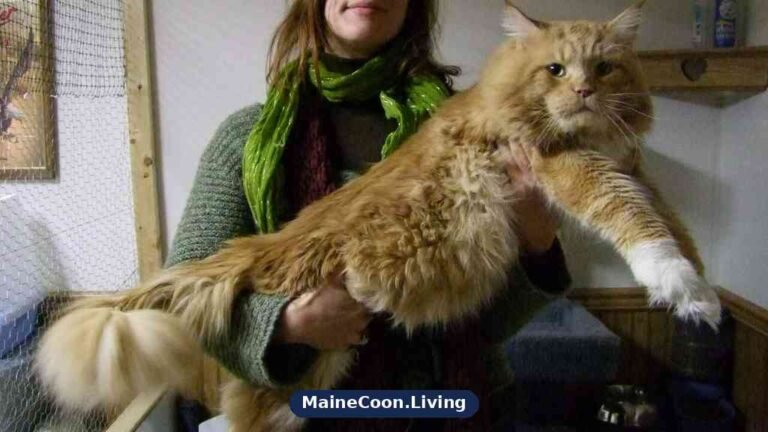
The Maine Coon wins on size, but not by the huge margin the internet sometimes claims. Most adult males weigh about 6 to 8 kg, with females nearer 4 to 6 kg, and the body is long and rectangular.
Norwegian males more often land around 5 to 7 kg, with females around 4 to 5 kg. They are still very large cats by normal house cat standards, just built a touch more compactly.
For the full growth picture on my side of the comparison, see my notes on Maine Coon size. Both breeds mature slowly, and neither is truly finished until somewhere between three and five years of age.
How the bodies differ
Shape matters as much as the scales. A Maine Coon is a long rectangle on sturdy legs of similar height, with a broad chest and a tail that flows behind like a banner.
A Norwegian is built a little differently, with hind legs longer than the front legs. That leaves the rump sitting higher than the shoulders, and it is part of why the breed climbs so well.
Norwegians are serious climbers, strong enough to come down a tree head first in a way most cats will not attempt. Maine Coons climb too, but mine have always preferred lower ground, long stretches and supervising a room from a solid chair.
That difference changes the furniture you buy. A Norwegian home really does need a tall, stable cat tree, while a Maine Coon home needs length, sturdy shelves and scratching posts that will not tip under a heavy cat.
Coat, and this is a real split
Both coats look like one thick winter blanket from a distance. Put your fingers into them and they feel like two different fabrics altogether.
Wool underneath, gloss on top
The Norwegian wears a proper double coat built for snow and rain. Underneath sits a dense, woolly undercoat, and over that lie longer, smooth, water resistant guard hairs that shed the wet.
In winter the coat is at full strength, with a heavy ruff, full britches on the back legs and tufts of fur between the toes. In summer much of that undercoat goes, and the same cat can look surprisingly slim for a few months.
Silky and uneven
The Maine Coon coat is a double coat too, but the texture is silkier and the length is deliberately uneven. It is shorter over the shoulders and back, then grows longer down the belly, flanks and britches, with a full ruff around the neck.
The TICA Maine Coon breed page makes the same point about that shaggy, uneven fall. There is an undercoat, but it is finer and less woolly than the Norwegian undercoat, so the coat drapes rather than puffs.
Colour will not help you separate them. Both breeds come in a wide range of solid colours and tabby patterns, and neither breed standard accepts pointed markings of the kind you see on a Siamese.
Temperament in daily life
Here is where owners usually make their final decision, and rightly so. You look at a coat for a few minutes a day, but you live with a temperament for fifteen years.
The Norwegian way
Norwegian Forest Cats are friendly, steady and quietly confident. They tend to choose closeness on their own terms, sitting beside you or above you rather than spreading themselves across your lap and keyboard.
They are not usually loud cats. Owners describe soft voices, a lot of watching and thinking, and bursts of real athletic play followed by long, serious naps in the highest spot available.
That independence is not distance. Most Norwegians bond hard to their household, they just do not need to prove it every twenty minutes.
The Maine Coon way
Maine Coons are the more involved roommate. Mine follows the action from room to room, comments on it in trills and chirps, and treats a closed door as a personal insult.
I wrote more about that side of the breed in my piece on Maine Coon temperament. The short version is that a Maine Coon wants to be part of whatever you are doing, even when helping mostly means sitting on the thing you need.
Playfulness also lasts longer in many Maine Coons. Plenty still fetch, carry toys around and invent games well into middle age, long after a Norwegian of the same age has become more selective about exercise.
Families, children and other pets
Both breeds have good reputations with families, and both earned them. They are large, patient cats that tend to walk away from trouble rather than escalate it.
The Maine Coon usually walks straight into a noisy household and joins in. The Norwegian may take longer with visitors and young children, preferring to observe from height until it has decided the new people are safe.
With other cats and with cat friendly dogs, slow introductions matter more than breed. Give either breed an escape route, a high perch and time, and most settle very well.
Grooming load, honestly
Neither breed is wash and go, whatever a breeder tells you at a show. The question is not whether you will groom, it is how much coat trouble you get when life gets busy.
The Norwegian is the heavier job in spring. That woolly undercoat comes out in quantity, and left alone it packs down into felted mats behind the ears, under the front legs and along the britches.
I would plan on a thorough comb through once a week for most of the year with a Norwegian, then much more often during the seasonal shed. Use a comb that reaches the skin, because brushing only the glossy top layer misses the part that tangles.
The Maine Coon is usually a step lighter. Two or three proper combing sessions a week keep most coats in order, although cottony coats in some lines mat far faster and need more.
With my own cat, little and often beats one long battle. Five calm minutes while the kettle boils does more good than a monthly wrestling match that leaves you both annoyed.
Bathing is optional for most indoor cats of either breed. A bath can help loosen a shedding Norwegian coat, but dry the cat thoroughly afterwards, because that dense undercoat holds water for a long time.
Price and running costs
Expect to pay more for the Maine Coon in most markets. As a rough guide, pedigree kittens from health testing breeders often fall around 1,000 to 2,500 US dollars for a Maine Coon and around 800 to 1,800 US dollars for a Norwegian Forest Cat.
Treat those figures as a starting point, not a quote. Country, waiting lists, pedigree and whether a kitten is sold as a pet or for breeding can move the price a long way in either direction.
Rescue is the other route, and breed specific rescues do occasionally take in both breeds. You may wait a long time for one to appear, but an adult cat also skips the tiny kitten stage that not everyone actually enjoys.
After purchase, the costs converge. Both are big cats who eat like big cats, need large litter trays and carriers, and cost more to board, groom and treat at the vet than a small cat does.
Health notes worth knowing
Both breeds are generally sturdy, and many live comfortably into their early to mid teens. Sturdy does not mean exempt, so ask breeders direct questions and expect clear answers.
The shared concern is hypertrophic cardiomyopathy, a thickening of the heart muscle that can be hard to spot early. The Cornell Feline Health Center guide to hypertrophic cardiomyopathy explains the condition and why heart scans matter more than appearances.
For Norwegian Forest Cats, the breed specific test that matters most is glycogen storage disease type IV, an inherited condition that good breeders screen for by DNA test. Ask to see the result rather than accepting a verbal promise.
For Maine Coons, ask about hip dysplasia, spinal muscular atrophy and the known heart gene test for the breed, alongside regular heart scanning. No single DNA result clears a Maine Coon completely, and any breeder who claims otherwise is overselling the science.
Weight is the quiet risk for both. A heavy winter coat hides extra kilos very well, so weigh the cat, feel the ribs at your vet visits, and do not let gentle giant become an excuse for fat.
My verdict, by owner
Choose the Norwegian Forest Cat if you want a calm, self contained companion who will share your home without running it. It suits quieter houses, people who are out for normal working hours, and anyone who loves a cat that climbs like it means it.
Choose the Maine Coon if you want company in the fullest sense of the word. It suits home workers, busy families and anyone who will genuinely enjoy being followed, talked to and supervised by a very large, very sociable cat.
Choose neither, for now, if you dislike grooming, cannot offer vertical space, or want a tiny low cost pet. Both of these are substantial animals with substantial coats, appetites and vet bills.
If temperament is still a tie, look at the third big northern breed in my Siberian vs Maine Coon comparison before you decide. Sometimes the right answer is the cat you had not considered yet.
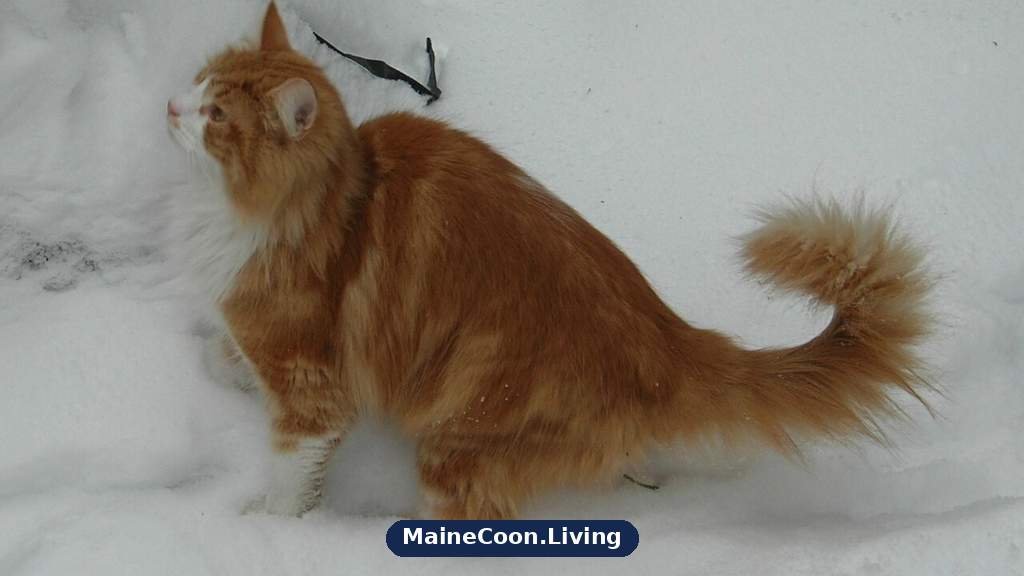
For me, the Maine Coon won years ago, and I have never regretted the trilling shadow in my kitchen. But on a quiet evening, watching a Norwegian sit in the snow in that straight profiled, triangular headed stillness, I completely understand everyone who chooses the other cat.
Frequently Asked Questions
Which is bigger, a Norwegian Forest Cat or a Maine Coon?
The Maine Coon is usually the bigger cat, longer in the body and heavier on average. A large male Maine Coon can outweigh a male Norwegian Forest Cat by a couple of kilos. Individual cats vary a lot, though, and a big Norwegian male can easily outsize a small Maine Coon female.
How can you tell a Norwegian Forest Cat from a Maine Coon by the face?
Look at the profile from the side. The Norwegian Forest Cat runs in one straight line from forehead to nose tip, under a neat triangular head. The Maine Coon has a gentle dip in the profile and a much squarer, more boxy muzzle.
Which breed needs more grooming?
The Norwegian Forest Cat usually needs more help, especially when it sheds its dense woolly undercoat in spring. The Maine Coon coat is silkier and often settles with two or three good combing sessions a week. Either coat will mat if you skip weeks at a time.
Are Norwegian Forest Cats friendlier than Maine Coons?
Both breeds are friendly, but they show it in different ways. Maine Coons tend to follow people around and join in, while Norwegian Forest Cats are often happy sitting close by and watching. A Norwegian is not cold or distant, it is simply more likely to offer affection on its own terms.
Which breed costs more to buy?
Maine Coons usually cost more, partly because demand for them is so high in many countries. Prices vary widely by breeder, country and pedigree, so treat any single figure you see online with caution. Ongoing costs for food, litter and vet care are similar, because both are large cats with large appetites.