Are Maine Coon Cats Hypoallergenic? The Honest Answer
A friend of mine lasted about twenty minutes on my sofa before her eyes started watering. She had read online that big, fluffy cats were somehow gentler for allergies, and she wanted to test that theory in person. My Maine Coon, unbothered, climbed onto the armrest beside her and started grooming his tail.
So let me save you the watery eyes and the guesswork. If allergies are part of your life, this is a decision worth slowing down for.
The Short Answer First
The short answer is no, and the bigger truth is that no cat breed is truly hypoallergenic. Maine Coons have not been shown to make less of the protein that sets off most cat allergies. Anyone marketing them as an allergy safe breed is selling a story, not a fact.
What Actually Causes Cat Allergies
Most cat allergies are not really about hair at all. They are a reaction to a protein called Fel d 1, which your immune system treats as a threat even though it is harmless in itself. The ASPCA covers the basics of living with cats on its cat care pages, and the picture is consistent wherever you read it.
Meet Fel d 1
Fel d 1 comes from a few places on and in the cat. It is made in the sebaceous glands in the skin, and it is also found in saliva and in urine. When a Maine Coon licks his coat for an hour, and mine really can, he spreads that saliva across every inch of fur.
As the saliva dries, the protein is left behind on the coat and on loose flakes of skin. Those tiny particles are what we call dander. Every cuddle, brush and head bump can lift them into the air around you.
Why It Hangs Around So Long
Fel d 1 is annoyingly well designed for staying put. The particles are small enough to float, sticky enough to cling to clothes, sofas and curtains, and stubborn enough to linger in a home for months. You can hoover on Monday and still breathe it in on Friday.
Do Maine Coons Produce Less of It?
This is the myth I hear most often, usually repeated with total confidence. There is no evidence that Maine Coons produce less Fel d 1 than other breeds. Individual cats vary a lot, but breed alone does not predict who will trigger your symptoms.
Cornell makes the same point in its feline health guidance, which is why vets tend to talk about the individual cat rather than the label on the pedigree. You can browse the Cornell Feline Health Center topics for a calm, level headed overview.
Sex, Neutering and Age Matter More
Some factors do seem to shift how much Fel d 1 a cat produces. Intact males tend to produce the most, and neutering usually lowers their output. Females, on average, tend to produce less than males, though the gap varies from cat to cat.
Age matters too, and it catches people out. Kittens produce less Fel d 1 than adult cats, so a kitten who seems fine at ten weeks may not stay that gentle. I will come back to that trap in a moment, because it breaks a lot of hearts.
That Long Coat Spreads It Further
The coat itself is not the allergen, and I want to be clear about that. Hair does not make Fel d 1. What that huge, thick coat does brilliantly is trap the protein, hold it, and then distribute it around your home like a slow moving duster.
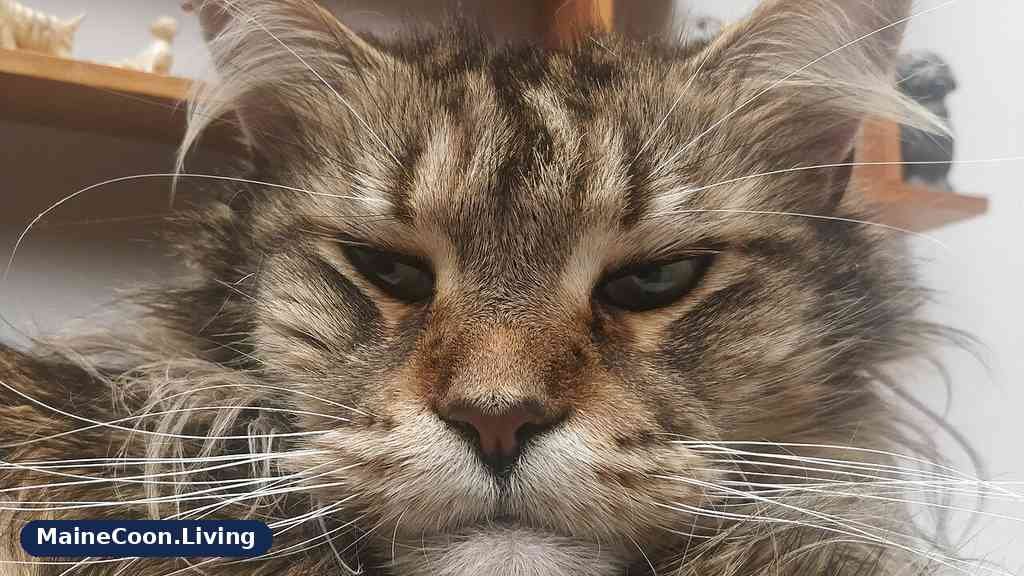
Shedding makes the spread worse, especially in a heavy seasonal blow out. Loose hair lands on bedding, rugs and car seats, carrying dried saliva and dander with it. If you want a realistic picture, read our guide to whether Maine Coons shed a lot before you fall for the sofa photos.
But My Kitten Did Not Make Me Sneeze
This is the false confidence I mentioned earlier, and I understand why it happens. A tiny kitten in a clean room, visited for half an hour, is not a real world test. Low allergen output, a short visit and pure excitement can hide what daily life will feel like.
Hairless Cats Do Not Solve It Either
People often ask whether a hairless breed would dodge the problem entirely. It would not, because the protein still comes from the skin and saliva, with or without fur. A hairless cat still grooms, still sheds skin flakes, and still needs regular bathing to manage skin oils.
Test It Properly Before You Commit
Spend real time with the specific cat you hope to bring home, not a relative and not a lookalike. Visit more than once, stay for hours, handle the cat, and sit where the cat sleeps if you can. One polite cuddle in a hallway tells you almost nothing.
Living With One If You Are Mildly Allergic
If your symptoms are mild and your allergist is comfortable, management can make a real difference. None of these habits removes Fel d 1 from your home completely.
Grooming and Bathing That Helps
Brush daily if you can, ideally outside or by someone in the house who is not allergic. Daily brushing catches loose hair and dander before it drifts onto every surface. Our step by step guide to grooming a Maine Coon covers the tools and routine that make this manageable.
A bath every two to four weeks with a cat safe shampoo can also help wash allergen off the coat. Start gently, keep it short, and never use human shampoo, which can dry the skin and make flaking worse. If your cat hates baths, ask your vet about alternatives rather than forcing a weekly wrestling match.
Clean Air, Clean Floors, Clean Bedding
A HEPA air purifier in the rooms you use most helps trap airborne particles, and a vacuum with a HEPA filter does the same for floors and furniture. Vacuum slowly, empty it outside, and do not forget sofas and curtains. It is dull work, but dull work is what keeps symptoms dull too.
Wash bedding in hot water regularly, including the cats favourite blankets and your own pillowcases. Where you have a choice, hard floors are easier to keep allergen free than deep carpets. Washable rugs beat fitted carpet that quietly stores months of dander.
The Bedroom Rule and Simple Habits
Make your bedroom a cat free zone, even if it feels mean at first. You spend a third of your life with your face in a pillow, and that is the worst place for dander to settle. My cat has forgiven many closed doors in exchange for a sunny window seat elsewhere.
Wash your hands after handling your cat, and try not to touch your face in between. Change your top after a long cuddle session if symptoms tend to flare in the evening. These small habits sound fussy, but they quickly become as automatic as feeding time.
What About Diet and Skin Health?
A good diet supports healthy skin and a coat in decent condition, which can reduce flaky dander around the house. Dry, irritated skin flakes more, and more flakes mean more particles in the air. That is a genuine benefit, just not the one adverts sometimes imply.
Good food does not cut Fel d 1 production itself, so please do not buy an expensive bag expecting an allergy cure. For broader feeding, coat and routine advice, our full Maine Coon cat care guide is a sensible place to start.
When to Talk to an Allergist
See an allergist before you commit to a cat, not after you are already struggling to breathe at night. They can test what you are actually reacting to and help you judge the risk honestly. Antihistamines help some people a lot and others only a little, so personal advice matters.
Immunotherapy, given as injections or tablets over time, is the medically proven route for desensitisation. It is slow, it takes commitment, and it does not work for everyone, but it changes the underlying response rather than just masking symptoms. That is a very different promise from an air purifier or a supplement.
You may also hear that symptoms sometimes ease after months of living with a cat. That does happen for some people as their body adjusts to constant exposure. It is not guaranteed immunity, though, and hoping for it is not a plan I would bet a cats home on.
My Honest Take as an Owner
I am an owner and an enthusiast, not a vet, an allergist or a breeder, and I would not swap my cat for anything. But love for this breed does not change the biology. If you want a Maine Coon, I want that to work for both of you, for the next fifteen years or more.
So test properly, get medical advice early, and set your home up before the cat arrives, not after. Allergies are only one part of the picture, and our overview of common Maine Coon health problems is worth reading alongside this. A well planned yes is worth ten hopeful maybes, and an organised routine beats wishful thinking every time.
Frequently Asked Questions
Are Maine Coon cats hypoallergenic?
No, they are not. Maine Coons produce Fel d 1, the main cat allergen, and there is no evidence they produce less of it than other breeds. Some individual cats trigger milder symptoms, but the breed itself offers no guarantee.
What actually causes a cat allergy?
Most cat allergies are caused by Fel d 1, a protein found in skin glands, saliva and urine. It dries onto the coat during grooming and becomes airborne on tiny flakes of skin called dander. Because it is small and sticky, it lingers on furniture, clothes and in the air.
Do female or neutered Maine Coons cause fewer symptoms?
They can, on average. Intact males tend to produce the most Fel d 1, neutering usually lowers output, and females tend to produce less than males. Individual variation is large, though, so always spend time with the specific cat before deciding.
Can grooming and cleaning really help?
Yes, they can lower the allergen load in your home, even though they cannot remove it completely. Daily brushing, a bath every two to four weeks, HEPA filtration, hot washing of bedding and a cat free bedroom all help. The benefits build when the routine is consistent and organised.
Should I see an allergist before getting a Maine Coon?
Yes, ideally before you commit to any cat. An allergist can confirm what you react to, discuss antihistamines, and explain immunotherapy, the medically proven desensitisation route. That advice is far more reliable than hoping your symptoms will simply fade with exposure.


2 Comments