Black Maine Coon Cats: Types, Traits and Care Guide
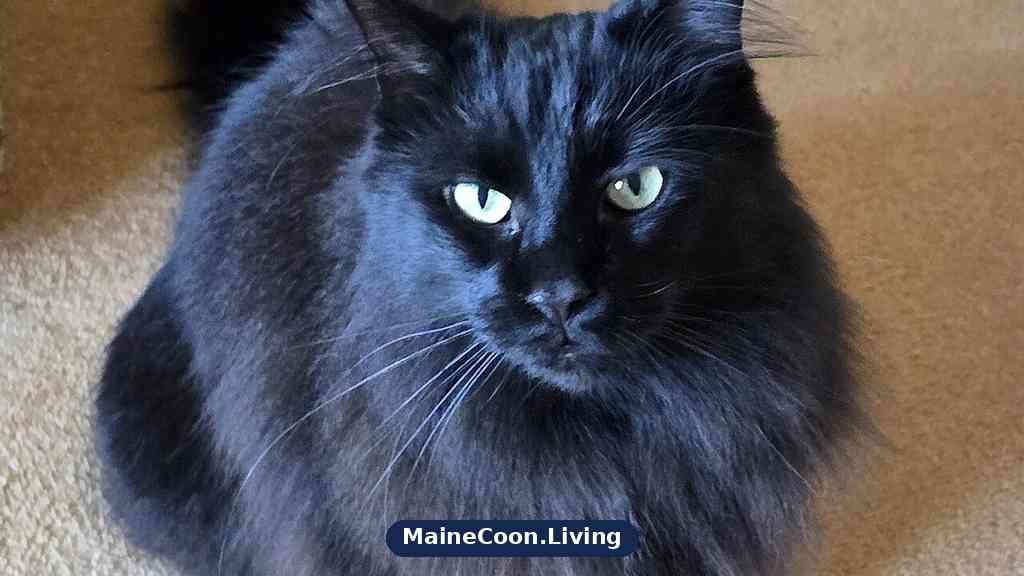
I am Umar, and black is the colour that changed how I look at this breed. From across a room a solid black Maine Coon can look like a shadow with ear tufts, all outline and plume tail. Get closer, sit with the cat in real daylight, and the coat turns out to be far more complicated than jet black.
This page stays with that one colour on purpose. If you want the full palette laid out side by side, start with our hub on Maine Coon colors and then come back here for the close up view.
What solid black really looks like up close
A true solid is black from nose leather to tail tip, and the paw pads are black too. There are no white patches, no locket on the chest, and no single pale chin in a strict solid. When people picture that clean sweep of colour, this is the cat they mean.
Up close, though, very few coats read as flat black everywhere. The guard hairs on the back are usually the darkest and glossiest part, while the softer fur on the belly and inside the legs can look a shade softer. The ruff around the neck often catches light differently again, and in some photos it can even look blue grey where the sun hits it.
That shift is not a fault and it is not a hidden pattern. It is light moving across hairs of different lengths and thicknesses on a very large, shaggy cat. A Maine Coon coat is uneven by design, longer on the ruff, britches and tail, and shorter over the shoulders, so one colour never presents as one flat tone.
I learned to judge the colour at the roots, not at the tips in a sunny photograph. Part the coat in a few places on a dull day, away from a window glare, and you get a far truer reading. Tips lie, especially on an older coat, and roots are much harder to fool.
Rusting, the brown tinge nobody warns you about
Ask owners of black cats what surprises them first and many will say rusting. Rusting is the reddish brown cast that creeps into a black coat, most often on the chest, the belly, the britches and the tail. In bright sun a cat that looked deep black indoors can suddenly look warm brown at the edges.
Sunlight is the main driver, because ultraviolet light breaks down the dark pigment near the surface of the hair. A cat that claims the sunniest windowsill in the house, day after day, will usually rust faster than one that prefers shade. Indoor cats rust too, just more slowly, and the tint often shows first where the coat is oldest.
Age of the coat matters as much as age of the cat. Hair that has been on the body for months, loose coat that is ready to shed, and dry damaged ends all hold colour poorly. That is why a black Maine Coon can look rustiest just before a heavy seasonal shed, and then look strikingly darker once the fresh coat is through.
Grooming changes the picture in a very practical way. Regular combing lifts out the dead, faded undercoat that dulls the whole animal, and it spreads natural oils along the fresh hair that remains. Owners often think the cat has changed colour after a proper groom out, when really they are finally seeing the new coat instead of the old one.
Diet plays a quieter part, and I want to be honest about the limits here. A complete, balanced diet with good quality protein and essential fatty acids supports healthy skin and a coat that grows in strong and glossy. Poor nutrition, illness, or a long stretch of picky eating can leave any coat dry and washed out, whatever its colour.
What diet cannot do is repaint a genetically brown tinged cat into a show ring black. If the rusting appeared suddenly alongside weight loss, a dull rough texture, or skin trouble, that is a vet conversation, not a shampoo conversation. Sudden coat change is a symptom worth checking, and colour alone should never be used to diagnose anything at home.
There is also a simple test I use before worrying. Comb out the loose coat thoroughly, wait for the new growth, and look again in soft natural light. If the fresh hair at the root is deep black, you were mostly looking at sun and old coat, and that is the common story with this colour.
Ghost markings on black kittens
Black kittens have a secret that catches new owners off guard. Hold a young solid black kitten in bright light and you may see faint tabby stripes on the legs, rings on the tail, and a soft pattern across the body. Owners sometimes panic and assume they were sold a tabby by mistake.
Those marks are called ghost tabby markings, and they are completely normal in solid coloured kittens. Underneath the solid colour, every cat carries a tabby pattern in its genetics, and in kittens the young coat is thin enough for that pattern to show through. Strong light makes it easier to see, which is why it often appears in one photo and vanishes in the next.
The good news is that they fade. As the kitten coat is replaced by the denser adult coat, and the dark pigment fills each hair more fully, the ghost stripes soften and usually disappear. With a Maine Coon that process is slow, because this breed matures over years rather than months, so faint marks can linger longer than owners expect.
I would not judge a kitten final colour at eight or twelve weeks, and good breeders will tell you the same. Ask to see the parents, look at older siblings if you can, and check the roots of the kitten coat rather than the surface. A kitten with strong, obvious tabby patterning in normal indoor light is a different case from one showing a whisper of pattern only in direct sun.
Adult solids can flash a hint of pattern again in extreme light, especially on a rusted summer coat. That faint show through does not turn a solid into a tabby for registration purposes. What matters is the underlying genetics and how the coat reads in ordinary conditions, not one harsh photograph.
Eyes that pair with a black coat
If the coat is the backdrop, the eyes are the whole performance. Against black fur, gold eyes glow like polished brass, and a deep copper eye is one of the most striking looks in the breed. Green eyes give a cooler, sharper contrast, and they are the pairing that stops a lot of people mid scroll.
All three colours are normal for a black Maine Coon, and none of them changes anything about health or temperament. Kittens start life with blue eyes that change over the first weeks, and the final shade can keep deepening well into the first year. A young cat with pale, undecided eyes is not finished yet, so be patient before deciding what colour you have.
What you should not expect in a solid black is a blue eyed adult. Blue eyes in this breed belong with white cats and with cats carrying a lot of white, not with a true solid black. If a seller offers a blue eyed solid black Maine Coon as a rare premium, that claim deserves very careful checking against the breed standard.
The standards published by the Cat Fanciers Association describe the accepted eye colours for the breed in detail. Reading the standard before you buy is dull homework that saves real money and disappointment later. It also helps you separate normal variation, like a green gold eye, from claims that were never part of the breed.
Eye shape matters to the look as much as colour does. Maine Coon eyes are large, slightly oval, and set a little obliquely, which gives that alert, intelligent expression. On a black face the shape can be hard to photograph, but in person it is the expression, more than the shade, that people remember.
Solid or smoke, and the other lookalikes
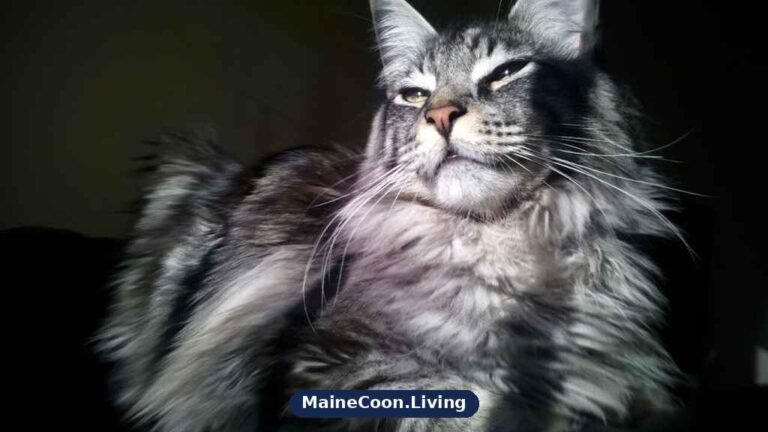
This is the section that saves the most confusion, because black has convincing lookalikes. The most common mix up is the black smoke, a cat that looks solid black while sitting still and then flashes pale silver the moment it moves. From a distance, and in most sale photos, the two can look nearly identical.
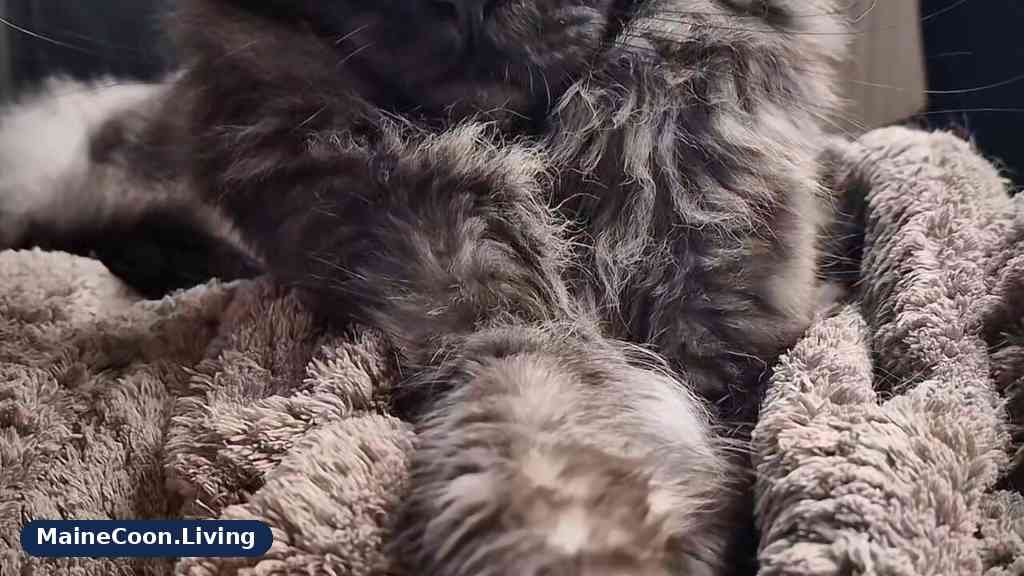
The test takes five seconds and needs no equipment. Part the fur on the side of the body and on the back, push it against the grain, and look at the colour closest to the skin. A solid stays dark all the way down each hair shaft to the root, while a smoke shows a clear pale band and a light, almost white undercoat beneath black tips.
Check in more than one place before you decide. The undercoat shows most dramatically on the ruff, the belly and the backs of the legs, and least on the short fur of the face. A cat that is pale at the roots in several areas is a smoke, however black it looked in the advert.
Once you have seen a smoke parted properly, you cannot unsee the difference. Our guide to the silver Maine Coon explains the inhibitor gene behind that pale undercoat in more depth. That same gene is at work here, turning what would have been a solid black coat into a smoke.
The second lookalike is a very dark brown cat. In poor light a deep brown tabby with heavy markings, or a brown based solid, can photograph almost black, especially on a phone. Natural daylight settles it, because brown keeps a warm chocolate tone at the roots and on the nose leather in a way true black does not.
Black cats with a heavy rust can also be mistaken for brown, which is why the root check matters more than the tip colour. Judge roots, nose leather and paw pads together, in daylight, and the answer is usually obvious. One feature on its own can mislead you, but the three together rarely do.
None of this makes a smoke or a dark brown a lesser cat, and I want that on record. Smokes are dramatic, much loved, and often cost just as much as solids from good breeders. The problem is only honesty, paying a solid price for a smoke kitten because nobody parted the fur.
The genetics, kept simple and honest
I am an owner and enthusiast, not a geneticist, so here is the simplified version that breeders use day to day. Black colour comes from eumelanin, the dark pigment, and a cat needs the dominant black instruction to produce it in this form. Cats carrying the recessive alternatives can produce chocolate or cinnamon tones instead, which is why those colours need both parents to pass the variant on.
Whether that black shows as a solid or as a tabby pattern comes down to a separate switch. A solid cat carries two copies of the non agouti instruction, which suppresses the visible tabby pattern across the body. That is also why those ghost markings in kittens are only a show through of a pattern that is genetically covered, not absent.
The smoke effect comes from yet another layer, the inhibitor gene, which restricts pigment along part of each hair. That layering is why colour prediction in a litter is never just about the colour of the two parents in a photograph. A black cat can carry hidden instructions for other colours and patterns, and only pedigree knowledge or genetic testing reveals them.
If exact genetics matter to you for breeding, pay for proper testing and talk to an experienced breeder or vet. Coat colour at home is a guide, not a lab result. I would rather tell you that plainly than dress up a guess as expertise.
Grooming a black coat so it stays rich
Black shows everything, and that is the honest starting point for grooming. Dust, dander, loose pale undercoat and dry skin flakes all sit visibly on a dark coat in a way they never do on a silver or cream cat. The routine is not harder than for any Maine Coon, but skipped sessions show up faster.
Comb little and often, working through the ruff, armpits, belly and britches where mats form first. A wide tooth metal comb gets to the roots where tangles start, and it doubles as your rusting check, because you see the new growth every week. Short, calm sessions beat one long battle that leaves you both fed up.
During the big seasonal sheds, step the grooming up rather than waiting for mats. Removing dead coat promptly is the single biggest difference between a black cat that looks dull and dusty and one that looks deep and clean. It also cuts the amount of hair redecorated across your furniture, which your household will notice.
Bathing has a place, but it is not a weekly ritual for most indoor cats. An occasional bath with a cat safe shampoo can lift dust and loose coat before a show or after a muddy adventure, and many Maine Coons tolerate water better than most breeds. Over bathing strips oils and can leave the coat drier and duller, which is the opposite of what a black coat needs.
Shine, in the end, is health showing on the surface more than any product. A complete diet, parasite control, clean water, and prompt vet care for skin or gut trouble will do more for gloss than any spray on finish. When a black coat loses its sheen and stays dull after grooming and a shed cycle, treat that as information and get it checked.
Photographers of black cats learn one last trick that owners can steal. Soft, indirect light shows the coat texture and the eyes together, while harsh flash flattens a black cat into a silhouette. If your photos never do your cat justice, change the light before you blame the coat, because the cat is probably fine.
Living with a black Maine Coon
Colour does not change temperament, and I will keep saying it because the myths around black cats are stubborn. A black Maine Coon has the same gentle, dog like, slightly clownish character as a tabby or a red from the same lines. Breeding, early handling and your home shape the personality, never the pigment.
Practically, a black cat in a dark hallway at night is a genuine trip hazard, and owners learn the shuffle quickly. A collar with a small bell, or simply turning a light on, solves what superstition never could. Their chirps and trills give them away most of the time anyway, since this is not a quiet breed.
They also reward the camera shy owner in an unexpected way. A black Maine Coon in a bright room, eyes up, is one of the most photogenic sights in the cat world once you get the light right. The video below gives a fair sense of the features and presence that still photographs often flatten.
Choose this colour because you love how it looks in your own home, in your own light, not because of rarity claims. Solid black is not the rarest Maine Coon colour, and honest breeders will not price it as if it were. What it is, at its best, is the breed outline in its purest form, all size and silhouette and glowing eyes.
Frequently Asked Questions
Is a solid black Maine Coon truly black all over?
A true solid is black from the tip of each hair to the root, with black nose leather and paw pads to match. In strong light you may still see a warm brown cast on older coat, and that is usually rusting rather than a different colour underneath.
Why does my black Maine Coon look reddish brown in the sun?
That reddish tinge is called rusting, and sunlight is the most common cause. Old coat that is ready to shed rusts fastest, so a thorough comb out and a fresh, balanced diet often bring the deep black tone back.
Do black Maine Coon kittens keep their faint stripes?
No, those faint stripes are ghost tabby markings, and they are normal in solid kittens. They show most clearly in bright light during the first months and fade as the thicker adult coat grows in.
How can I tell a solid black from a black smoke?
Part the fur on the back and on the side and look right down to the skin. A solid stays dark all the way to the root, while a smoke shows a clear pale band and a light undercoat.
What eye colours suit a black Maine Coon?
Gold, copper and green are the colours you will see most often, and all three stand out sharply against a black coat. Eye colour can deepen and settle as the cat matures, so young cats often change shade a little in the first year.
Live with a black Maine Coon for a while and the colour stops being a novelty. It becomes the background to the chirps at the door, the tail across your keyboard, and the heavy warmth on the sofa beside you. The gloss and the ghost stripes are lovely, but it is the cat underneath that you actually signed up for.

One Comment